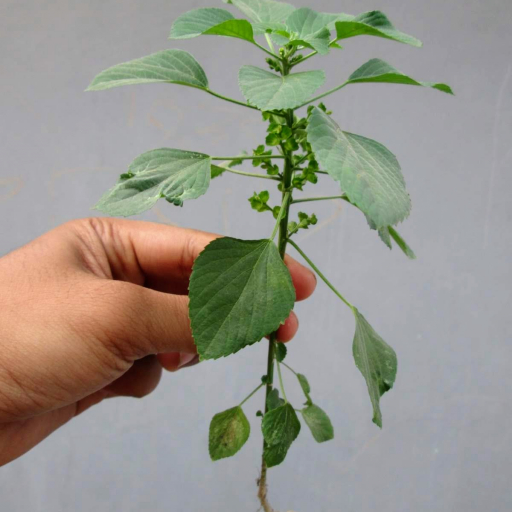
Plant Overview
Often called the "Indian Nettle" or the "Cat-Magnet," Acalypha indica is a humble-looking herb with a hidden, potent side. While many consider it a common garden weed across the tropical regions of Asia and Africa, it has been a staple in traditional herbalism for centuries. Interestingly, while it mimics the serrated look of a stinging nettle, it lacks the painful stinging hairs, making it much friendlier to handle—unless you happen to be a cat!
🔍 How to Identify
- 🍃 Jagged Leaves: The leaves are oval-shaped with distinct, saw-toothed (serrated) edges, closely resembling the common nettle.
- 🎋 Flower Spikes: It produces long, thin green spikes that emerge from where the leaf meets the stem. These spikes hold tiny, inconspicuous flowers.
- 🥤 Cup-like Bracts: If you look closely at the flower spike, you’ll see small, cup-shaped green leaves (bracts) that "cradle" the female flowers, which gives the plant its Tamil name, Kuppaimeni.
🏡 In Your Garden
- 🌱 Opportunistic Grower: This plant loves "disturbed" soil—think of those forgotten corners of the garden or cracks in the pavement. It thrives in moist, sunny spots but isn't picky about soil quality.
- 🪴 Containment Strategy: Because it is an annual that produces many seeds, it can become invasive. If you are growing it for its medicinal or feline-attracting properties, keeping it in a dedicated pot is the best way to prevent a garden takeover.
⚠️ Safety & Toxicity
- 🚫 Status: Potentially toxic if ingested without professional guidance.
- 🤢 Human Risk: While used in traditional medicine, raw ingestion can cause gastrointestinal distress or skin irritation in sensitive individuals. It is best treated as an ornamental or "wild" plant rather than a kitchen herb.
- 🐱 The Cat Factor: The roots contain a compound that acts as a powerful stimulant for cats, similar to catnip. While the root is generally safe for them to sniff and rub against, large amounts of the leaves can cause some cats to vomit.
✨ Fun Fact
Move over, Catnip! In many parts of the world, Acalypha indica is known as the ultimate "Cat-Grass." Cats will often find this plant in the wild, dig up the earth to expose the roots, and rub their faces against them in a state of pure feline euphoria.

Detailed Care Instructions
To grow Acalypha Indica, also known as Indian Nettle or Acalypha Indica, you can follow these steps:
- Choose a suitable location: Acalypha Indica grows well in partial shade to full sun. Select a spot in your garden that receives a minimum of 4-6 hours of sunlight per day.
- Prepare the soil: The soil should be well-draining and rich in organic matter. You can amend the soil by adding compost or aged manure to improve its fertility and drainage.
- Planting: Acalypha Indica can be grown from seeds or stem cuttings. If you're using seeds, sow them directly into the soil or in a seed tray filled with potting mix. Cover the seeds lightly with soil and keep them moist until germination occurs. For stem cuttings, take a 6-8 inch cutting from a healthy plant, remove the lower leaves, and place it in a small pot filled with potting mix. Keep the soil consistently moist until roots develop.
- Watering: Keep the soil evenly moist, but not waterlogged. Water the plant thoroughly whenever the top inch of soil feels dry. Avoid overwatering as it can lead to root rot.
- Fertilizer: Acalypha Indica benefits from regular feeding with a balanced fertilizer. Apply a slow-release fertilizer or a liquid fertilizer every 4-6 weeks during the growing season. Follow the instructions on the fertilizer packaging for the correct dosage.
- Pruning: Regular pruning helps promote bushier growth and keeps the plant compact. Pinch back the tips of the stems to encourage lateral branching. You can also prune away any overcrowded, dead, or damaged branches to maintain the plant's health and appearance.
- Pests and diseases: Monitor the plant regularly for pests such as aphids, mealybugs, or spider mites. Treat any infestations promptly with insecticidal soap or neem oil. Acalypha Indica is generally resistant to most diseases but can suffer from root rot if overwatered.
- Propagation: Acalypha Indica can be propagated by stem cuttings. Take 6-8 inch long cuttings from healthy plants, remove the lower leaves, and place them in a well-draining potting mix. Keep the soil moist until roots develop, and then transplant them into individual pots or the desired location in the garden.
Remember to protect the plants from extreme temperatures, especially during winter, and provide a supportive structure if needed. With proper care and maintenance, your Acalypha Indica should grow vigorously and produce beautiful foliage.

Place in a bright room that is sun drenched almost all day. Or directly in a south-facing window.

Acalypha Indica plant requires a consistent and moderate amount of watering. One should water it deeply but make sure not to overwater it. Before watering, one should check the soil moisture level by touching the upper layer of soil. If it feels dry, then it is time to water the plant. Avoid watering in the afternoon or at night as it can lead to fungal growth. It is best to water early in the morning or in the evening. Use room temperature water and ensure that the water reaches the roots completely. Also, make sure to empty any excess water from the saucer or container to avoid root rot.
To fertilize this plant, use a balanced fertilizer that contains equal parts nitrogen, phosphorus, and potassium. Use the fertilizer according to the instructions on the package, and only fertilize the plant during its growing season. Additionally, ensure that the plant is well-watered before and after fertilizing to prevent any stress from the fertilizer.
Acalypha Indica prefers well-drained soil with a slightly acidic pH between 5.5 and 7.0. The soil should be rich in organic matter and have good fertility. Acalypha Indica requires moist, but not waterlogged soil, and cannot tolerate drought. The soil should have good moisture retention, but also good drainage to prevent waterlogging. Ideally, the soil should be loamy with a good mixture of sand, silt, and clay to provide a healthy balance of air and water. Mixing in compost or well-rotted manure can also provide the necessary nutrients and improve soil structure.
Acalypha Indica plant can be propagated through stem cuttings. Choose healthy stems without any diseases or damages. Cut a 4-6 inch long stem with a sharp, sterilized knife or pruning shears. Remove any leaves from the bottom half of the stem. Dip the cut end in rooting hormone powder to promote root growth. Plant the stem in a pot filled with well-draining soil and water it thoroughly. Cover the pot with a plastic bag or dome to maintain humidity and avoid drying out. Place the pot in a brightly lit, warm location, but avoid direct sunlight. Mist the plant regularly to keep the soil moist until new leaves and roots develop in a few weeks. Once the new plant is established, remove the plastic cover and move it to a slightly larger container with suitable soil.








