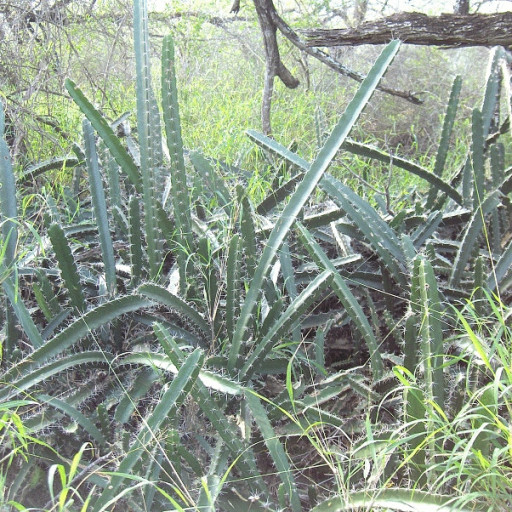
Plant Overview
Often called the Fairy Castle Cactus, this enchanting succulent looks like a miniature medieval fortress carved from green stone. While it starts as a tiny desk companion, in its native tropical habitats across the Americas, it can grow into a massive, sprawling hedge. It is a favorite for beginners because of its slow growth and architectural beauty.
🔍 How to Identify
- 🏰 Growth Habit: It produces dozens of vertical, columnar stems of varying heights that clump together, mimicking the turrets and spires of a castle.
- 📐 Stem Structure: Each stem usually has five distinct sides (ribs), though young branches might have fewer.
- ☁️ Spines: Along the edges of the ribs, you will find "areoles" covered in tiny, woolly white spines that look like soft fuzz from a distance but are quite prickly to the touch.
🏡 In Your Garden
- ☀️ Sunlight Nuance: To keep its "castle" shape tight and compact, it needs very bright light. If kept in a dark corner, the new stems will grow thin, pale, and "stretchy" (etiolation) as they search for the sun.
- 🪴 Drainage is Key: Like most desert dwellers, it hates "wet feet." Use a gritty cactus mix and a pot with a drainage hole. It prefers to have its soil completely dry out before receiving a deep drink.
- 🌡️ Winter Dormancy: During the cold months, this cactus enters a resting phase. Reduce watering significantly, as the plant isn't actively growing and is most susceptible to root rot during this time.
⚠️ Safety & Toxicity
- 🛡️ Status: Non-toxic to humans and pets.
- 🌵 Physical Hazard: While not poisonous, the spines are sharp and can easily lodge in the skin or a pet's paw. It is best placed on a high shelf or in a spot where it won't be accidentally bumped.
✨ Fun Fact
The "Fairy Castle" is actually a dwarf cultivar of the much larger Acanthocereus tetragonus. While the wild version produces massive white flowers that bloom only at night, the "Fairy Castle" version almost never blooms in a home setting; it spends all its energy creating its magnificent tower-like stems instead!

Detailed Care Instructions
| Humidity | Dry |
| Lighting | Full Sun |
| Toxicity | Non-Toxic |
| Difficulty | Easy |
| Hibernation | Cold Period |
| Temperature | 12°C - 30°C |
| Hardiness Zones | 9A - 10B |
To successfully grow Acanthocereus tetragonus, also known as Fairy Castle Cactus or Unicorn Cactus, follow these steps:
- Select a suitable container: Choose a pot with drainage holes to prevent waterlogging. It should be slightly larger than the current root system of the plant.
- Soil requirements: Use well-draining soil specifically formulated for cacti and succulents. You can also create a suitable mix by combining regular potting soil with perlite, pumice, or sand to increase drainage.
- Sunlight: Acanthocereus tetragonus prefers bright, indirect sunlight. Place it near a south-facing window or under grow lights for 6-8 hours of light per day. Avoid exposing it to direct sunlight during the hottest part of the day to prevent scorching.
- Temperature: The plant thrives in moderate to warm temperatures between 70-85°F (21-29°C). Protect it from extreme cold temperatures below 50°F (10°C).
- Watering: Allow the soil to dry completely between watering. A good rule of thumb is to water thoroughly when the top inch of soil feels dry. Ensure excess water drains out of the pot, as the plant is susceptible to root rot. Reduce watering during the winter months when the plant goes dormant.
- Humidity: Acanthocereus tetragonus can adapt to low humidity levels. However, misting the plant occasionally or placing a tray of water nearby can create a slightly more humid environment.
- Fertilizing: Feed the plant with a balanced, water-soluble fertilizer formulated for cacti and succulents during the growing season (spring to summer). Follow the package instructions for dilution and frequency.
- Pruning: To maintain its shape, prune the plant by cutting off the excess growth. Use clean, sharp pruning shears to avoid damaging the plant.
- Propagation: Acanthocereus tetragonus can be propagated through stem cuttings. Allow the cut end to callus over for a few days before placing it in a well-draining potting mix. Keep the soil lightly moist and place it in a warm, bright spot.
With proper care and attention, Acanthocereus tetragonus will grow and thrive, adding beauty to your indoor or outdoor garden.

Place in a bright room that is sun drenched almost all day. Or directly in a south-facing window.

1. Observe the soil: Before watering, check the soil moisture by inserting your finger about an inch deep into the soil. If it feels dry, it's time to water the plant.
2. Use filtered or distilled water: Acanthocereus Tetragonus is sensitive to excessive minerals and chlorine, so avoid using tap water. Instead, use filtered or distilled water.
3. Water thoroughly: When watering, make sure the water reaches the root system. You can do this by pouring slowly around the base of the plant until the water starts to drain out from the bottom of the pot.
4. Allow the soil to drain: After watering, make sure to allow the soil to drain out completely. Always discard the excess water from the saucer to avoid waterlogging.
5. Avoid overwatering: Acanthocereus Tetragonus is vulnerable to root rot if overwatered, so it's important to wait for the soil to dry out before watering again.
6. Adjust watering frequency: The frequency of watering will depend on the plant's surroundings, climate, and size of the pot. As a general rule, water once a week during the growing season and once every 2-3 weeks during the winter months.
7. Don't water the foliage: Avoid getting the foliage wet while watering as it may cause fungal diseases or damage the plant's delicate spines.
To fertilize this plant, use a balanced fertilizer with equal parts nitrogen, phosphorous, and potassium. Apply the fertilizer every two weeks during the growing season, which is spring through summer. Dilute the fertilizer to half or quarter strength to avoid over-fertilization. Water the plant thoroughly before fertilizing to prevent root burn. Avoid fertilizer application during the dormant season in fall and winter.
Without disclosing the common name of the plant, the ideal soil for Acanthocereus Tetragonus plant should be a well-draining mix that can hold moisture but not become waterlogged. A blend of coarse sand, perlite, and peat moss in a 1:1:1 ratio can be used. The pH of the soil should be slightly acidic to neutral with a range of 6.0-7.0. The soil should also be rich in organic matter and nutrients to support the growth and health of the plant. Additionally, it is recommended to use a pot or container with drainage holes to prevent waterlogging.
To propagate this plant, you will need to take a stem cutting from a mature plant. Select a healthy stem with no signs of damage or disease. Using a sharp, clean pair of pruning shears, make a clean cut just below a node or leaf. Remove any leaves or stems from the bottom third of the cutting.
Prepare a pot of well-draining soil mix and moisten it slightly. Dip the bottom of the cutting in rooting hormone powder, and then plant it in the pot, burying the bottom third of the stem. Water the cutting thoroughly and cover it with a plastic bag or dome to create a high-humidity environment.
Place the pot in a bright, warm spot, out of direct sunlight. Keep the soil moist but not waterlogged, and mist the cutting regularly to maintain high humidity. After a few weeks, you should see roots forming and new growth emerging from the top of the cutting.
Once the cutting has developed a strong root system and several healthy leaves, it can be transplanted into a larger pot or planted in the garden. Be sure to acclimate the cutting gradually to its new environment to prevent shock.
Common pests of the fairies castle include Scale insect, mealybugs, spider mites, thrips. Make a habit of checking your fairies castle frequently for pests so that any infestations can be caught and managed early.








