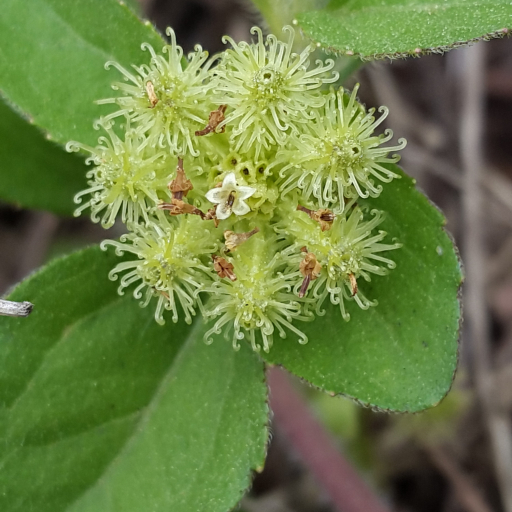
Plant Overview
Known affectionately as the Paraguayan Starbur or Sheepbur, this low-growing traveler is a master of hitchhiking. Originally hailing from the warm heart of South America, it has spread across the globe by clinging to anything that walks or rolls by. While it might look like a humble, soft groundcover at first glance, its "star" shape hides a prickly personality designed for survival.
🔍 How to Identify
- 🍃 Leaf Shape: The leaves are small, teardrop or wedge-shaped (spatulate), and grow in opposite pairs along the stem. They often have a slightly fuzzy or velvety texture to the touch.
- 🌼 Inconspicuous Flowers: You won't find showy petals here; the tiny, greenish-yellow flowers bloom quietly in the "axils" (the joints) where the leaves meet the crawling stems.
- ⭐ The "Star" Burr: Its most famous feature is the star-shaped fruit. As the plant matures, it produces small, five-pointed clusters of prickly burrs that turn brown and woody, ready to latch onto fur or clothing.
🏡 In Your Garden
- 🛤️ The Disturbance Lover: This plant is an "opportunist." It thrives in compacted soil, gravelly paths, and overgrazed pastures. If you find it in your lawn, it usually indicates the soil is a bit tired or has been heavily trampled.
- 🏃 Prostrate Habit: Unlike many weeds that reach for the sky, the Starbur hugs the earth. This "prostrate" growth habit allows it to slide right under the blades of a lawnmower, making it very difficult to eliminate once it establishes a mat.
⚠️ Safety & Toxicity
- 🌵 Physical Irritant: While not considered a high-risk toxic plant, the sharp, hooked spines on the burrs are a physical hazard. They can easily pierce thin skin or lodge themselves in the paws of curious pets.
- 🐾 Pet & Livestock Nuisance: For long-haired dogs or sheep, these burrs are a nightmare. They tangle deeply into fur and wool, often requiring scissors to remove. In pastures, they can cause minor sores in the mouths of grazing animals.
✨ Fun Fact
In its native Brazil, where it is known as Carrapicho-rasteiro, this "weed" is actually respected in traditional herbalism. It has a long history of being used in folk medicine to create topical washes for skin irritations and infusions believed to help with respiratory issues.

Detailed Care Instructions
To grow Acanthospermum Australe plant, also known as starburr or southern pricklybur, you can follow these steps:
- Obtain seeds: Acquire seeds from a reputable source or harvest them from mature plants. Make sure the seeds are fresh and viable.
- Prepare growing medium: Acanthospermum Australe prefers well-draining soil. Mix equal parts of potting soil, sand, and compost to create a suitable growing medium.
- Germination: Soak the seeds in water for 24 hours before sowing. This will help soften the seed coat and promote germination. After soaking, sow them about 1/4 inch deep in small pots or seed trays filled with the prepared growing medium.
- Provide proper conditions: Place the pots or trays in a warm and bright location, such as a greenhouse or sunny window. The ideal temperature for germination is around 70°F (21°C). Maintain the soil moist but not waterlogged.
- Transplant seedlings: After the seedlings have grown a couple of true leaves and are robust enough, usually within 4-6 weeks, transplant them into individual pots or the desired outdoor location. Make sure to harden off the seedlings before moving them outdoors by gradually exposing them to outdoor conditions over a period of time.
- Outdoor planting: Acanthospermum Australe prefers a location with full sun exposure. Ensure the soil is well-draining and amend it with organic matter if necessary. Space the plants about 12-18 inches apart, as they can spread out.
- Watering and care: Water the plants regularly, especially during dry spells, to keep the soil evenly moist. However, avoid overwatering as it can lead to root rot. Mulching around the plants can help conserve moisture and suppress weeds. Remove any weeds or competing vegetation regularly.
- Fertilization: Acanthospermum Australe generally doesn't require heavy feeding. However, you can incorporate a slow-release balanced fertilizer into the soil before planting or use a diluted liquid fertilizer every few weeks during the growing season.
- Pruning and maintenance: Regularly monitor the plants for any signs of pests or diseases. Prune any dead or damaged parts to maintain the plant's health and appearance.
By following these steps, you should be able to successfully grow Acanthospermum Australe plants. Remember to conduct proper research and adjust the care as per the specific requirements of this plant.

Place in a bright room that is sun drenched almost all day. Or directly in a south-facing window.

To properly water this particular plant, you should begin by checking the soil moisture level regularly, particularly during the growing season. This can be done by gently inserting your finger into the soil to a depth of a few inches and feeling for moisture.
If the soil feels dry to the touch, it may be time to water the plant. When watering, aim to thoroughly saturate the soil without causing water to pool on the surface or run off.
It is important not to allow the plant to become completely dry between waterings, as this can lead to stress and damage. Additionally, be careful not to overwater, which can lead to root rot and other complications.
In general, a moderate watering schedule that allows the soil to dry out slightly between waterings is recommended for this type of plant. However, you may need to adjust your watering routine based on factors such as the size of the plant, the specific soil conditions in your area, and the climate in which you are growing the plant.
To fertilize this plant, use a balanced fertilizer with equal parts nitrogen, phosphorus, and potassium. Apply the fertilizer during the growing season, which is typically in the spring and summer. Follow the instructions on the fertilizer package, but use half the recommended strength to avoid over-fertilizing. Water the plant thoroughly after fertilizing to help the nutrients penetrate the soil. Avoid fertilizing during the dormant season, which is typically in the fall and winter.
The ideal soil for this plant is well-draining and sandy loam, with a pH range of 5.5 to 7.5. It requires soil that is rich in organic matter and has good moisture retention. The plant also prefers soil that is slightly acidic to neutral. Moreover, the soil should be fertile, with an abundance of nutrients such as nitrogen, phosphorus, and potassium. Additionally, the soil should not be too compacted and should allow for proper aeration and drainage. Overall, the soil should be high-quality, with the appropriate pH and nutrient content, to promote healthy growth and development of the plant.
Acanthospermum australe can be propagated through various methods, including seed collection, stem cuttings, and division of the root ball.
To propagate through seed collection, allow the flowers to dry out and develop seed heads. Once the seed heads have turned brown and dry, remove them from the plant and harvest the seeds. The seeds can be sown directly into a potting mix or in a garden bed, and watered regularly until they germinate.
To propagate through stem cuttings, select a healthy stem from the parent plant and cut it using sharp, clean scissors or pruning shears. Remove the lower leaves from the stem, leaving only a few leaves at the top, and dip the cutting in rooting hormone powder. Plant the cutting in a potting mix or a garden bed and ensure that it is kept moist and in a shaded area until it develops roots and begins to grow.
To propagate through division of the root ball, dig up the parent plant and separate the roots gently into smaller sections. Replant the sections into pots or in a garden bed, ensuring they are well-watered and in a shaded area until they become established.
Regardless of the propagation method used, it is crucial to ensure that the plants are kept well-watered, in a shaded area, and in a suitable potting mix or soil until they become established.








