Plant Overview
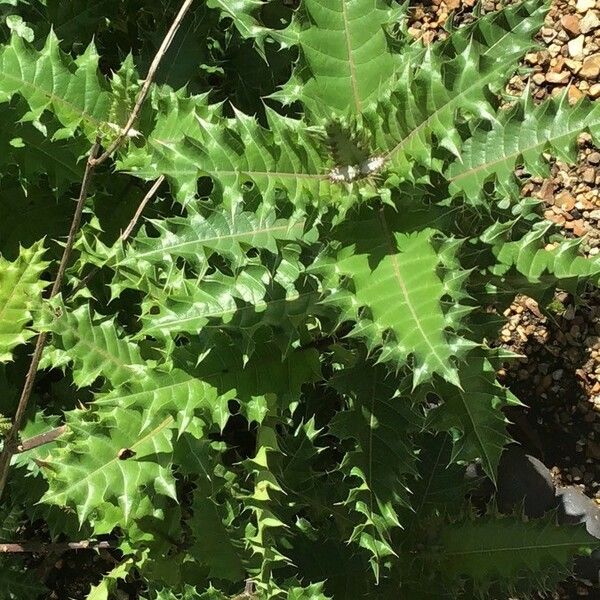
Commonly known as the Ethiopian Acanthus, this striking perennial is the high-fashion rebel of the Acanthus family. While its cousins are famous for their classic white and purple flowers, Acanthus sennii stands out with fiery red blooms and incredibly dramatic, silvery-veined foliage. Originating from the highlands of Ethiopia, it brings an architectural, "prehistoric" vibe to any garden space it inhabits.
🔍 How to Identify
- 🔥 The Flowers: Unlike the muted tones of common Bear’s Breeches, this species produces spikes of vibrant, tubular red flowers that emerge from dark, almost black bracts.
- 🗡️ The Foliage: The leaves are long, deeply lobed, and edged with formidable spines. They feature a distinct silver-grey marbling or veining that glows against the dark green leaf surface.
- 🏗️ The Structure: It grows as an upright, semi-woody shrub, reaching about 3 to 4 feet in height. It has a much more "shrub-like" appearance than the low-mounded Acanthus mollis.
🏡 In Your Garden
- 🏜️ Drainage is Vital: Coming from rocky highland regions, this plant absolutely hates "wet feet." If its roots sit in soggy soil over winter, it may rot. Plant it in a raised bed or a spot with gritty, well-draining soil.
- 🛡️ Strategic Placement: Because of its sharp spines, you should treat it like a cactus or a rose. Plant it away from paths or play areas where skin might brush against it. However, this same feature makes it an excellent "living fence" to deter unwanted foot traffic.
- ☀️ Sun Seeker: While most Acanthus species thrive in deep shade, Acanthus sennii prefers plenty of sunlight to produce those brilliant red flowers and maintain its silvery leaf patterns.
⚠️ Safety & Toxicity
- 🌵 Mechanical Hazard: The primary danger of this plant is its physical defense. The leaves are tipped with sharp needles that can easily puncture skin or cause irritation to curious pets.
- 🐾 Pet & Child Safety: While the plant is not considered highly toxic if ingested, the spines serve as a natural deterrent. It is generally avoided by deer and rabbits for this very reason. Always wear thick leather gloves when pruning or transplanting.
✨ Fun Fact
While the leaves of the common Acanthus were the inspiration for the ornate carvings on ancient Greek Corinthian columns, Acanthus sennii looks like it belongs in a different era entirely. It is one of the few members of the genus to produce truly red flowers, making it a rare prize for collectors of "Gothic" or architectural plants.

Detailed Care Instructions
Acanthus sennii is a beautiful plant that can be grown with proper care and attention. Here are some tips on how to grow Acanthus sennii:
- Light: Acanthus sennii prefers bright, indirect light. Place your plant near a window where it can receive plenty of sunlight, but avoid direct sunlight as it can scorch the leaves.
- Watering: Water your Acanthus sennii plant regularly, keeping the soil consistently moist but not waterlogged. Allow the top inch of soil to dry out before watering again.
- Temperature: Acanthus sennii thrives in temperatures between 65-75°F (18-24°C). Avoid placing the plant near drafts or heat sources as it can harm the plant.
- Humidity: Acanthus sennii prefers high humidity levels. You can increase humidity by using a humidifier, placing a tray of water near the plant, or misting the leaves regularly.
- Soil: Use a well-draining potting mix with plenty of organic matter for your Acanthus sennii. You can also add some perlite or sand to improve drainage.
- Fertilizing: Feed your Acanthus sennii plant with a balanced, water-soluble fertilizer every 4-6 weeks during the growing season (spring and summer).
- Pruning: Trim any dead or damaged leaves regularly to promote new growth and keep the plant looking neat.
- Repotting: Repot your Acanthus sennii plant every 2-3 years or when it outgrows its current pot. Choose a slightly larger pot with fresh potting mix.
With proper care and attention to these growing conditions, you can enjoy a healthy and beautiful Acanthus sennii plant in your home or garden.
Acanthus Sennii plants should be watered regularly to keep the soil consistently moist but not waterlogged. Watering frequency will vary depending on the climate and season, but generally, they should be watered about once a week during the growing season and less frequently during the dormant period.
When watering, make sure to thoroughly saturate the root ball, allowing excess water to drain out of the bottom of the pot or container. It is important to avoid letting the plant sit in standing water as this can lead to root rot.
Monitor the soil moisture levels by sticking your finger into the soil up to the first knuckle. If it feels dry, it's time to water. In hot weather or if the plant is located in a sunny spot, you may need to water more frequently.
It is also important to provide good drainage by using a well-draining potting mix and ensuring that the container has drainage holes. This will help prevent waterlogged soil and improve overall plant health.
During the winter months or when the plant is not actively growing, reduce watering frequency to prevent overwatering. Adjust your watering schedule based on the plant's individual needs and environmental conditions.
To fertilize Acanthus Sennii plant, you should apply a balanced fertilizer with an N-P-K ratio of 10-10-10 or similar. Fertilize the plant in the early spring before new growth appears and again in mid-summer. Follow the instructions on the fertilizer packaging for application rates and frequency. Water the plant thoroughly after fertilizing to help the nutrients penetrate the soil and be absorbed by the roots. Avoid over-fertilizing as it can damage the plant.
Acanthus Sennii plants thrive in well-draining soil that is rich in organic matter. It is recommended to use a soil mixture that is composed of equal parts loam, sand, and peat moss. The loam provides nutrients and structure, the sand improves drainage, and the peat moss helps retain moisture. Additionally, adding a small amount of perlite to the soil mixture can help improve aeration and prevent waterlogging. It is important to ensure that the soil pH is slightly acidic to neutral, around 6.0-7.0, as Acanthus Sennii plants prefer slightly acidic soil conditions. Regularly amending the soil with organic matter, such as compost or leaf mold, can help promote healthy growth and blooming. Avoid using heavy or clay-rich soil, as this can lead to poor drainage and root rot. Overall, providing well-draining, nutrient-rich soil will help Acanthus Sennii plants thrive and produce vibrant foliage and flowers.
To propagate the Acanthus Sennii plant, you can start by collecting seeds from the plant once they are mature. Sow the seeds in a well-draining potting mix and keep the soil consistently moist. Place the pot in a warm, well-lit area but away from direct sunlight.
Another method of propagation is by division. You can carefully divide the plant by splitting the root ball into smaller sections, making sure each section has roots attached. Plant these divisions in separate pots with fresh potting mix and keep them well-watered until they establish themselves.
You can also propagate Acanthus Sennii plant through stem cuttings. Take a cutting of a healthy stem, about 6 inches long, and remove the lower leaves. Dip the cut end in rooting hormone and plant it in a potting mix. Keep the soil moist and the cutting in a warm, humid environment until roots develop.
Whichever method you choose, it is important to provide the new plants with proper care and attention to help them establish and grow successfully.








