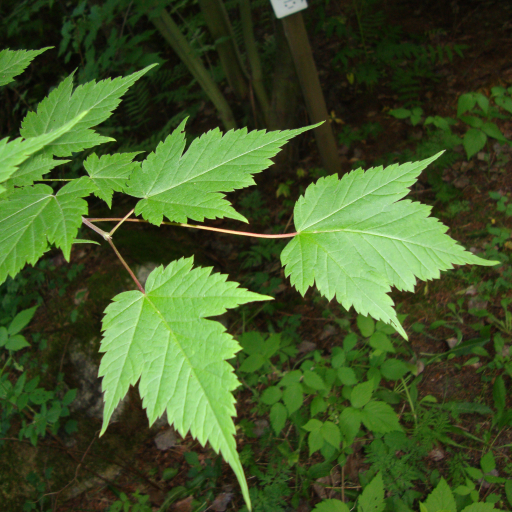
Plant Overview
Known as the Bearded Maple, this resilient shrub-like tree hails from the cool, mountainous forests of Eastern Russia, China, and Korea. While it may not be as famous as its flashy Japanese Maple cousins, it is a master of understated elegance and extreme cold-hardiness. It earns its unique name from a hidden botanical detail that you have to get up close to appreciate.
🔍 How to Identify
- 🧔 The "Bearded" Veins: The most defining feature is found on the underside of the leaves, where tiny, soft tufts of hair grow in the axils (corners) of the veins.
- 🍃 Five-Lobed Leaves: The leaves are roughly heart-shaped at the base but split into five distinct, sharply-toothed lobes that transition from soft green to a brilliant, clear yellow in the autumn.
- 🌿 Multi-Stemmed Habit: Unlike a tall oak or pine, the Bearded Maple often grows as a wide, spreading shrub or a small, multi-trunked tree, reaching about 15–20 feet at maturity.
- 🚁 Yellow Samaras: In late spring, it produces small, yellowish flowers followed by pairs of "helicopter" seeds (samaras) that dangle in graceful clusters.
🏡 In Your Garden
- ❄️ The Ultimate Survivor: If you live in a region with brutal winters where other maples struggle to survive, this is your plant. It is exceptionally frost-tolerant and thrives in temperate, northern climates.
- 💧 Hydration is Key: This maple hates "hot feet." It prefers cool, moist, and well-drained soil. In the heat of summer, a thick layer of mulch around the base will help keep the roots happy and prevent leaf scorch.
- ⛅ Dappled Light: While it can handle sun in cooler zones, it truly shines as an "understory" plant, sitting happily in the partial shade of larger trees where it can mimic its natural forest home.
⚠️ Safety & Toxicity
- ✅ Generally Safe: The Bearded Maple is not known to be toxic to humans, cats, or dogs. It is a very "friendly" addition to a family landscape.
- 🐴 Equine Caution: While specifically Acer rubrum (Red Maple) is the primary danger to horses, it is a good rule of thumb to keep grazing livestock away from wilted maple leaves of any species, as they can occasionally cause digestive upset.
✨ Fun Fact
The Latin name barbinerve literally translates to "bearded nerve." These tiny hairs aren't just for decoration; scientists believe they may help protect the plant's stomata (breathing pores) or discourage certain small crawling insects from traversing the leaf veins!

Detailed Care Instructions
To successfully grow Acer barbinerve (Chinese butterfly maple) plants, you can follow these steps:
- Select a suitable location: Choose a spot that receives partial shade to prevent scorching of the leaves. Ensure the area has well-draining soil.
- Prepare the soil: Acer barbinerve prefers slightly acidic soil. Before planting, amend the soil with organic matter such as compost or peat moss to improve fertility and drainage.
- Planting process: Dig a hole that is large enough to accommodate the root ball of the plant. Place the plant in the hole, making sure that the top of the root ball is level with the ground. Backfill the hole with soil, gently firming it around the roots to eliminate air pockets.
- Watering: Provide adequate water to ensure the plant's roots are well-hydrated. Water the plant deeply, ensuring the soil is moist but not waterlogged. Avoid overwatering or allowing it to dry out completely.
- Mulching: Apply a layer of organic mulch around the base of the plant, leaving a gap around the trunk to prevent moisture buildup and protect the roots. Mulching helps retain moisture, suppresses weed growth, and insulates the soil.
- Pruning and maintenance: Regular pruning is not necessary for Acer barbinerve, but you may remove any dead, damaged, or crossed branches to maintain plant health and shape. Additionally, monitor the plant for pests or diseases and take appropriate measures if needed.
- Fertilization: Acer barbinerve generally doesn't require regular fertilization. However, you can apply a balanced slow-release fertilizer in early spring to promote healthy growth. Follow the instructions on the fertilizer package for proper application.
- Winter care: In colder regions, Acer barbinerve may benefit from protection during harsh winters. Apply a layer of mulch around the base of the plant to insulate the roots. You can also consider wrapping the trunk in burlap or using a protective cover to shield it from cold winds.
By following these guidelines, you should be able to effectively grow Acer barbinerve and enjoy its unique and beautiful foliage.

Place in a bright room that is sun drenched almost all day. Or directly in a south-facing window.

To properly water Acer Barbinerve plants, it is important to follow these guidelines:
1. Take note of the soil: Before watering, check the moisture level of the soil. Insert your finger approximately 1-2 inches into the soil around the plant's root zone. If the soil feels dry at this depth, it is an indication that it requires watering.
2. Water frequency: Acer Barbinerve plants generally prefer consistently moist soil without being waterlogged. Depending on the climate and season, water the plant every 7-10 days during the growing season (spring and summer). Adjust the frequency accordingly if the weather is exceptionally dry or humid.
3. Watering technique: Use a gentle, slow watering technique to ensure the water is properly absorbed and does not run off or accumulate on the surface. Avoid splashing water on the leaves as this may lead to fungal diseases.
4. Quantity of water: Water the Acer Barbinerve plant until the water reaches a depth of about 6 inches. This helps to encourage deep root growth, which aids in the plant's overall health and drought tolerance.
5. Mulching: Apply a layer of organic mulch around the base of the plant. This aids in moisture retention and prevents weed growth, ensuring efficient water uptake.
6. Check drainage: Acer Barbinerve plants prefer well-draining soil to avoid waterlogged conditions. If the soil does not drain well, consider improving the drainage by adding organic matter or creating a slight slope around the plant.
7. Rainwater collection: Whenever possible, utilize rainwater to water the Acer Barbinerve plant. Rainwater is usually pH-balanced and does not contain any harmful chemicals like tap water might. Collect rainwater in barrels or use other methods to harvest and store it for later use.
8. Monitor plant response: Keep an eye on the plant's appearance and overall health. If it starts showing signs of overwatering, such as wilting, yellowing leaves, or fungal growth, adjust your watering regimen accordingly.
Remember, each plant's watering needs may vary slightly based on its specific environment and climate. Observing your Acer Barbinerve plant closely and adjusting the watering routine accordingly will help ensure its optimal health and growth.
To fertilize the Acer Barbinerve plant, follow these steps:
- Choose a balanced, slow-release fertilizer with equal amounts of nitrogen (N), phosphorus (P), and potassium (K). A low-NPK (e.g., 10-10-10) or a specialized fertilizer for evergreen trees can also be used.
- Begin fertilizing in early spring, after the last frost, and continue every 4-6 weeks until early fall. Avoid fertilizing during winter dormancy.
- Dilute the fertilizer according to the package instructions, typically using 1 tablespoon per gallon of water. Adjust the dosage accordingly if using specialized fertilizers.
- Water the Acer Barbinerve plant thoroughly before applying fertilizer to prevent root burn. Ensure the soil is moist but not waterlogged.
- Apply the diluted fertilizer evenly around the base of the plant, extending just beyond the dripline. Take care not to pour directly onto the trunk or foliage.
- Gently scratch the soil surface with a hand tool after applying fertilizer to help incorporate it into the root zone.
- Water the plant deeply after fertilization to help the nutrients penetrate the soil and reach the roots.
- Monitor the plant's response to fertilization. If excessive growth or burning of leaves occurs, reduce the fertilizer frequency or strength.
Remember, it's always best to follow the specific needs and instructions recommended by an expert or the product manufacturer for your Acer Barbinerve plant.
The Acer barbinerve plant thrives in a specific type of soil that provides the ideal conditions for its growth and development. It prefers a well-draining soil that is rich in organic matter. The soil should have good water retention capabilities while allowing excess water to drain away easily.
Acer barbinerve plants have a preference for neutral to slightly acidic soil with a pH range of 6.0 to 7.5. This ensures that the plant can efficiently absorb nutrients from the soil. It is important to avoid soils that are highly alkaline or excessively acidic, as this may affect the plant's overall health.
The ideal soil texture for Acer barbinerve is loamy or sandy loam. These types of soil provide a suitable balance between water retention and drainage. Loamy soil is rich in organic matter and nutrients while allowing excess water to percolate through the soil, preventing waterlogging.
Adding organic matter, such as compost or well-rotted manure, to the soil is highly beneficial for Acer barbinerve plants. Organic matter improves the soil structure, provides essential nutrients, and enhances moisture retention. A layer of organic mulch around the base of the plant helps maintain soil moisture, suppresses weed growth, and regulates soil temperature.
Regular monitoring of the soil moisture content is crucial for Acer barbinerve plants. It is important to ensure that the soil remains consistently moist but not overly saturated. While the plant requires adequate watering, it is necessary to avoid waterlogged conditions, as this can lead to root rot and other issues.
By providing the appropriate soil conditions, Acer barbinerve plants can thrive, ensuring optimal growth, vibrant foliage, and overall health.
To propagate Acer barbinerve, you can follow these steps:
- Start by selecting a healthy parent plant with desirable characteristics for propagation. Look for a mature Acer barbinerve plant that is disease-free and has robust growth.
- Choose an appropriate time for propagation. Late spring or early summer is usually the best time to propagate Acer barbinerve through softwood cuttings. This is when the plant's growth is active, increasing the chances of successful rooting.
- Prepare your tools and materials. You will need a sharp and clean pair of pruning shears, a clean container or pot for rooting, a well-draining potting mix, and a rooting hormone powder or gel.
- Take softwood cuttings from the parent plant. Locate healthy young shoots that are flexible and not fully woody. Cut a 4-6 inch (10-15 cm) long section from the tip of the branch, just below a leaf node.
- Remove the lower leaves, leaving a few at the top for the cutting to photosynthesize. If the remaining leaves are large, you can gently trim them to reduce water loss through transpiration.
- Dip the bottom end of the cutting into rooting hormone powder or gel, which helps boost root development.
- Prepare the rooting medium by filling a clean container or pot with well-draining potting mix. Moisten the mix, ensuring it is damp but not waterlogged.
- Create planting holes in the potting mix using a pencil or a similar object. Space the holes at least an inch (2.5 cm) apart to allow room for root development.
- Insert the treated cuttings into the planting holes, gently pressing the potting mix around them to ensure stability.
- Place the container or pot with the cuttings in a warm, bright location with indirect sunlight. Avoid direct sunlight as it may scorch the cutting.
- Mist the cuttings regularly to maintain humidity around them. A clear plastic bag or a transparent plastic dome can be placed over the container to create a mini greenhouse effect and retain moisture. Make sure to remove the cover periodically to prevent excess moisture buildup.
- Check the cuttings regularly for signs of rooting. It may take several weeks for roots to develop. Once roots have formed and have become sturdy, you can begin the process of hardening off the newly propagated plants in preparation for transplanting.
By following these steps, you can successfully propagate Acer barbinerve and enjoy growing this beautiful plant in your garden or collection.








