Plant Overview
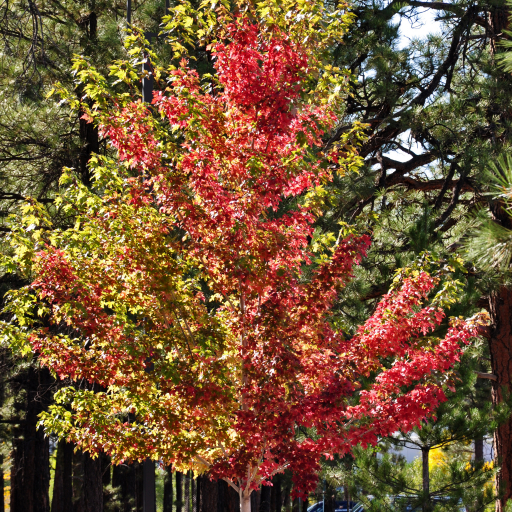
Known as the Freeman Maple, this tree is the "superhero" of suburban landscaping. It is a celebrated hybrid born from a cross between the elegant Red Maple and the resilient Silver Maple, offering the best of both worlds: lightning-fast growth and a jaw-dropping autumn wardrobe. It’s the go-to choice for homeowners who want a majestic shade tree without waiting decades for it to reach maturity.
🔍 How to Identify
- 🍁 Leaf Shape: Features 3 to 5 deeply cut lobes, resembling a refined, sharp-edged version of a classic maple leaf. The undersides often have a subtle silvery-green shimmer.
- 🌳 Growth Habit: It naturally forms a tidy, upright oval or pyramidal crown. This "neat" structure is much more predictable than its wild parents, making it ideal for street-side planting.
- 🎨 Autumn Color: Renowned for its brilliant, long-lasting display of fire-engine red and burnt orange. It often begins its color transformation earlier than other maples.
🏡 In Your Garden
- 🏗️ Urban Toughness: Unlike the pure Red Maple, which can be picky about soil pH, the Freeman Maple is a survivor. It handles heavy clay, alkaline soils, and urban pollution with ease.
- 💨 Structural Strength: It inherits the Silver Maple’s speed but lacks its "brittle wood" reputation. It is much more resistant to wind and ice damage, meaning fewer fallen branches after a storm.
- 🌱 Spacing Needs: Because it is a vigorous grower with a shallow root system, avoid planting it too close to sidewalks or driveways. Over time, those powerful roots can "heave" pavement if they don't have enough room to spread.
⚠️ Safety & Toxicity
- 🐾 Pet Friendly: The Freeman Maple is generally considered non-toxic to dogs, cats, and humans. It is a safe, family-friendly choice for backyard shade.
- 🐴 Equine Warning: If you live on a farm, take note: like its Red Maple parent, the wilted leaves can be toxic to horses if consumed in large quantities. Ensure fallen leaves are cleared from pastures.
- 🐝 Allergy Note: As a wind-pollinated tree, it does produce pollen in the spring which may trigger mild hay fever in sensitive individuals.
✨ Fun Fact
🧬 The most famous version of this tree, the 'Autumn Blaze' cultivar, was actually discovered by a nurseryman in the 1960s who noticed one specific sapling growing much faster and turning much redder than all the others!

Detailed Care Instructions
To grow Acer × Freemanii (Freeman maple) plants, follow these steps:
- Select a suitable planting location: Choose an area that receives full sun to partial shade. The soil should be well-draining and fertile. Considering the ultimate size of the tree, ensure ample space for it to grow.
- Prepare the soil: Remove any weeds or grass from the area. Add organic matter such as compost or aged manure to improve soil fertility and drainage.
- Planting the tree: Dig a hole that is wide and deep enough to accommodate the roots of the plant. Place the tree in the hole, ensuring that it is at the same depth it was in the nursery container or root ball. Backfill the hole with soil, firmly pressing it around the roots to eliminate air pockets.
- Watering: After planting, thoroughly water the tree to settle the soil around the roots. Provide regular watering during the initial establishment period, ensuring the soil stays slightly moist but not waterlogged.
- Mulching: Apply a layer of organic mulch around the base of the tree, but keep it a few inches away from the trunk. This helps conserve moisture, suppresses weed growth, and regulates soil temperature.
- Pruning: Prune only when necessary to remove dead or damaged branches and maintain a desirable shape. It is generally best to prune in late winter or early spring before the growing season starts.
- Fertilizing: Apply a balanced, slow-release fertilizer in spring to promote healthy growth. Follow the instructions on the fertilizer packaging for dosage and frequency.
- Pest and disease control: Monitor the tree regularly for any signs of pests or diseases such as aphids, scale insects, or fungal infections. If detected, treat accordingly using appropriate insecticides or fungicides.
- Protection from extreme weather: In areas with harsh winters, protect the young tree by wrapping the trunk with tree wrap or burlap to prevent sunscald or frost damage.
- Regular maintenance: Perform regular maintenance tasks like removing weeds around the base, checking for signs of stress or disease, and providing regular watering and fertilization as needed.
By following these steps, you can successfully grow Acer × Freemanii plants and enjoy their beautiful foliage and shade-providing abilities.
To properly water this plant, it is important to consider the soil type, weather conditions, and location of the plant. The soil should be moist but not saturated, so it is recommended to water deeply and infrequently. This means watering the plant thoroughly, allowing the water to soak deep into the soil, and then waiting until the top inch or two of soil has dried out before watering again. Additionally, the plant should be watered early in the morning or in the evening when the sun is not too strong, to avoid evaporation. It is also important to avoid watering the leaves, as this can lead to the development of fungal diseases.
When fertilizing this tree, use a balanced fertilizer with equal amounts of nitrogen, phosphorus, and potassium. Apply the fertilizer in the early spring before new growth starts, and again in mid to late summer. Follow the manufacturer's instructions for application rates. Water the tree thoroughly after fertilizing to ensure the nutrients are absorbed by the roots. Avoid fertilizing in the fall as this can promote late-season growth that is susceptible to winter damage.
The most suitable soil for Acer × Freemanii plant is a well-draining acidic soil with a pH range of 5.5 to 7.0. The soil should have good moisture retention ability to ensure proper hydration for the plant. It is recommended to use a mix of loamy soil, sand, and peat moss for planting. Organic matter should also be incorporated into the soil mix to provide necessary nutrients for growth. The soil should be kept consistently moist but not overly wet to prevent root rot. Adequate drainage is necessary to prevent waterlogging and ensure healthy root growth. Adding mulch around the base of the plant can help retain moisture in the soil and regulate soil temperature.
To propagate this plant, take a cutting from a healthy parent plant during its growing season. Make sure the cutting is about 4-6 inches long and has several leaves. Remove the lower leaves and dip the cut end into rooting hormone powder. Plant the cutting in moist soil mix and cover with a plastic bag to retain moisture. Keep the cutting in a warm, bright location but out of direct sunlight. Keep the soil moist but not waterlogged. After several weeks, new growth should appear, indicating that the cutting has rooted. At this point, the plastic bag can be removed and the new plant can be gradually acclimated to its new growing conditions.








