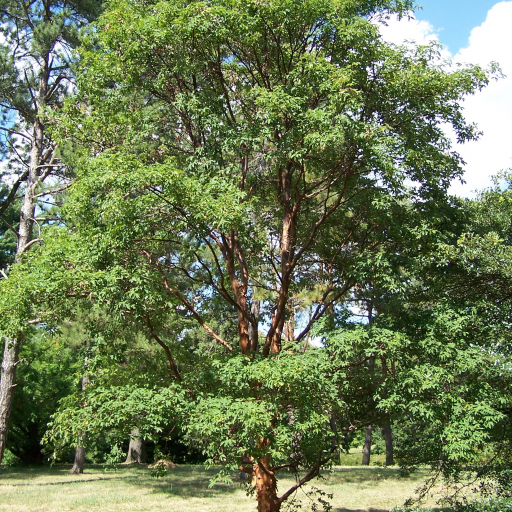
Plant Overview
Known as the Paperbark Maple, this tree is often called the "aristocrat" of the maple family. Native to Central China, it is celebrated worldwide for its stunning, translucent bark that peels away like fine sheets of cinnamon-colored parchment. It is a slow-growing masterpiece that provides visual interest in every single season, from its delicate spring flowers to its fiery autumn foliage.
🔍 How to Identify
- 🍂 Exfoliating Bark: The most striking feature; the trunk and older branches shed thin, papery layers of copper, cinnamon, and reddish-brown bark.
- 🍃 Trifoliate Leaves: Unlike the classic "five-pointed" maple leaf, this species has leaves divided into three distinct leaflets with blunt teeth, looking more like a clover than a traditional maple.
- 🍁 Autumn Brilliance: In late fall, the deep green leaves transform into a spectacular display of vibrant oranges, scarlet reds, and pinkish-undertones.
🏡 In Your Garden
- ⏳ Patience is Key: Because it grows quite slowly, it is perfect for small urban gardens or as a focal specimen. You won't have to worry about it outgrowing its space quickly, but it does require patience to reach its full height.
- ❄️ Winter's Best Friend: While many trees look skeletal in the winter, the Paperbark Maple shines. The peeling bark looks particularly magical when contrasted against a backdrop of white snow or dark evergreen shrubs.
- 💧 Root Sensitivity: It hates "wet feet" and drought equally. Ensure the soil is well-draining but consistently moist to prevent the leaf margins from browning (scorch).
⚠️ Safety & Toxicity
- ✅ Safe for All: Acer griseum is considered non-toxic to humans, dogs, and cats. It is a very "family-friendly" tree to plant near walkways or play areas.
- 🧤 General Precaution: While the tree is safe, always use caution when pruning to avoid scratches from falling branches, and keep an eye out for common garden pests that might take up residence in the peeling bark.
✨ Fun Fact
Most of the Paperbark Maples found in Western gardens today can be traced back to seeds collected by the famous plant hunter Ernest Wilson in 1901. Interestingly, this tree is notorious for producing "blank" seeds (up to 95% are sterile), making it quite difficult and expensive for nurseries to propagate!

Detailed Care Instructions
| Color | Green (Flowers Are Insignificant) |
| Soil Ph | 6.5 To 7 |
| Soil Type | Moist, Well-Drained |
| Bloom Time | Spring |
| Plant Type | Deciduous Tree |
| Mature Size | 20 To 30 Feet Tall And 15 To 25 Feet Wide |
| Native Area | China |
| Sun Exposure | Full Sun To Part Shade |
| Hardiness Zones | 4 To 8 |
To grow Acer Griseum (Paperbark Maple) successfully, follow these steps:
- Climate and location: Acer Griseum thrives in temperate regions with cool summers and cold winters. The ideal location should have well-draining soil and receive partial to full sun exposure.
- Soil preparation: Prepare the planting hole by loosening the soil and improving drainage by incorporating organic matter like compost or peat moss. The soil should be slightly acidic to neutral (pH 5.5-7.0).
- Planting: Dig a hole twice as wide and deep as the root ball. Gently remove the plant from its container or root ball, and place it in the hole. Ensure that the top of the root ball is level with or slightly above the soil surface. Backfill the hole with the amended soil, tamping it gently to remove air pockets.
- Watering: Water the newly planted Acer Griseum thoroughly to settle the soil. Keep the soil evenly moist, especially during the plant's establishment period. Water deeply but avoid waterlogged conditions.
- Mulching: Apply a layer of organic mulch around the base of the plant, keeping it away from the trunk. Mulching helps retain moisture, suppresses weeds, and maintains a stable soil temperature.
- Pruning: Acer Griseum generally requires minimal pruning. However, remove any dead, damaged, or diseased branches as needed. Prune to shape the tree when necessary, preferably during the dormant season.
- Fertilization: Acer Griseum usually doesn't require regular fertilization. However, if the soil lacks essential nutrients, apply a balanced slow-release fertilizer in early spring.
- Pest and disease control: Monitor the plant for pests like aphids, scale insects, or mites. Use insecticidal soap or horticultural oil if necessary. Keep the area around the plant clean to reduce the risk of fungal diseases.
- Winter protection: Acer Griseum is hardy, but young plants may benefit from winter protection in colder climates. Apply a layer of mulch around the base of the plant to insulate the roots and protect them from freezing temperatures.
- Regular maintenance: Regularly inspect and maintain the plant by removing any suckers or offshoots to maintain a single-stemmed tree form.
Remember to consult local gardening experts or nursery professionals for more specific advice based on your region's climate and conditions.

Place in a bright room that is sun drenched almost all day. Or directly in a south-facing window.

When irrigating this tree, it is important to ensure that the water penetrates deeply into the soil to encourage deep root growth. Adequate hydration is particularly important during the first few years of growth to promote root development and establishment. During the warmer months, it may be necessary to provide additional water to prevent the soil from drying out, especially if the tree is planted in a particularly sunny or exposed location. It is recommended to water deeply and infrequently, rather than providing frequent shallow watering, as this can cause surface root growth and make the plant more vulnerable to drought conditions. Mulching around the base of the tree can also help retain moisture in the soil and regulate its temperature. Additionally, it is important to avoid overwatering, as this can lead to waterlogging and root rot.
To fertilize this plant, use a slow-release fertilizer with a balanced N-P-K ratio of 10-10-10 or similar. Apply the fertilizer in early spring, just before new growth begins. Use approximately 1 pound of fertilizer for every 100 square feet of soil. Avoid fertilizing too heavily or too frequently, as this can cause damage to the plant. Always follow the manufacturer's instructions for application rates and timing.
The Acer Griseum plant requires well-draining soil that is slightly acidic and rich in nutrients. It will grow well in loamy soil that is a mixture of sand, silt, and clay. The soil should be moist, but not waterlogged, as excess water can cause root rot. Adding organic matter, such as compost or leaf mold, to the soil can improve its drainage and fertility. The plant should be placed in a location with adequate sunlight and protection from strong winds.
To propagate this plant, first select a healthy parent plant with good growth and mature foliage. Take softwood cuttings in late spring or early summer, around 4-6 inches in length, using a sharp and clean pair of pruners. Remove the lower leaves and dip the cut end of the stem in rooting hormone powder. Plant the cuttings in a well-draining soil mix and keep the soil moist but not waterlogged. Place the newly planted cuttings in a location with indirect sunlight and warm temperatures, between 60-70°F. Mist the cuttings as needed to maintain humidity, and be patient as it may take several weeks for roots to develop. Once the new plants have established roots and new growth, they can be transplanted to their permanent location.








