Plant Overview
Known as the Montpellier Maple, this resilient Mediterranean native is the "tough cousin" of the maple family. Frequently found clinging to rocky limestone cliffs in Southern Europe, it is beloved for its miniature, glossy leaves and its ability to withstand scorching heat and drought that would wither other maples. In the garden, it is often treated as a living sculpture, growing slowly into a dense, rounded canopy that provides excellent shade.
🔍 How to Identify
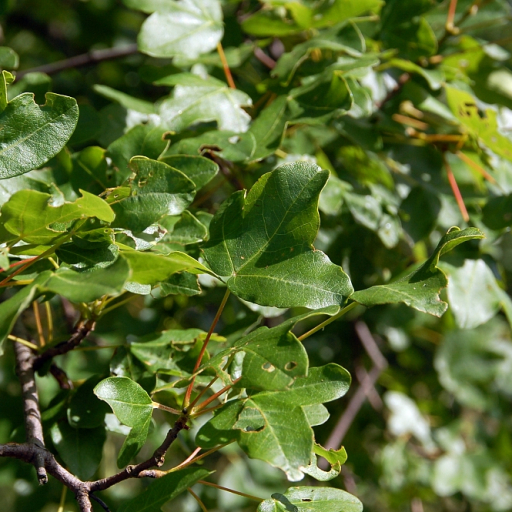
- 🍃 The Leaf Shape: Unlike the classic five-pointed maple leaf, this species has small, leathery leaves with exactly three rounded lobes, resembling a bird's footprint.
- 🌳 Bark Texture: When young, the bark is smooth and grey, but as the tree matures, it develops deep, attractive fissures and a rugged, dark brown character.
- 🚁 Winged Seeds: It produces "samaras" (helicopter seeds) where the two wings are held almost parallel to each other, rather than spreading wide like most other maples.
🏡 In Your Garden
- 🧱 Soil Specialist: This tree is a "calciphile," meaning it absolutely thrives in alkaline or lime-rich soils where other plants might struggle with chlorosis.
- ☀️ Drought Warrior: Once established, its deep root system allows it to survive long dry spells, making it an ideal choice for xeriscaping or Mediterranean-themed landscapes.
- ✂️ Pruning & Growth: Because it grows slowly and has naturally small foliage, it is one of the most popular deciduous species for the art of Bonsai, responding beautifully to careful shaping.
⚠️ Safety & Toxicity
- ✅ General Safety: The Montpellier Maple is considered non-toxic to humans and common household pets like cats and dogs.
- 🐴 Equine Caution: As with many members of the Acer genus, it is best to keep wilted leaves away from horse pastures, as some maple species can cause respiratory issues in equines if consumed in large quantities.
✨ Fun Fact
The Montpellier Maple is so long-lived and sturdy that its dense, heavy wood was historically used in Europe to craft high-quality tool handles and even early musical instruments!

Detailed Care Instructions
| Humidity | Dry |
| Lighting | Part Sun |
| Difficulty | Easy |
| Hibernation | Cold Period |
| Hardiness Zones | 5 - 8 |
To grow Acer monspessulanum, also known as Montpellier maple, follow these steps:
- Climate: Determine if your location is suitable for growing Acer monspessulanum. It is a Mediterranean tree that thrives in mild, temperate climates. It prefers full sun or partial shade.
- Soil: Acer monspessulanum prefers well-draining soil that is slightly acidic to neutral pH. If your soil is heavy clay, amend it with organic matter, like compost, to improve drainage.
- Planting: Choose a suitable location in your garden or yard. Dig a hole that is slightly larger than the tree's root ball. Place the tree in the hole, ensuring that the top of the root ball is level with the ground. Backfill the hole with soil, gently tamping it down. Water the tree thoroughly.
- Watering: While Acer monspessulanum is drought-tolerant once established, it still needs regular watering during its first year to establish its root system. Water deeply, but allow the soil to dry slightly between waterings to prevent overwatering.
- Mulching: Apply a layer of organic mulch, such as wood chips or bark, around the base of the tree. This helps retain moisture, suppress weeds, and regulate soil temperature.
- Pruning: Prune Acer monspessulanum in late winter or early spring to remove any dead, diseased, or damaged branches. You can also shape the tree to your desired form. Avoid heavy pruning as it can stimulate excessive growth and reduce its natural shape.
- Fertilization: Acer monspessulanum generally does not require regular fertilization, especially if planted in fertile soil. However, if you notice slow growth or pale leaves, you can apply a balanced slow-release fertilizer in early spring.
- Protection: Protect young Acer monspessulanum trees from strong winds or heavy frost. You can provide temporary windbreaks or add a layer of mulch around the base of the tree to insulate its roots during cold winters.
- Maintenance: Regularly monitor your Acer monspessulanum for pests and diseases. Common issues include aphids, scale insects, and leaf spot diseases. Promptly address any problems to prevent them from spreading.
By following these steps, you should be able to successfully grow Acer monspessulanum in your garden or yard. Remember to provide it with proper care, water, and protection to ensure its healthy growth.

Place in a bright room that is sun drenched almost all day. Or directly in a south-facing window.

To water this particular plant, it is important to consider the specific watering needs of the species. Generally, it is advisable to water these plants regularly but not excessively, as overwatering can lead to root rot and other issues. It is also important to ensure that the soil in which the plant is growing is well-drained and does not become waterlogged. In addition, when watering, it is advisable to use room temperature water rather than cold water, as this can shock the plant and potentially harm it. Finally, it is important to monitor the plant's moisture levels frequently and adjust the watering schedule as needed to ensure optimal growth and health.
To fertilize this plant, use a balanced fertilizer with equal amounts of nitrogen, phosphorus, and potassium. Apply the fertilizer in late winter or early spring before new growth begins. Use a slow-release fertilizer or a liquid fertilizer diluted according to package instructions. Avoid over-fertilizing, as this can lead to excessive growth and reduced plant health. Water the fertilizer in thoroughly after application.
The ideal soil for this particular plant species is a well-drained, fertile soil that is slightly acidic with a pH level between 5.0 to 6.5. The soil should be light and airy with good water-retention capacities. A sandy loam or a loamy soil with a good proportion of organic matter is preferred. The plant should not be grown in heavy clay soils or soils that are constantly saturated with water. The use of organic compost or leaf-mould as a soil amendment is highly recommended as it adds nutrients and improves soil structure. The soil should be kept moist but well-drained, and the plant should not be over-watered or allowed to dry out excessively. Care should be taken to ensure that the soil does not become waterlogged as this can lead to root-rot and other diseases. Overall, a well-drained, fertile, slightly acidic soil with good water-retention capacities is essential for the healthy growth of the plant.
To propagate this plant, start by collecting seeds from the parent plant. Once you have the seeds, you can soak them in water for a few hours to help soften the seed coat. After soaking, plant the seeds in a well-draining soil mix and cover with a thin layer of soil.
You can also propagate this plant via softwood cuttings. Take a cutting from the parent plant that is approximately 4-6 inches in length and remove the bottom leaves. Dip the cut end in rooting hormone and plant the cutting in a well-draining soil mix. Keep the soil moist and place the cutting in indirect sunlight. Roots should start to form in a few weeks.
Another option for propagation is to layer the plant. Identify a healthy, low-growing branch on the parent plant and bend it gently towards the ground. Make a small wound on the underside of the branch and cover with soil. After a few weeks, roots should start to form at the wound site. Once well-established, the layer can be cut from the parent plant and potted up.








