Plant Overview
Often called the Nippon Maple, this elegant deciduous tree is a hidden gem from the high-altitude forests of Japan. While its famous cousin, the Japanese Maple (Acer palmatum), is known for its delicate, lacy foliage, the Nippon Maple offers a much bolder, architectural presence. It is prized by collectors for its massive leaves and its dramatic transformation into a golden-yellow torch when the autumn chill arrives.
🔍 How to Identify
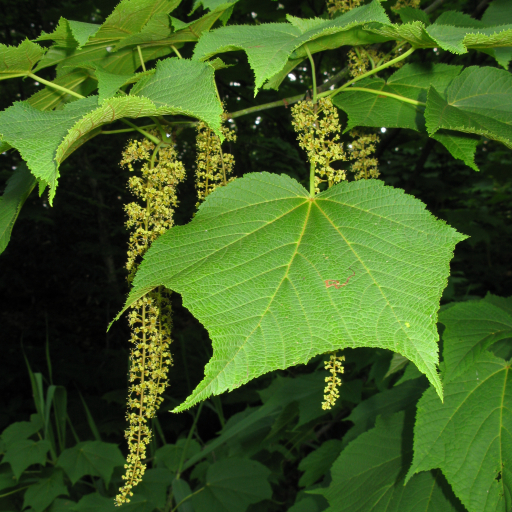
- 🍃 Large, Lobed Leaves: The leaves are impressively sized (often 6–10 inches across) with five shallow, pointed lobes. They feature a distinct heart-shaped (cordate) base and a slightly matte, textured surface.
- 🌼 Pendulous Flowers: In late spring, the tree produces long, drooping clusters called racemes. These yellow-green flowers hang elegantly from the branches, eventually turning into winged "helicopter" seeds (samaras).
- 🌳 Smooth Bark: The trunk and branches remain relatively smooth and gray-green for many years, providing a sleek, clean look in the winter garden compared to the rugged bark of other maple species.
🏡 In Your Garden
- 🌥️ The Shade Protector: Because its leaves are so large and thin, they are highly susceptible to "leaf scorch" in direct, harsh afternoon sun. This tree is the perfect candidate for a dappled-shade woodland garden where it can stay cool.
- 🍂 Acidic Preferences: It thrives in rich, slightly acidic soil that mimics the forest floor. It has a sensitive root system that dislikes being moved, so it is best to choose its "forever home" carefully and avoid frequent transplanting.
⚠️ Safety & Toxicity
- ✅ Safe for Pets & Kids: The Nippon Maple is generally considered non-toxic to humans, dogs, and cats. It is a safe, family-friendly choice for backyard landscaping.
- 🐴 Equine Caution: While specifically the Red Maple is the primary threat to horses, it is a general best practice in the botanical world to keep grazing livestock away from wilted maple leaves of any variety, as they can sometimes cause digestive distress.
✨ Fun Fact
🏔️ A Mountain Specialist: In its native Japan, you won't find this tree in the lowlands. It is a true specialist of the "montane zone," preferring the misty, cool air of mountain slopes at elevations between 1,500 and 6,000 feet!

Detailed Care Instructions
To grow Acer Nipponicum, also known as Nippon Maple or Miyama Maple, you can follow these steps:
- Choose a suitable location: Acer Nipponicum thrives in partial shade to full sun. Ensure the area has well-draining soil with a slightly acidic to neutral pH.
- Planting: Dig a hole that is slightly larger than the root ball of the plant. Place the plant in the hole, making sure the top of the root ball is level with the ground. Backfill the hole with soil, firming it gently.
- Watering: After planting, water the Acer Nipponicum thoroughly. Keep the soil consistently moist but not waterlogged. Avoid allowing the soil to become completely dry or overly saturated.
- Mulching: Apply a layer of organic mulch around the base of the plant to help retain moisture, suppress weeds, and protect the roots from temperature fluctuations.
- Pruning: Minimal pruning is required for Acer Nipponicum. However, you can remove any dead, damaged, or crossing branches in late winter or early spring.
- Fertilizing: Apply a slow-release balanced fertilizer in early spring to promote healthy growth. Follow the instructions on the fertilizer packaging for the correct application rate.
- Pest and disease control: Acer Nipponicum is generally resistant to most pests and diseases. However, occasional aphids, scale insects, or fungal leaf spots may occur. Inspect the plant regularly and take appropriate measures if necessary.
- Protection from extreme weather: During extreme weather conditions, such as strong winds or heavy snowfall, you may need to protect the young Acer Nipponicum plants with stakes or a temporary windbreak to prevent damage.
By following these steps and providing proper care, your Acer Nipponicum should grow into a healthy and beautiful plant.

Place in a bright room that is sun drenched almost all day. Or directly in a south-facing window.

To water the Acer nipponicum plant effectively, follow these guidelines:
1. Observe the soil: Before watering, check the moisture level of the soil. Insert your finger about an inch into the soil to feel for moisture. If the soil feels dry to the touch, it is an indicator that watering is required.
2. Watering frequency: Acer nipponicum generally requires regular watering throughout its growing season. Aim to water the plant once every 7-10 days, or as needed, depending on the environmental conditions.
3. Consider the climate: Assess the climate in your region to determine the watering needs of your Acer nipponicum. In hot and dry climates, more frequent watering may be necessary, while in cooler and more humid regions, less frequent watering might suffice.
4. Watering technique: When watering, provide a deep and thorough soak to the plant's root zone. Use a watering can or a gentle hose attachment to avoid excessive pressure that could damage the plant.
5. Watering amount: Acer nipponicum has shallow root systems, so it's crucial to water directly at the base of the plant, keeping the water concentrated around the root ball. Aim to provide enough water to penetrate the root zone but avoid excessive runoff.
6. Mulch to retain moisture: Consider applying a layer of organic mulch, such as wood chips or shredded bark, around the base of the plant. Mulch helps to prevent moisture evaporation, maintain soil temperature, and reduce weed growth.
7. Rainwater utilization: Whenever possible, consider using rainwater to water your Acer nipponicum. Rainwater is generally free from chemicals found in tap water, and its natural purity can benefit the overall health of the plant.
8. Fall and winter watering: As the colder months approach, gradually reduce the frequency of watering to prevent overwatering. During fall and winter, Acer nipponicum enters a dormant phase, requiring less water.
Remember, it's important to adapt these watering guidelines based on your specific growing conditions and the needs of your individual Acer nipponicum plant. Regularly monitor the plant's response to watering to ensure a healthy and thriving growth.
To fertilize Acer Nipponicum, follow these instructions:
- Choose a balanced, slow-release fertilizer with an NPK ratio of around 10-10-10 or 14-14-14.
- Start fertilizing the plant in early spring, just before new growth begins.
- Dilute the fertilizer according to the manufacturer's instructions to avoid over-fertilization.
- Apply the diluted fertilizer evenly around the base of the plant, ensuring it does not come into direct contact with the stems or leaves.
- Gently work the fertilizer into the top layer of soil, using a hand cultivator or rake, without disturbing the roots.
- Water the plant thoroughly after fertilizing to help distribute the nutrients and prevent any potential fertilizer burn.
- Repeat the fertilization process every 4-6 weeks during the growing season, typically from spring to early fall.
- Stop fertilizing in late fall, before the plant enters its dormant period.
- Monitor the plant's growth and adjust the fertilization schedule or amount if necessary, based on its specific needs and health.
- Always read and follow the instructions on the fertilizer packaging for the best results.
Acer nipponicum, a deciduous plant native to Japan, has specific soil requirements for optimal growth. It thrives best in well-draining soil that is rich in organic matter. The soil should have a slightly acidic pH level ranging from 5.5 to 7.5. This pH range is important for the plant's nutrient uptake and overall health.
The ideal soil composition for Acer nipponicum is a loamy or sandy loam soil, which provides a balance between water drainage and moisture retention. Loam soil retains enough moisture for the plant's roots to access water, but excess water is also efficiently drained to prevent waterlogging, which can lead to root rot.
To enhance the soil's fertility, organic matter such as compost or well-rotted manure can be incorporated. This improves the soil structure, adds essential nutrients, and enhances moisture retention. Additionally, organic matter promotes microbial activity in the soil, which aids in breaking down nutrients and makes them readily available to the plant.
When planting Acer nipponicum, it is essential to ensure good soil preparation. This involves loosening the soil to a depth of at least 15-20 inches and removing any weeds or debris. Amending the soil with organic matter during this process helps create the ideal growing conditions for the plant.
Regular soil testing can also be beneficial to monitor the soil's nutrient levels and pH balance. This information can guide you in making necessary adjustments, such as adding organic amendments or adjusting the pH if it falls outside the desired range for Acer nipponicum.
In summary, Acer nipponicum thrives in well-draining, slightly acidic soil with a pH range of 5.5 to 7.5. A loamy or sandy loam soil rich in organic matter promotes nutrient availability and moisture retention while preventing waterlogging. Proper soil preparation and occasional soil testing help ensure the plant's healthy growth and development.
Acer nipponicum, a deciduous tree or shrub native to Japan, can be propagated through several methods, such as seed propagation, softwood cutting, or grafting. Here's a detailed explanation of each method:
- Seed propagation:
- Collect mature seeds from a healthy Acer nipponicum plant during the fall season.
- Clean the seeds by removing any debris or attached fruit pulp.
- Soak the seeds in water for 24 hours to enhance germination.
- Fill seed trays or pots with a well-draining seed-starting mix. Plant one seed in each container, burying them about 1 inch deep.
- Place the containers in a cool location with indirect sunlight. Maintain soil moisture by misting with water when necessary.
- Germination typically occurs within 2-3 months, but it can be slow. Once seedlings have grown large enough to handle, transplant them into individual pots or a nursery bed.
- Collect mature seeds from a healthy Acer nipponicum plant during the fall season.
- Softwood cutting propagation:
- Select healthy, flexible green shoots from a mature Acer nipponicum plant in late spring or early summer.
- Cut 4-6 inch long stem cuttings, making sure to include at least two leaf nodes.
- Remove the lower leaves, leaving only a few leaves at the tip of the cutting.
- Optionally, dip the cut end in a rooting hormone to encourage root development.
- Fill a small container or propagation tray with a mixture of equal parts peat moss and perlite or vermiculite.
- Insert the cuttings about 1 inch deep into the potting medium.
- Place the container in a warm, humid environment with bright, indirect light.
- Mist the cuttings regularly to maintain humidity and prevent them from drying out.
- Roots should start forming within 4-6 weeks. Once rooted, transplant the cuttings into individual pots or a suitable growing medium.
- Select healthy, flexible green shoots from a mature Acer nipponicum plant in late spring or early summer.
- Grafting propagation:
- Collect scion wood (a young shoot or bud) from a desirable Acer nipponicum cultivar during late winter or early spring.
- Select a compatible rootstock from another Acer species or a young Acer nipponicum plant grown from seed.
- Make a slanted cut at the bottom of the scion and a corresponding cut on the rootstock, ensuring they fit together snugly.
- Wrap the grafted area tightly with grafting tape to secure the union.
- Place the grafted plant in a warm, humid environment, such as a greenhouse or propagating case.
- After a few weeks, once the graft has successfully fused, remove the tape and gradually acclimate the plant to outdoor conditions.
- Monitor the grafted plant closely during the first growing season, providing appropriate care and protection from extreme conditions.
Remember to label and keep track of your propagated Acer nipponicum plants to ensure you can identify and appreciate their unique characteristics.
- Collect scion wood (a young shoot or bud) from a desirable Acer nipponicum cultivar during late winter or early spring.








