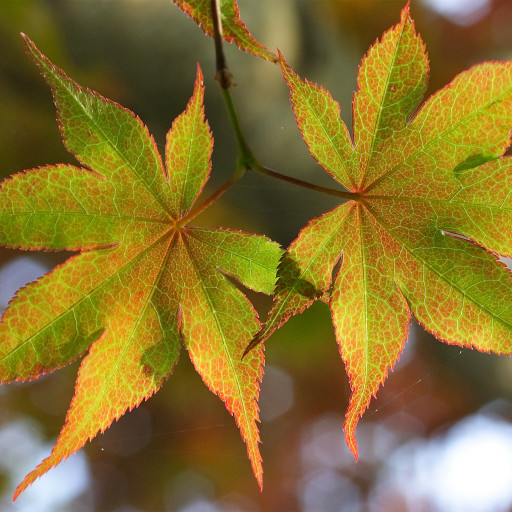
Plant Overview
The Acer palmatum, universally known as the Japanese Maple, is the crown jewel of the ornamental garden, often referred to as "The Artist’s Tree" for its sculptural form. In its native Japan, it is known as Irohamomiji, a name that references the "hand-like" shape of its leaves and their poetic transformation through the seasons. Whether standing as a weeping centerpiece or a vibrant upright accent, this tree is a living symbol of grace and Zen philosophy.
🔍 How to Identify
- 🍁 Palmate Leaves: The most iconic feature is the hand-shaped leaf, typically featuring five, seven, or nine pointed lobes that resemble outstretched fingers.
- 🌿 Layered Branching: These trees naturally grow in elegant, horizontal layers or cascading mounds, creating a delicate, "cloud-like" silhouette even when the leaves have fallen.
- 🚁 Winged Samaras: In late spring, the tree produces small, V-shaped winged seeds called samaras that spin like tiny helicopters as they catch the breeze.
🏡 In Your Garden
- 🌬️ Wind & Sun Protection: Japanese Maples have thin, delicate foliage that is highly prone to "leaf scorch." They thrive best in dappled shade where they are protected from the harsh afternoon sun and drying winds, which can turn their leaf edges crispy and brown.
- 💧 Soil & Drainage: They are sensitive to "wet feet" and require well-draining, slightly acidic soil. Because they have relatively shallow root systems, they hate being planted too deep or in compacted soil, which can suffocate the roots.
⚠️ Safety & Toxicity
- ✅ Safe Status: Good news for families and animal lovers—the Acer palmatum is generally considered non-toxic to humans, dogs, and cats.
- 🐾 Minor Caution: While not poisonous, consuming large amounts of any woody plant material can cause mild digestive upset in curious pets, so it is best to discourage them from chewing on the bark or fallen leaves.
✨ Fun Fact
In Japan, the tradition of Momijigari (red leaf hunting) is the autumn equivalent of cherry blossom viewing. People travel for miles to see the Acer palmatum forests transform into a sea of fire-red and deep gold, a practice that has been celebrated in Japanese poetry since the 8th century.

Detailed Care Instructions
The tree is not considered as invasive in the United States.
How can I tell what kind of Japanese maple tree I have?
Japanese maples are grouped by size and form (weeping, rounded, dwarf, mounding, upright, or cascading), leaf shape (palm-shaped or lacy), and leaf color (red, green, orange, purple, white, and pink, depending on the season) which can give you clues about the kind of tree you have.
Can the roots of a Japanese maple destroy a foundation?
Japanese maples have rather compact root systems that are not likely to damage a foundation but depending on the size of the variety or cultivar, plant larger ones no closer than 10 feet from the house.
| Color | Red Or Purple |
| Soil Ph | Slightly Acidic |
| Humidity | Normal |
| Lighting | Full Sun |
| Soil Type | Moist, Well-Drained |
| Bloom Time | Spring |
| Difficulty | Medium |
| Plant Type | Tree |
| Hibernation | Cold Period |
| Mature Size | 15 To 25 Feet Tall And Wide |
| Native Area | Japan, China, Korea, Parts Of Mongolia And Russia |
| Temperature | 15°C - 35°C |
| Sun Exposure | Filtered Sun To Part Shade |
| Hardiness Zones | 5–9 |
To grow Acer Palmatum (Japanese maple) plants, follow these steps:
- Choose a suitable location: Acer Palmatum thrives in partial shade, protected from strong winds. Select a spot with well-drained, moist soil that is slightly acidic.
- Prepare the soil: Amend the soil with organic matter such as compost or peat moss to improve drainage and fertility. Remove any weeds or grass from the planting area.
- Planting: Dig a hole that is twice as wide and as deep as the root ball of the plant. Gently remove the plant from its container and loosen the roots. Place the plant in the hole, ensuring that the root crown sits level with the soil surface. Backfill the hole with soil, firmly pressing it around the roots to remove air pockets.
- Watering: Water the newly planted Acer Palmatum thoroughly to settle the soil. Provide regular watering, especially during dry periods, to keep the soil consistently moist but not waterlogged. Provide a layer of mulch around the base of the plant to retain moisture and suppress weeds.
- Fertilization: Apply a balanced, slow-release fertilizer in early spring or early fall according to the manufacturer's instructions. Alternatively, use a well-balanced liquid fertilizer diluted with water throughout the growing season. Avoid fertilizing in late summer to prevent new growth being damaged by frost.
- Pruning: Prune Acer Palmatum plants during dormancy in late winter or early spring to shape and remove any dead, diseased, or crossing branches. Avoid pruning heavily as it can stress the tree.
- Protection: Protect the plant from direct sunlight and cold winds during the winter months, especially young or newly planted Acer Palmatum. You can use burlap or a windbreak to shield the tree.
- Diseases and pests: Watch for common diseases like leaf spot and verticillium wilt. Treat any issues promptly and, if necessary, consult a local garden center or professional for advice.
With proper care and attention, Acer Palmatum will provide beautiful foliage and add elegance to your garden.

Place in a window with dappled sun or a spot in the middle of a room. Or directly in a window facing west or east.

When providing water to this plant, it is essential to make sure that the soil is evenly moist and not waterlogged. Watering should be done deeply but infrequently, allowing the soil to dry out a bit between watering sessions. It is recommended to check the soil regularly by inserting a finger into the soil to measure the moisture level.
It is also important to water the soil directly and avoid getting water on the leaves as this can cause damage or disease. Additionally, using room temperature water is advisable as cold water can shock the roots and cause stress to the plant.
During hot and dry weather, the plant may require more frequent watering, while during colder months, it may not need as much water. It is also essential to note that different types of soil may affect the frequency of watering needed.
In summary, watering this plant involves giving it the right amount and frequency of water, checking soil moisture levels regularly, and avoiding getting water on the leaves.
For optimal growth and health, fertilize this plant during the spring and summer months with a slow-release fertilizer that is specifically formulated for acid-loving plants. Apply the fertilizer according to the manufacturer's instructions, taking care not to over-fertilize. During the dormant season, avoid fertilizing and instead focus on providing appropriate watering and maintenance. Additionally, periodically test the soil pH to ensure it remains within the optimal range for this type of plant, which is typically between 5.0 and 6.5.
When planting Acer Palmatum, it is recommended to use rich, acidic soil that is well-draining and has a pH level between 5.5-6.5. The soil should be a mixture of organic compost, peat moss, and coarse sand or perlite to ensure proper drainage. It is important to avoid heavy clay soils or soils that are prone to waterlogging, as this can cause root rot and other issues. Additionally, the soil should be enriched with a slow-release fertilizer to provide essential nutrients for the plant's growth and development.
To propagate this specific plant, you will need to take a stem cutting. First, locate a healthy and mature stem on the plant. Using a sharp and sterile pair of scissors or pruners, cut a 4-6 inch section of the stem. Remove any leaves or shoots from the bottom half of the cutting. Prepare a pot with well-draining soil and water it thoroughly. Dip the cut end of the stem in rooting hormone and insert it into the soil. Cover the pot with a plastic bag to create a humid environment, and keep the soil moist. Place the pot in a bright and warm location, but avoid direct sunlight. In a few weeks, new roots should begin to form. Once the new plant has established roots, it can be potted in a larger container or planted in the ground.
Common pests of the japanese maple include Spider mites, thrips, larvae. Make a habit of checking your japanese maple frequently for pests so that any infestations can be caught and managed early.








