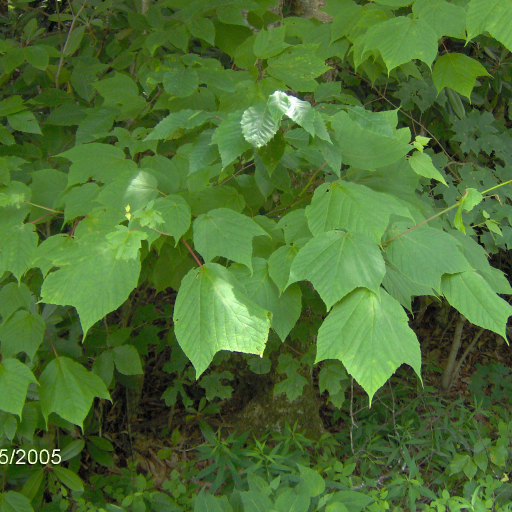
Plant Overview
Often called the "Striped Maple" or "Moosewood," Acer pensylvanicum is a true gem of the cool, northern woodlands. It earns its slithery nickname from its stunning green bark etched with white, vertical lines that resemble a snake’s skin. Unlike its towering maple cousins, this tree is a shy inhabitant of the forest floor, preferring the dappled shade of taller giants in the Appalachian and North American forests.
🔍 How to Identify
- 🍃 Goosefoot Leaves: The leaves are unusually large and thin, featuring three shallow lobes that look remarkably like the footprint of a goose.
- 🐍 Snake-Skin Bark: Young trunks and branches are smooth and bright green, marked by distinct, vertical white stripes that become deeper and more textured as the tree ages.
- 🔔 Drooping Blooms: In late spring, it produces elegant, pendulous racemes (hanging chains) of small, bell-shaped yellow flowers that sway gently in the breeze.
🏡 In Your Garden
- ☁️ The Shade Specialist: Because it is an understory tree by nature, it thrives in partial to full shade. It is a perfect choice for adding vertical interest to a woodland garden or a "dark corner" where other trees might fail.
- 💧 Cool Roots: This maple hates "hot feet." It requires cool, moist, and well-drained acidic soil. It struggles significantly in urban environments with high heat or heavy pollution.
- 🌱 Slow and Steady: It is a slow grower and rarely exceeds 30 feet in height, meaning it won't overwhelm your yard or require heavy pruning like larger maple varieties.
⚠️ Safety & Toxicity
- ✅ Safe Status: Acer pensylvanicum is considered non-toxic to humans, cats, and dogs.
- 🦌 Wildlife Favorite: While safe for pets, it is a favorite snack for deer and moose. If you live near a forest, you may need to protect young saplings with a fence to prevent them from being over-browsed.
✨ Fun Fact
The nickname "Moosewood" isn't just a coincidence—the tender, sugary bark and twigs are a vital winter food source for moose and white-tailed deer. In the spring, the inner bark was historically used by some to make a sweet, whistle-like instrument!

Detailed Care Instructions
| Lighting | Part Sun |
| Hardiness Zones | Max 7B |
To grow Acer pensylvanicum, also known as striped maple or moosewood, follow these steps:
- Select the planting location: Acer pensylvanicum prefers a partially shaded area with well-draining soil. It can tolerate full sun but may require more moisture. Avoid planting in areas with strong winds or hot, dry conditions.
- Prepare the soil: The soil should be amended with organic matter such as compost to improve drainage and fertility. Remove any weeds or grass from the planting area.
- Planting the tree: Dig a hole slightly wider than the root ball and deep enough for the tree to sit at the same level as it was growing in the container or nursery. Gently place the tree in the hole, ensuring that it is straight. Backfill the hole with soil, firming it gently around the root ball.
- Watering: After planting, water thoroughly to settle the soil and remove any air pockets around the roots. Provide regular watering during the first year to establish the tree, especially during dry periods.
- Mulching: Apply a layer of organic mulch, such as wood chips or shredded bark, around the base of the tree. This helps to retain moisture, suppress weeds, and regulate soil temperature.
- Pruning: Prune Acer pensylvanicum during the dormant season, typically in late winter or early spring before new growth begins. Remove any dead, damaged, or crossing branches. Prune for shape and to encourage an open canopy.
- Fertilizing: Acer pensylvanicum generally does not require regular fertilization if planted in well-amended soil. However, a balanced slow-release fertilizer can be applied in early spring to provide additional nutrients.
- Pest and disease control: Striped maple is relatively resistant to pests and diseases. However, regular monitoring for pest infestations and taking appropriate action, such as spraying horticultural oil or insecticidal soap, can help manage any issues.
- Provide adequate moisture: Ensure that the tree receives sufficient water during dry periods, especially during the first few years of establishment. Mulching can help retain moisture in the soil.
- Winter protection: In colder regions, protect the tree from winter damage by wrapping the trunk with burlap or using tree wraps. This will prevent sunscald and frost cracks.
With proper care, Acer pensylvanicum can thrive and grow into a beautiful tree, adding interest and diversity to your landscape.

Place in a dark room with little light, like a dark bedroom or a spot far away from a window or directly in a north-facing window.

To properly water this plant, it is important to first check the soil moisture level. Insert your finger into the soil up to the second knuckle to test for dampness. Only water the plant if the soil feels dry to the touch. When watering, pour water directly onto the soil at the base of the plant rather than over the leaves or into the air. Avoid over-watering as this can lead to root rot and other issues. It is best to water this plant deeply but infrequently rather than giving it small amounts frequently. In general, this plant prefers moist but well-draining soil. If the plant is growing in a container, make sure there is adequate drainage at the bottom of the pot to prevent water from standing.
To fertilize this plant, apply a balanced, slow-release fertilizer in early spring before new growth appears. Use a fertilizer with a nitrogen-phosphorus-potassium (NPK) ratio of around 10-10-10. Use a granular or liquid fertilizer according to package instructions and apply evenly around the base of the plant. Do not over-fertilize, as this can lead to excessive growth and a weaker plant overall.
The most suitable soil for Acer Pensylvanicum plants is a well-draining, loamy soil that has a slightly acidic to neutral pH level. The soil should also be rich in organic matter and nutrients. It is important to avoid soils that are too heavy or clayey as they can cause waterlogged conditions, which can lead to root rot. Sandy soils should also be avoided as they can dry out too quickly and fail to hold moisture. Organic matter, such as compost or well-rotted manure, can be added to the soil to improve its structure and increase nutrient levels. Mulching around the base of the plant can also help to retain moisture and regulate soil temperature. Regular fertilization with a balanced fertilizer can also ensure that the soil has sufficient nutrients to support healthy growth.
To propagate this plant, you will need to collect stem cuttings from a mature specimen. The stems should be about 4-6 inches in length and should have several nodes along the length of the stem. Remove any leaves from the bottom 2/3 of the stem.
Prepare a potting mix of equal parts perlite and peat moss. Dip the cut end of the stem into rooting hormone and then insert it into the potting mix. Water the cutting thoroughly and cover it with a clear plastic bag to create a humid environment.
Place the potted cutting in bright but indirect light. Check the cutting regularly and water as needed to keep the potting mix moist but not waterlogged.
In a few weeks, you should see new growth emerging from the top of the cutting. Once the roots have established themselves in the potting mix (usually within a few months), you can transplant the new plant into a larger pot or directly into the ground.








