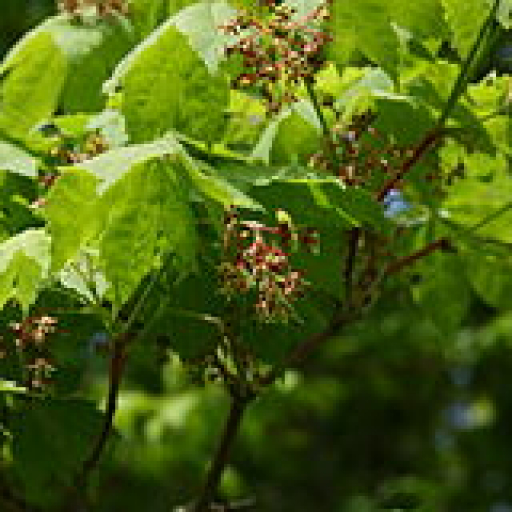
Plant Overview
Often called the Korean Maple, this elegant small tree is the secret weapon for gardeners living in chilly climates. While it mimics the delicate, airy beauty of the famous Japanese Maple, it possesses a rugged soul forged in the freezing mountains of Korea and China. It is a slow-growing masterpiece, beloved for its "purplebloom" spring flowers and a fall color show that transforms from fiery orange to deep, royal red.
🔍 How to Identify
- 🍃 The Leaves: Look for circular, palm-shaped leaves featuring 9 to 11 deep lobes. The edges are sharply toothed, giving the foliage a "crisp" and refined texture.
- 🌸 Purplebloom Flowers: In late spring, look for small, hanging clusters of white and purple flowers that appear just as the soft, downy new leaves begin to unfurl.
- 🪵 Layered Structure: It naturally grows as a multi-stemmed tree with a graceful, umbrella-like canopy that looks like it was plucked straight from a traditional landscape painting.
🏡 In Your Garden
- 🧊 The Cold-Hardy Hero: This tree is celebrated for its ability to survive temperatures as low as -30°F. It is the perfect choice for northern gardeners who want the "Japanese Maple look" but live in zones where those trees would typically freeze.
- 🌥️ Light & Wind Nuance: While hardy, its leaves are physically delicate. To prevent "leaf scorch" (brown, crispy edges), plant it in a spot protected from harsh afternoon sun and drying winter winds.
- 🌱 Root Sensitivity: The Korean Maple has a shallow, sensitive root system. It thrives in well-drained, slightly acidic soil. It hates "wet feet," so avoid planting it in low spots where water collects after rain.
⚠️ Safety & Toxicity
- ✅ Safe for the Family: The Korean Maple is considered non-toxic to humans, dogs, and cats. It is a very "neighborly" tree to have in a backyard where pets and children play.
- 🖐️ Pruning Caution: Like many maples, this tree can "bleed" sap if pruned in late winter or early spring. While the sap isn't harmful, it’s best to prune in mid-summer to late autumn to keep the tree healthy and the garden clean.
✨ Fun Fact
🎨 A Master of Disguise: Its scientific name, pseudosieboldianum, literally translates to "false Siebold’s Maple." It was given this name because it looks almost identical to the Acer sieboldianum found in Japan, though the Korean version is much tougher and more resistant to extreme frost!

Detailed Care Instructions
To grow Acer pseudosieboldianum, also known as the Korean Maple, follow these steps:
- Select a suitable location: The Korean Maple prefers a partly shaded area, especially during the hot afternoon hours. Choose a spot that receives morning sun and afternoon shade. The soil should be well-draining with a slightly acidic pH level.
- Prepare the soil: Prior to planting, prepare the soil by loosening it and removing any weeds or grass. Add organic matter such as compost or well-rotted manure to improve fertility and moisture retention.
- Planting: Dig a hole that is two to three times wider and slightly deeper than the root ball of the plant. Place the plant in the hole, ensuring that the top of the root ball is level with or slightly above the soil surface. Backfill the hole with soil, gently firming it around the roots.
- Watering: After planting, water the Korean Maple thoroughly to settle the soil and ensure proper root establishment. Water regularly, especially during dry periods, but avoid overwatering or letting the soil become waterlogged.
- Mulching: Apply a layer of organic mulch, such as wood chips or leaf compost, around the base of the plant. Mulching helps retain moisture, suppresses weed growth, and insulates the roots from extreme temperatures.
- Fertilizing: Use a slow-release, balanced fertilizer in early spring to promote healthy growth. Follow the manufacturer’s instructions for application rates.
- Pruning: Prune any dead, damaged, or crossing branches during the dormant season to maintain the desired shape and improve airflow within the canopy.
- Protect from extreme conditions: Korean Maples are generally hardy, but young plants may benefit from protection during extreme cold or hot temperatures. Provide additional shade in hot summers or cover young plants with burlap during freezing winters.
- Pest and disease control: Korean Maples are generally resistant to pests and diseases, but it is still important to keep an eye out for signs of issues such as aphids, scale insects, or fungal diseases. Promptly address any problems using appropriate control measures.
- Regular maintenance: Regularly check for water needs, weed control, and general health of the plant. Clean up fallen leaves and debris to prevent the spread of diseases.
With proper care and maintenance, your Acer pseudosieboldianum will gradually grow and develop into a beautiful and healthy plant.

Place in a bright room that is sun drenched almost all day. Or directly in a south-facing window.

Acer Pseudosieboldianum is a plant that belongs to the genus Acer. This plant requires watering to thrive and grow optimally. When watering this plant, it is important to consider the type of soil it is growing in as well as the weather conditions of the area it is planted.
To water this plant, ensure that the soil is not dry or waterlogged. The soil should be moist, so water moderately to keep the plant hydrated. Also, ensure that the water penetrates the root zone for optimal growth.
It is recommended to water Acer Pseudosieboldianum in the early hours of the day or late in the afternoon. Watering when the temperature is cooler helps to reduce water loss due to evaporation and prevents potential heat stress on the plant.
It is also important to avoid getting water on the leaves or flowers if possible. Wet leaves can lead to fungal diseases and also increase the risk of sunburn in hot climates.
Lastly, it is crucial to consider the drainage of the soil when watering Acer Pseudosieboldianum. The soil should not be waterlogged, as this can harm the plant's roots. Ensure that any excess water is allowed to drain freely from the soil to prevent root rot.
To fertilize this plant, use a balanced fertilizer with equal amounts of nitrogen, phosphorous, and potassium. Apply the fertilizer in early spring before new growth appears and again in late summer. It is important to not over-fertilize as this can lead to leaf burn and damage to the roots. Always follow the recommended dosage on the fertilizer package and water the plant thoroughly after applying the fertilizer.
The ideal soil for this plant is well-draining and fertile. It should be slightly acidic with a pH range of 5.5 to 6.5. A mix of loamy soil, peat moss, and sand can be used to create the ideal soil composition. The soil should also be moist but not waterlogged, as the plant can be sensitive to overly wet conditions. Adding organic matter such as compost can help improve soil quality and nutrient availability for the plant.
To propagate this plant, take stem cuttings from a healthy and well-established parent plant during its dormant period. The ideal time for taking cuttings is in late winter or early spring, before bud break.
Choose a healthy branch that is at least 6 inches long and has several nodes. Cut the stem at a slant with a sharp, clean knife, making sure to avoid crushing the stems. Remove any leaves or buds on the lower half of the stem.
Dip the cut end of the stem in rooting hormone powder to promote root growth. Plant the cutting in a potting mix that contains a mixture of peat moss and perlite. Firmly press the soil around the cutting to ensure good contact with the soil.
Water the soil well and cover the cutting with a plastic bag or clear plastic container to create a humid environment. Keep the soil moist, but not too wet to prevent rot.
Place the pot in a warm, well-lit area, but avoid direct sunlight. Check the cutting periodically for roots by gently tugging on it. Once the cutting has rooted and established, remove the plastic covering and move the plant to a larger pot or to its permanent location in the garden.








