Plant Overview
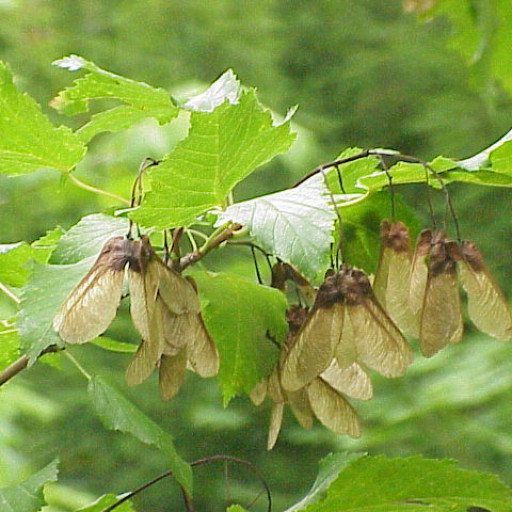
Often called the Tatarian Maple, this resilient beauty is a favorite for those who want the fiery drama of a maple without the finicky attitude of more delicate species. Originating from the rugged landscapes of Eastern Europe and Siberia, it is built for endurance, standing strong against harsh winds and bitter cold. In midsummer, it puts on a breathtaking show not with its flowers, but with vibrant red winged seeds that look like clusters of rubies dangling among the green leaves.
🔍 How to Identify
- 🍃 Leaf Shape: Unlike the classic "star-shaped" maple leaf, these are broadly ovate and usually unlobed (or very shallowly lobed) with a distinct double-toothed margin.
- 🌸 Fragrant Blooms: In late spring, it produces upright clusters of creamy-white flowers that are surprisingly fragrant—a rare treat, as most maple flowers have no scent.
- 🍒 Ruby Samaras: The "helicopter" seeds (samaras) turn a striking, brilliant red in mid-to-late summer, providing a "second season" of color long before the autumn foliage arrives.
🏡 In Your Garden
- 🪴 Adaptability King: This is the "problem solver" of the maple family. It thrives in challenging conditions where others struggle, easily handling dry, alkaline, or even slightly salty soils.
- ✂️ Growth Habit: It naturally grows as a multi-stemmed large shrub, making it a perfect choice for a "living screen" or privacy hedge, though it can be pruned into a charming small tree.
⚠️ Safety & Toxicity
- 🟢 General Status: Non-toxic to humans and common household pets like cats and dogs.
- 🐴 Equine Caution: While the Acer rubrum (Red Maple) is the primary danger to horses, it is a standard safety practice to keep any wilted maple foliage away from grazing areas to avoid potential digestive issues in livestock.
✨ Fun Fact
The Tatarian Maple is so hardy and wind-resistant that it was historically used in the "Great Plains Shelterbelt" project—a massive effort to plant trees across the American Midwest to stop soil erosion during the Dust Bowl era!

Detailed Care Instructions
| Lighting | Full Sun |
| Hardiness Zones | Max 8B |
To grow Acer tataricum (Tatarian maple) plants, you can follow these steps:
- Select a suitable planting location: Tatarian maples prefer full sun to partial shade and well-drained soil. Choose a spot in your garden that receives at least 6 hours of direct sunlight each day.
- Prepare the soil: Before planting, loosen the soil and remove any weeds or other vegetation. Ensure good drainage by incorporating organic matter, such as compost, into the soil.
- Dig a hole: Dig a hole that is slightly larger and deeper than the pot in which the Acer tataricum plant is growing. Place the plant in the hole, making sure the top of the rootball is level with the soil surface.
- Backfill the hole: Gently backfill the hole with soil, ensuring the plant is securely planted but not overly compacted. Use your hands to firm the soil around the plant.
- Water thoroughly: Give the newly planted Tatarian maple a good amount of water after planting to settle the soil and provide moisture for the roots. Provide regular watering during dry periods, especially in the first year of growth.
- Mulch and protect: Apply a layer of organic mulch, like wood chips or straw, around the base of the plant to help retain moisture and suppress weed growth. Leave a small gap between the trunk of the plant and the mulch to prevent rot.
- Prune if necessary: Tatarian maples generally have a neat, rounded shape, but occasionally pruning may be necessary to remove any dead, damaged, or crossing branches. Wait until late winter or early spring before new growth begins to prune. Trim the branches just above a bud or node.
- Fertilize sparingly: Tatarian maples typically don't require heavy fertilization. However, you can apply a slow-release balanced fertilizer in early spring if desired. Follow the manufacturer's instructions for the appropriate amount to use.
- Monitor for pests and diseases: Keep an eye out for common pests, such as aphids or scale insects, and treat them promptly. Also, watch for any signs of diseases like leaf spot or powdery mildew, and take appropriate action if necessary.
- Enjoy and maintain: Acer tataricum plants generally require minimal maintenance once established. Regularly monitor the plant's health, water it during dry spells, and enjoy its attractive foliage and, in some cases, vibrant fall colors.
Remember to check the specific growing requirements for your particular variety of Acer tataricum as they may vary slightly.

Place in a window with dappled sun or a spot in the middle of a room. Or directly in a window facing west or east.

To properly water Acer Tataricum, it is important to take into consideration its unique watering needs. One should first assess the soil to make sure it is not too dry. If it is, watering should be done slowly and deeply to allow the water to penetrate the soil and reach the roots. It is recommended to water the plant once a week during the growing season, and less often in the winter. When watering, avoid splashing the leaves as this can encourage disease. It is also important to allow excess water to drain away from the plant to prevent root rot. Additionally, if the plant is potted, make sure it has proper drainage holes and use a well-draining potting mix.
The plant should be fertilized in the early spring before new growth appears. Use a slow-release fertilizer with a balanced ratio of nitrogen, phosphorus, and potassium. Apply the fertilizer evenly across the root zone, avoiding direct contact with the stems or leaves. Water the plant thoroughly after fertilizing to help distribute the nutrients into the soil. Repeat the process once a year for optimal growth and health of the plant.
A suitable soil for Acer Tataricum should be well-draining and loamy, with a neutral to slightly acidic pH. It should be rich in organic matter, with good moisture retention capacity, to provide the tree with essential nutrients and moisture for optimal growth. The soil should also be free from compacted or heavy clay, as well as rocks or debris, which can impede root growth and development. It is recommended to amend the soil with compost or aged manure before planting to improve its overall quality and fertility.
Propagation of this plant is typically achieved through seed germination or stem cuttings. To propagate through seed germination, collect mature seeds in the fall and store them in a cool, dry place over the winter. In the spring, scarify the seeds (scratch the hard outer layer) and then soak them in water for 24 hours. Plant the seeds in moist potting soil and keep them in a warm, bright location until they germinate.
To propagate through stem cuttings, take 4- to 6-inch cuttings from the plant in the spring or early summer before the plant has produced flowers. Remove the bottom leaves and dip the cut end in rooting hormone powder. Plant the cutting in a sterile potting mix and keep it moist. To encourage rooting, cover the pot with plastic and keep it in a warm, bright location. Once the cutting has developed roots and new growth, it can be transplanted into a larger container or directly into the ground.








