Plant Overview
Known famously as Sweet Yarrow or English Mace, Achillea ageratum is a charming Mediterranean perennial that has graced European cottage gardens for centuries. Unlike the more common roadside yarrow, this species is prized for its brilliant, golden "button" flowers and its delightfully spicy fragrance. Historically, it was a staple in medieval gardens, valued both for its beauty and its curious culinary uses.
🔍 How to Identify
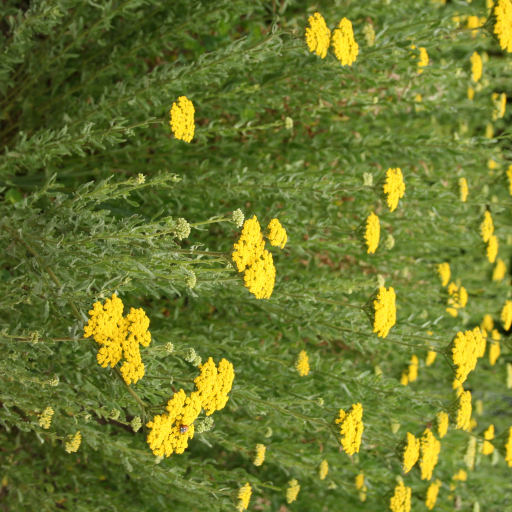
- 🌼 Flowers: It produces dense, flat-topped clusters of bright yellow, rayless florets that look like tiny, sun-drenched buttons.
- 🌿 Foliage: The leaves are narrow, lance-shaped, and distinctively serrated along the edges, offering a softer texture than the "fern-like" leaves of common yarrow.
- 👃 Scent: One of its most identifying features is the aroma; when the leaves are bruised, they release a sweet, spicy scent reminiscent of nutmeg or mace.
🏡 In Your Garden
- ☀️ Sun & Soil Nuances: This plant is a sun-worshipper and thrives in hot, dry spots. It is particularly sensitive to "wet feet," meaning it requires excellent drainage—if planted in heavy clay, it may struggle to survive the winter.
- ✂️ Growth Habit: It forms a tidy, mounding clump that spreads slowly via rhizomes. To keep it looking fresh, it is best to divide the plant every few years, as the center of the clump can become woody and sparse over time.
- 🐝 Biodiversity: It is an exceptional plant for "beneficials," attracting hoverflies and predatory wasps that help naturally control garden pests like aphids.
⚠️ Safety & Toxicity
- 🐾 Toxic to Pets: Achillea ageratum contains volatile oils and alkaloids that are toxic to dogs, cats, and horses. Ingestion can cause vomiting, diarrhea, and skin redness.
- 🛡️ Skin Irritation: Some individuals may experience contact dermatitis (a localized rash) when handling the foliage, especially if their skin is exposed to sunlight immediately afterward.
✨ Fun Fact
In 17th-century England, this plant was so common in kitchens that it was nicknamed "English Mace." Before tropical spices were easily imported, gardeners would chop the leaves into soups, stews, and rice dishes to mimic the warm, savory flavor of real mace!

Detailed Care Instructions
| Humidity | Normal |
| Difficulty | Medium |
| Hibernation | Cold Period |
| Temperature | 14°C - 30°C |
| Hardiness Zones | 6 - 9 |
To grow Achillea Ageratum plants, also known as 'Moonshine yarrow,' follow these steps:
- Choose a suitable location: Achillea Ageratum prefers full sun, so select a spot in your garden that receives at least 6 hours of direct sunlight per day. The soil should be well-draining, as these plants do not tolerate wet or soggy conditions.
- Prepare the soil: Before planting, loosen the soil and remove any weeds or grass. Work in some organic matter, such as compost or well-rotted manure, to improve soil fertility and drainage.
- Planting: Dig a hole slightly larger than the root ball of the plant. Place the Achillea Ageratum in the hole, making sure that the crown of the plant (where the stem meets the roots) is level with or slightly above the soil surface. Backfill the hole with soil, gently firming it around the plant.
- Watering: Give the plant a thorough watering after planting to settle the soil and help the roots establish. Afterward, water on a regular basis, providing enough moisture for the plant without over-saturating it. Aim for deep watering once a week, rather than frequent shallow watering.
- Mulching: Apply a layer of organic mulch around the base of the plant, such as wood chips or straw. Mulching helps retain moisture, suppress weeds, and regulate soil temperature.
- Fertilizing: Achillea Ageratum doesn't require much fertilizer, as excessive nutrients can lead to leggy growth and reduced flowering. However, you can apply a balanced slow-release fertilizer in spring or top-dress with compost for additional nutrients.
- Pruning: To promote bushier growth and encourage more blooms, deadhead the faded flowers regularly. Cut the flower stalks back to the nearest set of leaves or the base of the plant. Pruning can also be done in early spring to remove any dead or weak stems.
- Pest and disease control: Achillea Ageratum is generally resistant to pests and diseases. However, if issues arise, amend with organic pest control methods or consult a local garden center for appropriate treatments.
- Divide and propagate: Every few years, as the plant starts to overcrowd or decline in vigor, you can divide Achillea Ageratum in spring or fall. Dig up the clump, separate it into smaller sections, and replant them in well-prepared soil.
With proper care and attention, Achillea Ageratum plants will thrive and add beauty to your garden with their vibrant yellow flowers and aromatic foliage.

Place in a window with dappled sun or a spot in the middle of a room. Or directly in a window facing west or east.

To irrigate Achillea Ageratum plant, you should keep the soil moist but not waterlogged. It is recommended to water the plant deeply at least once a week, but it may require more frequent watering during hot and dry weather conditions.
Before watering the plant, feel the top layer of the soil to make sure it is dry to the touch. Then, slowly pour water at the base of the plant until the soil is completely saturated. Avoid getting the foliage wet, as this can lead to disease or pest problems.
You can also mulch around the plant to help retain moisture in the soil. Additionally, if the plant is potted, make sure there are drainage holes at the bottom to allow excess water to escape.
It is important not to overwater the plant, as this can lead to root rot and other issues. Always monitor the soil moisture level and adjust your watering habits accordingly.
To fertilize this plant, mix a slow-release granular fertilizer into the soil at the base of the plant in early spring. Water thoroughly after applying the fertilizer. Once the plant begins to grow, fertilize every 4-6 weeks with a water-soluble fertilizer mixed to half strength. Water the plant after fertilizing to help the nutrients penetrate the soil. Avoid fertilizing in late summer to fall to prevent stimulating new growth that may not have enough time to develop before winter.
The ideal soil to use for the Achillea Ageratum plant should be well-draining and nutrient-rich. It should have a pH range between 6 and 7.5. The soil should be a mixture of organic matter, such as compost or aged manure, and mineral soil, such as sandy loam.
It is recommended to add a slow-release fertilizer to the soil before planting, as the Achillea Ageratum plant requires regular feeding to thrive. The soil should be kept moist but not waterlogged, as this can cause root rot.
When planting the Achillea Ageratum, it is important to ensure that the soil is well aerated, and any clumps or rocks are removed to create a more even soil structure. Additionally, the plant prefers full sun exposure, so it is essential to choose a location that receives at least six hours of direct sunlight daily.
Overall, the soil that is used for the Achillea Ageratum plant should be well-balanced, providing adequate nutrients, water, and drainage to promote healthy growth and development.
One way to propagate this plant is through division. In late winter or early spring, dig up the plant and carefully separate the roots into smaller sections. Each section should have some roots and at least one shoot. Replant the sections in well-draining soil and keep them moist until they become established.
Another method of propagation is by stem cuttings. Take a 3-4 inch cutting from a healthy stem and remove the lower leaves. Dip the cut end in rooting hormone and plant in moist soil. Cover the cutting with plastic to create a mini greenhouse and keep it out of direct sunlight until roots form.
The plant can also self-seed, so if you want to encourage propagation, leave some of the spent flowers on the plant so they can produce seeds. The seeds can be collected and sown in the spring or fall.
It's important to note that different species of Achillea Ageratum may have slightly different propagation methods, so you should research the specific type that you have to ensure success.








