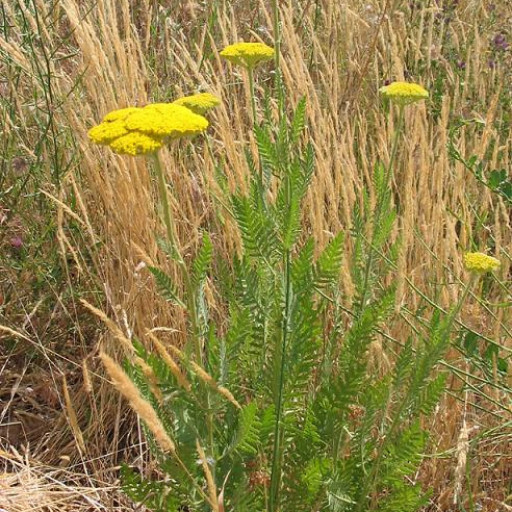
Plant Overview
Known as the "Fern-leaf Yarrow," this stately perennial is a golden beacon in the summer border. Unlike its smaller, wilder cousins, it stands with architectural grace, holding massive, flat-topped flower heads that look like sunny landing pads for traveling butterflies. It has long been a favorite for "everlasting" bouquets because its brilliant yellow hue refuses to fade, even months after being cut and dried.
🔍 How to Identify
- 🌿 Foliage: The leaves are deeply divided, feathery, and grayish-green, looking remarkably like the fronds of a fern and emitting a spicy, herbal scent when crushed.
- ☀️ Flower Heads: It produces dense, plate-like clusters (corymbs) of tiny mustard-yellow flowers that can span up to 5 inches across.
- 📏 Stature: This is a giant among yarrows, featuring stiff, hairy, upright stems that can reach 3 to 4 feet in height without flopping over.
🏡 In Your Garden
- 🏜️ The Leaner, The Better: This plant actually prefers "poor" soil. In overly rich or highly fertilized ground, the stems grow too fast and become weak, losing their signature architectural uprightness.
- 🦋 Pollinator Runway: The flat shape of the flower clusters is specifically designed by nature to act as a landing platform for beneficial insects like hoverflies, ladybugs, and parasitic wasps.
⚠️ Safety & Toxicity
- 🐾 Pet Sensitivity: Fern-leaf Yarrow contains sesquiterpene lactones and achilleine, which are toxic to dogs, cats, and horses if eaten, potentially causing vomiting or diarrhea.
- 🧤 Skin Irritation: Some people may develop a skin rash (phytophotodermatitis) when handling the leaves in bright sunlight; it is wise to wear gardening gloves when pruning large clumps.
✨ Fun Fact
🏛️ The genus name Achillea honors the Greek hero Achilles. According to legend, he used yarrow plants to treat the wounds of his soldiers during the Trojan War, a testament to the plant's ancient history as a medicinal herb.

Detailed Care Instructions
| Color | Red |
| Soil Ph | 5.5-8 |
| Lighting | Full Sun |
| Toxicity | Poisonous |
| Soil Type | Sandy, Loamy, Clay, Well-Draining |
| Bloom Time | June To September |
| Plant Type | Herbaceous Flowering Perennial |
| Mature Size | 3 Ft. Tall |
| Native Area | Northern Hemisphere Of Asia, Europe, And North America |
| Sun Exposure | Full Sun |
| Hardiness Zones | 3-9 |
To grow Achillea Filipendulina (also known as "Cloth of Gold"), you can follow these steps:
- Choose a suitable location: Achillea Filipendulina prefers full sun exposure, so make sure to select a planting site that receives at least 6 to 8 hours of direct sunlight each day. The soil should be well-draining.
- Prepare the soil: Achillea Filipendulina can tolerate a wide range of soil conditions but prefers fertile, loamy soil. Before planting, enrich the soil with organic matter, such as compost, to improve its fertility and drainage.
- Start with seeds or divisions: You can grow Achillea Filipendulina from seeds or divisions. If using seeds, sow them in early spring directly into the prepared soil. If using divisions, separate the plants in early spring or fall, ensuring each section has healthy roots.
- Planting: Dig a hole in the prepared soil that is slightly larger than the size of the rootball. Place the seedling or division into the hole, ensuring the crown of the plant (where the roots meet the stems) is level with the soil surface. Backfill the hole with soil and gently firm it around the plant.
- Watering: Initially, water the newly planted Achillea Filipendulina thoroughly to settle the soil around the roots. Afterward, water the plant once or twice a week, providing approximately an inch of water each time. As the plant establishes, it requires less frequent watering.
- Mulching: Apply a layer of organic mulch, such as straw or wood chips, around the base of the plant. Mulching helps retain soil moisture, suppress weed growth, and regulate soil temperature.
- Maintenance: Regularly deadhead the spent flowers to encourage continuous blooming throughout the growing season. Additionally, divide the plant every few years to prevent overcrowding and rejuvenate its growth.
- Pests and diseases: Achillea Filipendulina is generally resistant to pests and diseases. However, keep an eye out for issues like powdery mildew or aphids. If necessary, treat with appropriate organic or chemical solutions.
With proper care and maintenance, Achillea Filipendulina should grow well and reward you with beautiful golden blooms throughout the summer.

Place in a bright room that is sun drenched almost all day. Or directly in a south-facing window.

To water this plant, you should begin by determining whether the soil is dry or moist. You can do this by inserting your finger into the soil up to the first knuckle. If it feels dry, then the plant needs water.
When watering, it is important to avoid getting the leaves wet, as this can lead to disease. Instead, you should water the soil around the base of the plant using a watering can or hose with a gentle spray. Water until the soil is moist, but not saturated.
During particularly hot or dry spells, you may need to water this plant more frequently to prevent it from wilting or becoming stressed. However, be careful not to overwater, as this can lead to root rot and other issues.
In general, it is best to water this plant deeply and infrequently, rather than giving it frequent shallow watering. This will help encourage deep root growth and ensure that the plant is able to access water even during periods of drought.
To fertilize this plant, choose a balanced, slow-release fertilizer with equal amounts of nitrogen, phosphorus, and potassium. Apply the fertilizer in the spring just as new growth is beginning, following the recommended dosage on the package. Make sure to water the plant thoroughly before and after fertilizing. Avoid fertilizing late in the growing season, as it can encourage new growth that won't have time to harden off before winter.
Achillea filipendulina plant requires a well-draining soil with a pH level of 6.0 to 7.0. The soil should be fertile and rich in humus, with a good percentage of loam, sand, and organic matter for proper aeration. It should be capable of retaining moisture without becoming waterlogged, as the plant does not tolerate wet feet. Addition of compost or well-rotted manure before planting will improve soil quality and promote healthy growth. The use of a slow-release fertilizer is recommended to provide essential nutrients throughout the growing season. Avoid soils with a high clay content, which can lead to root rot and other problems.
To propagate this plant, you can take stem cuttings or divide the mature plant. If taking stem cuttings, choose a healthy, non-flowering stem and cut it at a 45-degree angle. Remove the lower leaves and dip the cut end in rooting hormone powder. Plant the cutting in a well-draining soil mixture and keep it moist. Place a plastic bag over the cutting to create a humid environment and place it in a bright, but not direct, light. Keep the soil moist and remove the bag once the cutting has rooted and starts to grow.
To divide the mature plant, dig it up and separate the roots into smaller sections. Each section should have at least two or three stems. Replant each section in a well-draining soil mixture and water thoroughly. Keep the soil moist and provide partial shade while the plant establishes itself. Once the plant is established, it can be treated like any other mature plant.
Common pests of the fernleaf yarrow include Aphids. Make a habit of checking your fernleaf yarrow frequently for pests so that any infestations can be caught and managed early.








