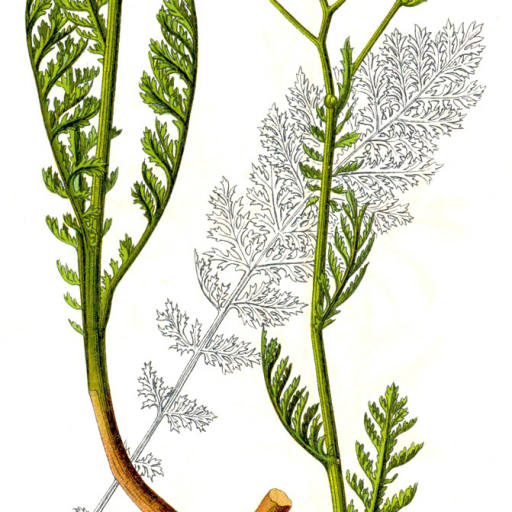
Plant Overview
Often called the Noble Yarrow, this plant is the more "elegant" cousin of the common field yarrow. Its name honors the Greek hero Achilles, who, according to legend, used the plant's feathery leaves to staunch the wounds of his soldiers during the siege of Troy. While its wild relatives can sometimes look unkempt, the Noble Yarrow stays compact and silver-toned, making it a favorite for moon gardens and rocky landscapes.
🔍 How to Identify
- 🌿 Lacy Foliage: The leaves are exceptionally fine and feathery, resembling delicate silver-green lace. They are more deeply divided and "toothed" than the common Achillea millefolium.
- 🌼 Dense Clusters: It produces small, creamy-white to pale-yellow flowers. These are packed into tight, flat-topped clusters (corymbs) that look like miniature, fuzzy buttons from a distance.
- 👃 Aromatic Scent: If you gently crush a leaf between your fingers, it releases a sharp, pleasant camphor-like aroma that is much stronger than other yarrow varieties.
🏡 In Your Garden
- ☀️ Drought Specialist: This plant is a true "tough love" specimen. It prefers poor, sandy, or rocky soil and actually loses its tidy shape if the soil is too rich or wet. It is the perfect choice for a sunny xeriscape or a rock garden.
- 🦋 The Landing Pad: The flat, sturdy flower heads act as perfect landing platforms for pollinators. You will frequently see butterflies and hoverflies resting on them to drink nectar in mid-summer.
- ✂️ Control the Spread: Unlike some yarrows that spread aggressively via underground runners, Achillea nobilis is a bit more polite, though deadheading (cutting off faded flowers) will keep it looking neat and prevent unwanted self-seeding.
⚠️ Safety & Toxicity
- 🐾 Pet Warning: Noble Yarrow is considered toxic to dogs, cats, and horses. If ingested, it can cause vomiting, diarrhea, and hypersalivation.
- 🧤 Skin Sensitivity: Some people may experience "yarrow dermatitis," a mild skin rash or itchiness, after handling the leaves. It is a good idea to wear gloves if you have sensitive skin or plan on doing heavy pruning in the sun.
✨ Fun Fact
In the Middle Ages, before hops became the standard for brewing, yarrow was used as a primary ingredient in "gruit"—a herbal mixture used to bitter and preserve beer. It was said that yarrow-ale was significantly more "invigorating" (and perhaps a bit more intoxicating) than the beer we drink today!

Detailed Care Instructions
To grow Achillea nobilis (noble yarrow) plant, follow these steps:
- Choose a suitable location: Select a sunny area in your garden with well-draining soil. The plant prefers full sun exposure but can tolerate light shade.
- Prepare the soil: Achillea nobilis thrives in soil that is not too clayey or too sandy. Improve the soil by adding organic matter, such as compost or well-rotted manure, to enhance fertility and drainage.
- Sow seeds or plant a nursery-grown starter: You can start Achillea nobilis from seeds or purchase young plants from a nursery. If sowing seeds, scatter them directly on the soil surface and lightly press them into the soil. Alternatively, if using nursery-grown plants, dig a hole large enough to accommodate the root ball and gently place the plant into the hole.
- Water properly: Water the newly planted seeds or plants thoroughly but avoid overwatering. Regular watering is required during the establishment phase. Once established, yarrow plants are fairly drought-tolerant and do not require consistent moisture.
- Mulch: Apply a thin layer of organic mulch, such as straw or wood chips, around the plant to help conserve moisture, suppress weed growth, and regulate soil temperature.
- Prune regularly: To keep the plant compact and promote bushier growth, deadhead faded flowers and trim back any leggy or straggly growth. Pruning will spur continuous blooming throughout the season.
- Fertilize as needed: Yarrow plants do not typically require heavy feeding. However, if the soil lacks fertility, you can apply a balanced, slow-release fertilizer once in early spring or use compost as a natural alternative.
- Divide the plant: After a few years of growth, the plant may become crowded and benefit from division. Dig up the clump, separate it into smaller sections, and replant them with adequate spacing.
- Pests and diseases: Achillea nobilis is relatively pest-resistant but can occasionally face issues like powdery mildew or aphids. Monitor the plant regularly and treat any issues with appropriate organic or chemical insecticides or fungicides if necessary.
- Enjoy the blooms: Once the plant is established, it will produce beautiful, flat-topped clusters of yellow flowers on upright stems. Enjoy the vibrant blooms and the wildlife they attract, such as butterflies and bees.

Place in a bright room that is sun drenched almost all day. Or directly in a south-facing window.

Watering instructions for a plant in the Achillea Nobilis family depend on the specific plant's location, soil type, and weather conditions. It is important to water the plant regularly during the growing season, making sure the soil doesn't dry out completely. However, too much water can lead to root rot and other problems.
Typically, it is best to water these plants deeply and infrequently. When watering, make sure to water the soil around the base of the plant, rather than getting the leaves wet. It is recommended to use a watering can, hose, or drip irrigation system rather than a sprinkler to avoid getting the leaves wet.
If the plant is located in a pot or container, it will need more frequent watering than those planted in the ground. The soil should be kept evenly moist but not waterlogged.
During periods of hot and dry weather, it may be necessary to water the plant more frequently. Conversely, during cooler and wetter periods, the plant may require less watering.
Overall, it is important to pay attention to the plant's individual needs when it comes to watering, and adjust as necessary. Proper watering will help the plant grow healthy and strong, producing beautiful blooms.
To properly fertilize this plant, it's best to use a balanced fertilizer with equal amounts of nitrogen, phosphorus, and potassium. Apply the fertilizer in the spring just as new growth begins, and then again in late summer or early fall. Be sure to follow the manufacturer's instructions for the proper amount to use. Over-fertilization can cause excessive foliage growth at the expense of flowers.
Achillea Nobilis plant prefers well-drained soil with a neutral to alkaline pH level. The soil should be fertile, rich in nutrients, and have good moisture retention ability. The recommended soil mix for this plant includes sandy or loamy soil with added organic matter like compost or well-rotted manure. The ideal soil texture needs to be loose and airy to allow for good drainage and to encourage root development. It is also important to avoid heavy clay soils as they retain too much moisture, which can lead to root rot or fungal diseases. Finally, it is recommended to fertilize the soil upon planting with slow-release fertilizers to provide the necessary nutrients for growth.
To propagate this plant, you will need to prepare a cutting from a healthy mature plant. Choose a stem that is at least 4 inches long and has several healthy leaves. Remove the lower leaves from the stem, leaving only a few leaves near the top. Dip the cut end of the stem in rooting hormone powder and then plant it in a pot filled with well-draining potting soil. Water the soil thoroughly, and then cover the pot with a plastic bag to create a humid environment. Place the pot in a bright location but out of direct sunlight. Keep the soil moist but not waterlogged. After about 3-4 weeks, you should see new growth emerging from the top of the stem, indicating that the cutting has successfully rooted. Remove the plastic bag and continue to care for the plant as you would for a mature plant.








