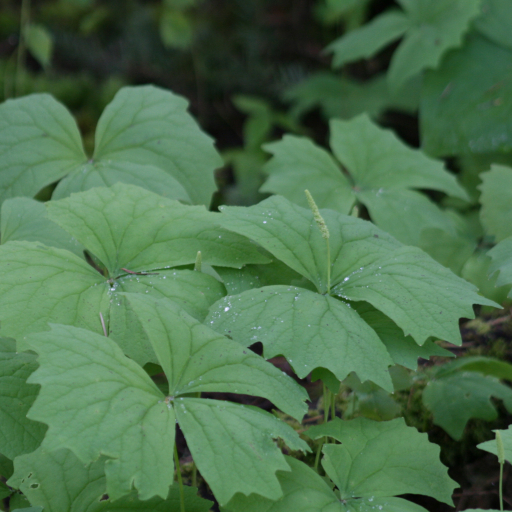
Plant Overview
Often called Vanilla Leaf, Sweet-after-death, or Deer-foot, this charming woodland perennial is a staple of the Pacific Northwest’s deep, shaded forests. It is famous among hikers not for its modest flowers, but for the intoxicating, sugary aroma of vanilla that wafts from its foliage as the leaves begin to dry at the end of the season.
🔍 How to Identify
- 🍃 The Triple Leaf: True to its name (triphylla), each leaf is divided into three distinct, fan-shaped leaflets with wavy, scalloped edges that vaguely resemble a deer's hoof print.
- ☁️ Petal-less Blooms: In spring, it sends up a thin, leafless stalk topped with a fuzzy white "bottle-brush" spike. Interestingly, these flowers have no petals at all—only tiny, protruding stamens.
- 🌱 Low Carpet Growth: It spreads via underground runners (rhizomes), creating a lush, horizontal green canopy that sits about 12 to 18 inches off the forest floor.
🏡 In Your Garden
- 🌲 Shadow Seeker: This plant is an obligate shade-lover. In a garden setting, it must be tucked under a thick tree canopy or on the north side of a building, as direct afternoon sun will quickly bleach and wither its delicate leaves.
- 💧 Rich & Moist: It craves "duff"—the spongy, organic layer of decomposing needles and leaves found in forests. It prefers soil that stays consistently moist; if the ground dries out completely, the plant will retreat into early dormancy.
⚠️ Safety & Toxicity
- ✅ Non-Toxic: Vanilla Leaf is considered safe and is not known to be poisonous to humans, cats, or dogs.
- 🦟 Natural Repellent: While safe to touch, the plant contains coumarin (which creates the vanilla scent). Native tribes traditionally dried the leaves and hung them in bundles or rubbed them on their skin to ward off flies and mosquitoes.
✨ Fun Fact
The nickname "Sweet-after-death" comes from the plant’s unique chemistry; the living green leaves have almost no scent at all. The signature vanilla fragrance is only released once the leaf tissues die and begin to dry out!

Detailed Care Instructions
To grow Achlys Triphylla plants, also known as Vanilla Leaf, follow these steps:
- Choose the right location: Achlys Triphylla plants prefer partial to full shade. Look for a spot in your garden that receives dappled sunlight or is sheltered from direct sunlight, especially during the hottest parts of the day.
- Soil preparation: Ensure that the soil is rich, moist, and well-draining. Achlys Triphylla plants prefer soil with a slightly acidic to neutral pH. You may need to amend the soil with organic matter like compost or peat moss to improve its texture and fertility.
- Planting: Achlys Triphylla can be propagated from seeds or division. If using seeds, sow them directly into the prepared soil in early spring or late fall. Alternatively, you can divide mature plants in early spring or late fall by carefully separating the clumps and replanting them.
- Watering: Keep the soil consistently moist, but not waterlogged. Check the moisture level regularly and water when the top inch of soil feels dry. Avoid overwatering as it can lead to root rot.
- Mulching: Apply a layer of organic mulch around the plant to help retain moisture and suppress weed growth. This will also provide insulation to the roots during extreme temperatures.
- Maintenance: Remove any dead or yellowing leaves to maintain plant health and aesthetics. Fertilize with a balanced organic fertilizer once or twice a year, following the package instructions.
- Pest and disease control: Achlys Triphylla plants are generally resistant to pests and diseases. However, keep an eye out for slugs, snails, and powdery mildew. Use organic pest control methods or appropriate treatments if necessary.
- Propagation: If you want to expand your Achlys Triphylla population, you can propagate them through division. As mentioned earlier, divide mature plants in early spring or late fall and replant the divided clumps.
Remember to consult local gardening resources or experts for any specific care instructions or considerations relevant to your region.

Place in a window with dappled sun or a spot in the middle of a room. Or directly in a window facing west or east.

To provide adequate hydration to this plant, it is important to regularly monitor the soil moisture levels. Check the soil frequently by inserting your finger about an inch into the soil. If it feels dry, or nearly dry, it is time to water the plant.
When watering, use a watering can or a gentle stream of water from a hose to avoid disrupting the soil and damaging the plant's roots. Water around the base of the plant, avoiding the leaves as much as possible.
Ensure that the soil is well-draining to prevent waterlogging and root rot. If the soil is clayey or compacted, consider amending it with organic matter to improve its quality.
During the growing season, water the plant regularly, at least once a week. However, during the dormant season, reduce watering to just enough to prevent the soil from completely drying out.
Avoid overwatering as it can lead to various problems such as fungal infections, root rot and pest infestations. On the other hand, underwatering can cause the plant to wilt and eventually die.
In summary, water this plant when the soil is dry, water at the base, avoid wetting the leaves, ensure good drainage, and adjust watering frequency according to the season.
To fertilize this plant, use a balanced fertilizer with equal amounts of nitrogen, phosphorus, and potassium. Apply the fertilizer in early spring before new growth appears. Be careful not to over-fertilize, as this can cause damage to the roots and decrease the plant's overall health. Water the plant thoroughly after fertilizing. Follow the manufacturer's instructions for the amount of fertilizer to use based on the size of your plant.
Achlys Triphylla prefers soil that is well-draining and rich in organic matter. It does well in soil with a slightly acidic to neutral pH, between 6.0 and 7.0. A mix of loam soil and leaf mold, or a high-quality compost, can provide the ideal growing conditions for this plant. The soil should be kept consistently moist but not soggy, and it should never be allowed to dry out completely. It is important to avoid using soil that is heavy in clay or sand as this can lead to poor drainage and root rot.
To propagate this plant, you will need to take a cutting from a healthy, mature plant. Choose a stem that is at least 4 inches long and has several leaves and nodes on it. Using a clean, sharp pair of scissors or pruning shears, make a clean cut just below a node on the stem.
Remove any leaves that are close to the bottom of the stem, leaving only the top few leaves intact. Dip the end of the stem in rooting hormone powder, tapping off any excess.
Prepare a small pot with a well-draining potting mix. Make a small hole in the center of the potting mix and insert the cutting, pressing down gently to ensure it is secure. Water the cutting well, making sure the soil is evenly moist but not waterlogged.
Cover the pot with a clear plastic bag or dome to create a humid environment for the cutting to root in. Keep the pot in a warm, bright location out of direct sunlight.
Check the soil regularly, and water as needed to keep it moist. After several weeks, gently tug on the cutting to see if it has rooted. Once you feel resistance, it is safe to remove the plastic bag or dome and continue caring for the new plant as usual.








