Plant Overview
Known as the Pink Cedar or Shingle Tree, the Acrocarpus fraxinifolius is a towering giant of the tropical world. While its name suggests a connection to cedars, it is actually a fast-growing legume that earns its nickname from the stunning, rose-colored "blush" of its new spring leaves. In its native Asian habitats, it is often used as a majestic shade provider for coffee and tea plantations, acting as a natural canopy for more delicate crops.
🔍 How to Identify
- 🌿 The Foliage: The leaves are "bipinnate" and closely resemble those of an Ash tree (hence the name fraxinifolius). The most striking feature is the new growth, which emerges in vibrant shades of bright pink, orange, or red before maturing into a deep, glossy green.
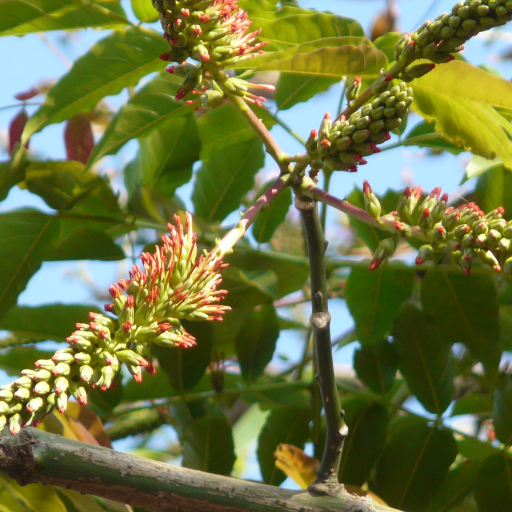
- 🌸 The Blooms: It produces dense, bottle-brush-like clusters of flowers that drip with nectar. These flowers are usually a fiery orange-red and appear on the bare branches just before the new leaves unfurl.
- 🪵 The Trunk: This is a massive tree with a straight, cylindrical trunk that can reach incredible heights. The bark is relatively smooth and light grey, often developing small "buttress" roots at the base as it matures to stabilize its weight.
🏡 In Your Garden
- 🌳 Space Requirements: This is not a plant for a small backyard or a container. Because it is a "pioneer species," it grows incredibly fast and needs massive amounts of vertical and horizontal space to thrive. It is best suited for large estates, parks, or reforestation projects.
- ☀️ Sun & Soil: It is a sun-worshipper that requires full light to maintain its rapid growth. While it isn't overly picky about soil, it demands excellent drainage; it hates having "wet feet" and may suffer from root rot if the ground stays waterlogged for too long.
⚠️ Safety & Toxicity
- 🟢 General Safety: The Pink Cedar is generally considered non-toxic to humans and common livestock. In fact, its leaves are often used as high-protein fodder for cattle in agricultural settings.
- 🐾 Pet Caution: While there are no specific reports of toxicity to cats or dogs, the sheer size of the falling seed pods and large leaves can be a choking hazard or a messy nuisance for curious pets.
✨ Fun Fact
The Acrocarpus fraxinifolius is often called the "Shingle Tree" because its wood is remarkably durable and easy to split into thin planks. Historically, its timber was the primary material used to make roof shingles in many parts of Southeast Asia!

Detailed Care Instructions
To grow Acrocarpus fraxinifolius, also known as the Pink Cedar, you can follow these steps:
- Climate and Soil: Acrocarpus fraxinifolius thrives in tropical and subtropical climates. It prefers well-drained soil that is rich in organic matter. The pH of the soil should be slightly acidic to neutral.
- Seed Collection and Preparation: Acrocarpus fraxinifolius produces bean-like pods that contain multiple seeds. Collect mature pods from the tree when they turn brown and start to split open. Remove the seeds from the pods and soak them in water for 24 hours before planting.
- Germination: Fill small nursery pots or seedling trays with well-draining potting mix. Plant the soaked seeds about 1 cm deep in the soil. Place the pots or trays in a warm and shaded area. Maintain slightly moist soil by regular watering. Germination can take anywhere from a few weeks to several months.
- Seedling Care: Once the seedlings emerge, provide them with filtered sunlight instead of direct sunlight, as they are sensitive to intense light. Regularly water the seedlings, keeping the soil evenly moist but not waterlogged. Gradually expose the seedlings to more sunlight over time.
- Transplanting: When the seedlings reach a height of about 30 cm (12 inches) and have developed a strong root system, they can be transplanted outdoors. Choose a sunny location with well-draining soil. Dig a hole large enough to accommodate the root ball and gently place the seedling in it. Firm the soil around the base of the seedling and water thoroughly.
- Growth and Maintenance: Acrocarpus fraxinifolius is a fast-growing tree, reaching heights of 25-40 meters (82-131 feet). Regular watering is recommended, especially during dry periods. Applying organic mulch around the base of the tree can help retain moisture and suppress weed growth. Pruning may be required to promote good branch structure and remove any dead or damaged branches.
Remember that Acrocarpus fraxinifolius is a large tree and needs ample space to grow. It is also important to comply with any local regulations or restrictions regarding tree planting.

Place in a bright room that is sun drenched almost all day. Or directly in a south-facing window.

To properly water this particular plant, it is important to consider its specific watering needs and environment.
First, check the soil moisture level by sticking your finger into the soil about an inch deep. If it feels dry, it is time to water.
Next, slowly pour water into the soil until water starts to drain out of the bottom of the pot.
Avoid watering the leaves or trunk of the plant as this can encourage disease and pests.
The frequency of watering will depend on factors such as the temperature, humidity, and amount of sunlight the plant receives.
It is important to allow the soil to dry out slightly between watering but not completely dry out as this can cause stress to the plant.
To fertilize this plant, use a balanced fertilizer with equal parts nitrogen, phosphorus, and potassium. Apply the fertilizer around the base of the plant, avoiding contact with the trunk or foliage. Water the plant thoroughly after fertilizing to help the nutrients penetrate the soil. Fertilize every two months during the growing season, reducing frequency during the winter months. Be sure to follow the manufacturer’s instructions for proper application rates and timing.
Acrocarpus Fraxinifolius plant requires a well-draining soil that is rich in nutrients. It prefers a soil that is slightly acidic with a pH range of 5.5-6.5. The soil should be loamy and have good water retention capacity. This plant has an extensive root system and can tolerate a variety of soil types, provided the soil is not too compacted or waterlogged. Adding organic matter such as compost or well-rotted manure can help improve soil structure, nutrient content, and water retention. Avoid using heavy clay or sandy soil as they can inhibit root growth and reduce plant vigor. Adequate drainage is essential to prevent waterlogging and root rot, which can be fatal to the plant.
Acrocarpus Fraxinifolius can be propagated through vegetative cuttings. First, select a healthy mature plant, and take a cutting from the stem that is about 6-8 inches long. Remove any leaves from the bottom 2/3 of the cutting, and dip the cut end in rooting hormone powder.
Prepare a pot with well-draining soil mixture and make a small hole in the center. Insert the cutting into the hole and gently press the soil down to secure it in place. Water the soil until it is moist but not soaked and place the pot in a well-lit area that receives indirect sunlight.
Cover the pot with a clear plastic bag or a plastic wrap and secure it in place with a rubber band. This will create a mini greenhouse that will help retain moisture and humidity around the cutting, aiding in the rooting process.
Check the pot regularly for soil moisture and remove the plastic covering once roots start to emerge. Once the rooted cutting has grown enough to handle, it can be transplanted into a larger pot or planted in the ground outdoors.








