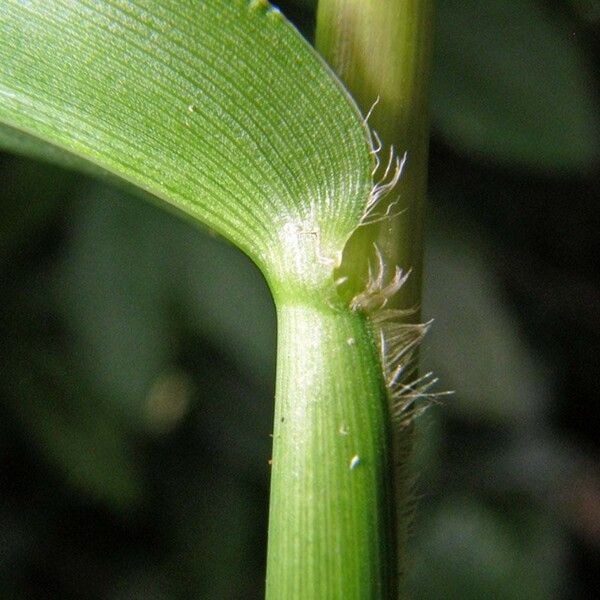
Plant Overview
Commonly known as Oat-seed Grass or Highland Grass, Acroceras zizanioides is a moisture-loving perennial that thrives where other grasses might drown. Native to the tropical regions of Africa and Asia, it has traveled the globe, often found weaving a lush green carpet along riverbanks and shaded forest floors. It gets its nickname from its elegant seed heads, which bear a striking resemblance to cultivated oats.
🔍 How to Identify
- 🌿 The Foliage: The leaves are lance-shaped (broad at the base and tapering to a point) and often feature a slightly "pleated" or wavy texture along the edges, making them look softer than typical lawn grass.
- 🛤️ Growth Habit: This plant is a "creeper." Its stems (culms) often lie flat against the ground, rooting at the joints (nodes) to create a dense, sprawling mat.
- 🌾 Seed Panicles: The flowering tops consist of several spiked branches. Each little seed packet is plump and smooth, mimicking the look of a wild oat grain.
🏡 In Your Garden
- 💧 The Moisture Lover: Unlike many grasses that demand well-drained soil, this species is a specialist in dampness. It is perfect for those "problem spots" in a yard that stay soggy or near the edges of a backyard pond.
- ☁️ Shade Tolerance: While most turf grasses turn yellow without direct sun, Acroceras zizanioides is remarkably shade-tolerant. It uses its broad leaves to soak up limited light under the canopy of larger trees.
- 🏃♂️ Space Management: Because it roots at every node, it can be quite assertive. If you are planting it as ground cover, be prepared to give it boundaries, or it will happily wander into neighboring flower beds.
⚠️ Safety & Toxicity
- ✅ Status: Generally Non-Toxic.
- 🐾 Pet Safety: This grass is not known to be poisonous to cats, dogs, or horses. In fact, in many parts of the world, it is highly valued as high-quality forage for livestock.
- 🌱 Invasive Potential: While safe to touch and eat (for animals), its "safety" risk is primarily ecological. In some tropical regions outside its native range, it can be a bit too successful, crowding out delicate local wildflowers.
✨ Fun Fact
The specific epithet zizanioides actually means "resembling Zizania." Zizania is the genus for Wild Rice! It was named this way because early botanists were struck by how much this humble forest grass looked like the tall, grain-bearing rice found in marshes.

Detailed Care Instructions








