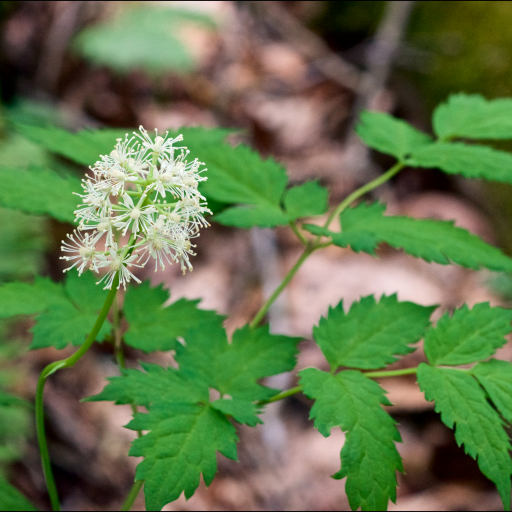
Plant Overview
Often called "Doll's Eyes" for its eerie, stare-back berries, Actaea pachypoda is a captivating woodland perennial native to eastern North America. This plant is a favorite for shade gardeners who enjoy a touch of the macabre or a "curiosity cabinet" aesthetic in their landscape. While it looks like something out of a Tim Burton film, it is a hardy member of the buttercup family that thrives in the quiet, damp corners of the forest.
🔍 How to Identify
- 👁️ The Fruit: Small, white, oblong berries with a single dark purple or black dot at the end, strikingly similar to a porcelain doll’s eye.
- 🔴 The Stalks: The berries are held aloft on thick, vibrant reddish-pink stems (pedicels) that become more intensely colored as the fruit matures.
- 🌿 The Foliage: Large, compound green leaves with sharply toothed edges and deep lobes, giving the plant a lush, fern-like appearance even when not in fruit.
🏡 In Your Garden
- 🌑 The Shade Specialist: This is a true "understory" plant, meaning it thrives in the dappled light of woodland gardens. It is perfect for those "difficult" shady spots where other flowering plants might struggle.
- 🍂 Soil Nuance: It prefers "forest floor" conditions—rich, moist, and well-draining soil. Adding leaf mold or organic compost mimics its natural habitat and helps the plant establish a strong root system.
⚠️ Safety & Toxicity
- 💀 Highly Toxic: The name "Baneberry" is a literal warning. All parts of the plant, especially the berries and roots, contain cardiogenic toxins that can have a sedative effect on cardiac muscle tissue.
- 🚫 Keep Away: The berries are deceptively attractive to children. It is strongly recommended to plant this in a restricted area of the garden if you have curious pets or young kids, as ingestion is extremely dangerous.
✨ Fun Fact
- 🐦 Immune Avians: While the berries are lethal to humans and most mammals, birds are completely immune to the toxins. They eat the berries and help the plant reproduce by dispersing the seeds throughout the woods!

Detailed Care Instructions
| Color | White |
| Soil Ph | 6.8 To 7.5 |
| Humidity | Normal |
| Lighting | Part Sun |
| Toxicity | Poisonous |
| Soil Type | Rich, Well-Drained |
| Bloom Time | Spring |
| Difficulty | Medium |
| Plant Type | Herbaceous Perennial |
| Hibernation | Cold Period |
| Mature Size | 18 To 24 Inches Tall And 2 To 3 Feet Wide |
| Native Area | North America |
| Sun Exposure | Part Shade To Full Shade |
| Hardiness Zones | 3 To 8 |
To successfully grow Actaea pachypoda, also known as doll's eyes or white baneberry, follow these steps:
- Choose a suitable location: These plants prefer partially shaded areas with moist and well-drained soil. Select a spot that receives morning sunlight but is protected from harsh afternoon sun.
- Prepare the soil: Actaea pachypoda thrives in rich, organic soil. Amend the soil with compost or well-rotted manure before planting to improve fertility and drainage.
- Planting: Dig a hole slightly larger than the root ball of the plant. Place the plant in the hole, making sure it is at the same depth as it was in its nursery container. Backfill the hole with soil and gently firm it around the plant.
- Watering: Actaea pachypoda requires consistent moisture to grow well. Water deeply after planting and maintain regular watering throughout its growing season. Avoid overwatering, as soggy soil can lead to root rot.
- Mulching: Apply a layer of organic mulch around the plant to retain moisture, suppress weed growth, and insulate the roots. It also helps to keep the soil cool during hot weather.
- Fertilizing: Actaea pachypoda typically does not require heavy fertilization. However, you can apply a slow-release balanced fertilizer in early spring to provide necessary nutrients. Follow the instructions on the fertilizer packaging for application rates.
- Pruning: Prune any dead or damaged stems in early spring before new growth appears. This will help maintain the plant's health and appearance.
- Division: Actaea pachypoda can be divided in early spring if the plant becomes overcrowded. Dig up the plant, carefully separate the clumps into smaller sections, and then replant them at the desired location.
- Pests and diseases: Actaea pachypoda is relatively resistant to pests and diseases. However, occasional issues like slugs, aphids, or powdery mildew can occur. Regular inspection and treatment with organic pest control solutions can be helpful when necessary.
By following these steps and providing suitable growing conditions, you can successfully grow Actaea pachypoda plants.

Place in a window with dappled sun or a spot in the middle of a room. Or directly in a window facing west or east.

Actaea Pachypoda is a plant that requires regular watering, especially during its growing season. It is recommended to water the plant deeply, so the roots can get enough water and reach deep into the soil. You can check if the soil is dry by inserting your finger about an inch into the soil. If it feels dry, it is time to water the plant.
When watering, make sure to avoid getting water on the leaves and instead water the soil around the base of the plant. During hot summer days, Actaea Pachypoda may require more frequent watering.
It is important not to overwater the plant as this can lead to root rot and other problems. The soil should be moist but not waterlogged. To avoid this, make sure the soil has proper drainage. You can mix the soil with sand or perlite to improve drainage.
During the winter months, Actaea Pachypoda goes dormant, and its watering needs reduce. You can water the plant sparingly, only when the soil starts to feel dry.
Regular monitoring and proper watering can help Actaea Pachypoda to thrive and grow healthy.
To fertilize this plant, provide a balanced fertilizer with equal amounts of nitrogen, phosphorus, and potassium. Apply the fertilizer in the spring and again in the fall. Avoid over-fertilization, as excessive nitrogen can cause the plant to grow too quickly and become weak. Always follow the instructions on the fertilizer package and water the plant well after fertilizing.
Actaea Pachypoda plant prefers a well-drained soil that is rich in organic matter. The soil should be moist but not waterlogged, and it should have a pH range of 5.5 to 7.5. A mixture of loamy soil and compost is ideal for this plant. It is important to avoid soils that are heavy and clay-like, as they tend to retain too much moisture and can cause root rot. Additionally, the soil should be free of any contaminants such as pesticides or herbicides, as they can harm the plant's growth and development.
Actaea Pachypoda plant can be propagated through several methods, which include division, seed propagation, or stem cutting propagation. Firstly, division propagation involves separating the parent plant into smaller sections and replanting them to create new plants. For this method, carefully dig up the parent plant and use a sharp knife to cut the roots into smaller sections. Ensure each section has a portion of the stem and leaves. Then plant each section in new soil and water it.
Secondly, the seed propagation method involves collecting the seeds from the parent plant and sowing them in well-draining soil. Start by cleaning the seeds and drying them well in the sun. Once dry, gently press them into the soil and cover them mildly. Water the soil regularly but be careful not to overwater it. The seeds will germinate in a few weeks.
Lastly, stem cutting propagation involves taking a healthy stem cutting from the parent plant, ensuring that there are a few leaves and no flowers on it. Then, dip the bottom section of the stem in rooting hormone powder and plant the stem in well-draining soil. Cover it with a plastic bag to retain moisture and keep the humidity level high. With time, new roots will develop, and a new plant will grow.
Common pests of the white baneberry include Spider mites. Make a habit of checking your white baneberry frequently for pests so that any infestations can be caught and managed early.








