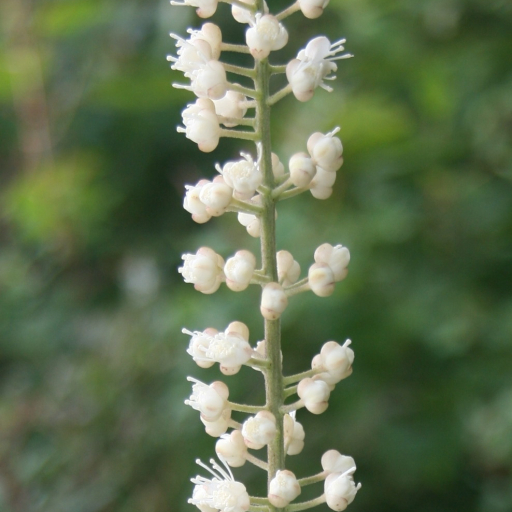
Plant Overview
Known as "Fairy Candles" for its luminous, tall white flower spikes, Actaea simplex is a dramatic late-season performer that brightens up the darkest corners of the garden. Native to the woodlands of East Asia, it has long been prized by gardeners for its architectural height and the ethereal, honey-scented fragrance it releases in the autumn air. It is the perfect choice for those seeking a touch of gothic elegance or a vertical "wow" factor in shaded landscapes.
🔍 How to Identify
- 🕯️ Flower Spikes: Long, slender racemes that arch gracefully, covered in tiny, fluffy white or pale pink flowers that resemble glowing wands.
- 🌿 Lacy Foliage: Deeply cut, fern-like leaves that form a dense mound. Depending on the variety, the foliage can range from a vibrant forest green to a deep, moody purple-black.
- 📏 Stately Stature: A clumping perennial that stands tall—often reaching 4 to 6 feet—providing a high-contrast backdrop for shorter woodland plants.
🏡 In Your Garden
- 💧 Thirst for Moisture: This plant is a "canary in the coal mine" for soil moisture. It hates drying out; if the soil becomes too parched, the delicate leaf edges will crisp and turn brown almost immediately.
- 🌥️ Shadow Play: While many flowering plants crave the sun, Actaea simplex thrives in dappled shade. In fact, in hotter climates, the dark-leaved varieties need protection from the afternoon sun to prevent their beautiful pigments from bleaching.
- 🐢 Slow and Steady: It is a slow grower that resents being moved due to its deep root system. Choose its "forever home" carefully, as it may take a season or two to fully establish and reach its impressive flowering height.
⚠️ Safety & Toxicity
- 🚫 Toxic if Ingested: All parts of the plant, including the roots and berries (if they form), contain compounds that are poisonous to humans and animals.
- 🐾 Pet & Child Warning: Keep this plant out of reach of curious pets or toddlers. Ingestion can lead to severe stomach upset, vomiting, and in rare cases, more serious neurological reactions.
- 🧤 Skin Sensitivity: The sap can be a mild irritant to those with sensitive skin. It is best to wear garden gloves when pruning or dividing the plant.
✨ Fun Fact
The common name "Bugbane" refers to the plant's historical use as an insect repellent. The flowers emit a distinct scent that, while pleasant to many humans (resembling wild grapes or honey), was once believed to drive away various pests, including bedbugs!

Detailed Care Instructions
To grow Actaea simplex, also known as baneberry or black cohosh, follow these steps:
- Choose a suitable growing location: Actaea simplex prefers partial to full shade, and moist, well-draining soil. It can tolerate some sun, especially morning sun, but should be protected from hot afternoon sun.
- Prepare the soil: Before planting, loosen the soil and amend it with organic matter like compost to improve drainage and fertility. Remove any weeds or debris from the planting area.
- Planting: Dig a hole slightly larger and deeper than the plant's root ball. Place the Actaea simplex in the hole, making sure the top of the root ball is level with or slightly above the soil surface. Backfill the hole with soil, gently firming it around the roots.
- Watering: After planting, water the Actaea simplex thoroughly and maintain consistent moisture for the first few weeks until it becomes established. Afterwards, water regularly and deeply during dry spells, but avoid overwatering or allowing the soil to become waterlogged.
- Mulching: Apply a layer of mulch, such as wood chips or leaf litter, around the plant to conserve moisture, suppress weed growth, and insulate the soil.
- Fertilizing: Actaea simplex generally does not require much fertilization. However, a slow-release organic fertilizer can be applied in early spring or a balanced liquid fertilizer can be used during the growing season to boost growth and flowering.
- Pruning: While Actaea simplex does not require heavy pruning, you can remove dead or damaged foliage in early spring before new growth appears. This can also help improve airflow and reduce the risk of disease.
- Pests and diseases: Actaea simplex is relatively resistant to pests and diseases. However, it can occasionally attract aphids, slugs, and snails. Monitor the plants regularly and take appropriate action if necessary.
- Division: After a few years, Actaea simplex can become overcrowded. To maintain vigor and promote better growth, you can divide the plant in early spring or fall. Dig up the plant, separate the root ball into smaller sections, and replant them at the same depth as before.
- Winter care: Actaea simplex is cold hardy and generally requires minimal winter protection. However, you can apply a layer of mulch around the base of the plant in late fall to insulate the roots against freezing temperatures.
By following these steps, you can successfully grow Actaea simplex and enjoy its beautiful flowers and foliage in your garden.

Place in a window with dappled sun or a spot in the middle of a room. Or directly in a window facing west or east.

Watering Actaea Simplex plants is a crucial aspect of their care routine. Here are some details on how to properly water these plants:
1. Soil Moisture: Actaea Simplex plants require consistently moist soil. It is essential to keep the soil evenly moist but not excessively wet. Aim for a moist feel when touching the soil, similar to a wrung-out sponge.
2. Watering Frequency: Generally, Actaea Simplex plants benefit from regular watering. During the growing season, water them deeply once or twice a week to ensure proper hydration. However, it is crucial to adjust the watering frequency depending on factors such as weather conditions, soil type, and plant size.
3. Watering Method: When watering Actaea Simplex plants, it is best to use a gentle watering technique that allows the water to reach the root zone without causing any damage. Consider using a watering can or a hose with a gentle spray nozzle to avoid disturbing the plant's roots.
4. Watering Time: Water Actaea Simplex plants early in the morning or late in the evening to minimize water loss due to evaporation. This allows the plants to efficiently absorb and utilize the water.
5. Mulching: Apply a layer of organic mulch around Actaea Simplex plants to help retain soil moisture. Mulch acts as a protective barrier, preventing excessive water evaporation and keeping the soil consistently moist for longer periods.
6. Drainage: Actaea Simplex plants prefer well-draining soil to prevent waterlogging and root rot. Ensure that the container or planting area has adequate drainage holes to allow excess water to escape and avoid water accumulation.
7. Rainwater vs. Tap Water: If possible, consider using rainwater or collected, stored water for watering Actaea Simplex plants. Rainwater is often slightly acidic and free from the chemicals commonly found in tap water, making it a more natural and beneficial option for the plant.
Remember, the key to successful watering is striking a balance between keeping the soil consistently moist and avoiding overwatering, which can lead to root rot and other water-related issues. Monitor the plant's water needs regularly, adjusting the watering regimen as needed based on its specific growing conditions.
To fertilize Actaea Simplex, follow these instructions:
- Choose a balanced, slow-release fertilizer with equal amounts of nitrogen (N), phosphorus (P), and potassium (K). Look for a formulation like 10-10-10 or 14-14-14.
- Apply the fertilizer in early spring, just as new growth begins to emerge. This will provide nutrients to support healthy development throughout the growing season.
- Use a garden fork or small trowel to create shallow holes around the base of the plant, spaced evenly.
- Sprinkle the fertilizer granules into the holes, following the recommended application rate on the fertilizer packaging. Typically, 1-2 tablespoons per hole should suffice.
- Gently cover the fertilizer with soil and lightly tamp it down to prevent runoff and ensure it is in contact with the roots.
- Water the area thoroughly after fertilizing to help dissolve the granules and transport nutrients to the plant's root zone.
- Repeat the fertilization process once or twice during the growing season, spaced out by about 6-8 weeks. Avoid over-fertilizing, as it can lead to excessive foliage growth and reduced flowering.
Remember to always read the instructions on the fertilizer packaging and follow any specific guidelines or precautions provided.
For Actaea simplex plants, it is important to choose the appropriate type of soil that suits its requirements. The ideal soil for this plant should have specific characteristics to promote its proper growth and development. It is recommended to select a well-draining soil that allows excess water to drain away easily, preventing waterlogging and root rot.
The ideal soil type for Actaea simplex is moist, fertile, and rich in organic matter. This type of soil provides the necessary nutrients for the plant to thrive. Adding organic matter such as compost or well-rotted manure to the soil helps improve its fertility and moisture retention.
Actaea simplex plants prefer slightly acidic to neutral soil pH levels, ranging from 5.5 to 7.0. Therefore, it is advised to test the soil pH before planting and make any necessary adjustments using suitable soil amendments.
Additionally, this plant benefits from a soil that has good moisture retention capabilities while also being well-draining. It is crucial to strike a balance between wet and dry conditions to avoid overwatering or drought stress. Regular watering is recommended to maintain soil moisture without causing waterlogged conditions.
When planting Actaea simplex, it is beneficial to prepare the soil adequately to ensure a healthy start. This can be achieved by loosening the soil, removing any weeds or debris, and incorporating organic matter to enrich the soil.
In summary, Actaea simplex plants perform best in well-draining, moist, fertile soil that is slightly acidic to neutral (pH 5.5-7.0). Adding organic matter to the soil enhances its fertility and moisture retention. Proper soil preparation and regular watering are essential for the successful growth and development of Actaea simplex plants.
To propagate Actaea simplex plants, you can follow these steps:
- Select a healthy and mature Actaea simplex plant from which you want to propagate. Ensure that the plant is disease-free and free from any signs of stress or damage.
- Prepare a medium-sized pot or container with well-draining soil. Actaea simplex plants prefer moist, fertile, and slightly acidic soil conditions.
- Take a sharp, clean knife or pair of scissors and cut a 4-6 inch long stem from the Actaea simplex plant. Ensure that the cutting includes at least two sets of leaves.
- Remove the lower set of leaves from the cutting, leaving only the upper set of leaves intact.
- Dip the cut end of the stem in a rooting hormone powder or gel to improve the rooting success rate. This step is optional but can enhance the chances of successful propagation.
- Create a small hole in the soil with a pencil or your finger and insert the cutting into the hole. Press the soil gently around the base of the stem to secure it in place.
- Place the potted cutting in a warm, bright location that receives indirect sunlight. Avoid placing it in direct sunlight as it may cause excessive heat and damage the cutting.
- Water the cutting thoroughly, ensuring that the soil remains consistently moist but not overly saturated. Mist the cutting with water regularly to maintain high humidity around the plant.
- After a few weeks, check for root development by gently tugging on the cutting. If you feel resistance, it indicates that roots have started to form.
- Once the cutting has developed a healthy root system, it can be carefully transplanted into a larger pot or directly into the garden bed. Ensure that the new planting location meets the preferred growing conditions of Actaea simplex, such as partial shade and rich, well-draining soil.
- Continue to provide regular watering and care to the propagated Actaea simplex plant, ensuring that it receives adequate moisture, sunlight, and nutrients to promote healthy growth.
By following these steps, you should be able to successfully propagate Actaea simplex plants and expand your garden with new specimens.








