Plant Overview
Often called "Silver Vine" or "Matatabi," this vigorous climbing beauty is East Asia's secret weapon for cat lovers and garden enthusiasts alike. Known for its shimmering foliage that looks as though it was dipped in silver-white paint, it serves as a stunning ornamental vine. In Japan and China, it has been cherished for centuries, not just for its looks, but for its medicinal properties and its legendary effect on felines.
🔍 How to Identify
- 🍃 Silver Variegation: The most striking feature is the heart-shaped leaves that often turn partially or completely white or silver-tipped, appearing as if they’ve been frosted.
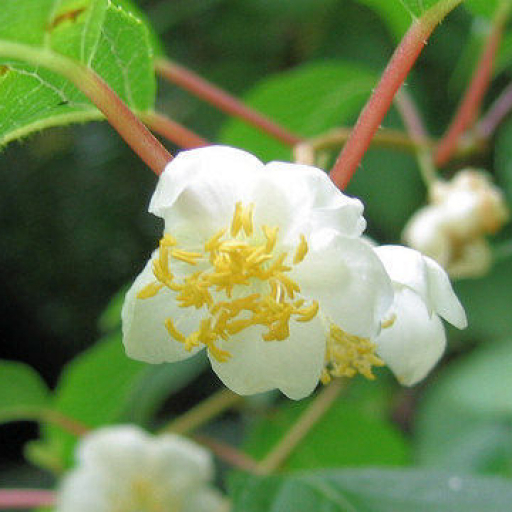
- 🌸 Fragrant Blooms: In late spring, the vine produces small, creamy-white flowers that are tucked under the foliage and emit a soft, sweet scent.
- 🍊 Oblong Fruit: Unlike the common fuzzy kiwi, Silver Vine produces smooth, yellowish-orange, acorn-shaped berries that are smaller and more pointed at the end.
🏡 In Your Garden
- 🧗 The Need for Support: This is a fast-growing deciduous climber that requires a sturdy trellis, fence, or arbor. Without a structure to scramble over, it will quickly become a tangled ground cover.
- 💧 Moisture Lovers: It thrives in rich, moist, well-draining soil. While it enjoys the sun, it prefers "cool feet," so mulching the base or planting in a spot with afternoon shade helps prevent the leaves from wilting.
⚠️ Safety & Toxicity
- ✅ Safe Status: Actinidia polygama is considered non-toxic to humans, dogs, and cats.
- 🐱 Feline Euphoria: While safe, be aware that the plant contains actinidine. This compound triggers a "paws-off" euphoric response in cats that is often more intense and longer-lasting than catnip. If you have neighborhood cats, they may try to rub against or even chew the lower stems!
✨ Fun Fact
In a battle of the treats, Silver Vine is the heavyweight champion! Research shows that nearly 80% of cats respond to Matatabi, while only about one-third of cats are affected by traditional catnip. In Japan, the plant's name translates roughly to "travel again," hinting at its traditional use as a tonic to give tired travelers the energy to continue their journey.

Detailed Care Instructions
To grow Actinidia polygama, also known as Silver Vine or Cat Powder, you can follow these steps:
- Choosing a suitable location: Silver Vine plants prefer a sunny to partially shaded location. Ensure that the site has well-draining soil with a pH level between 6 and 7.
- Purchase healthy plants: Buy healthy, certified Actinidia polygama seedlings from a reputable nursery or online store.
- Planting: Dig a hole that is deep and wide enough to accommodate the root ball of the seedling. Gently place the seedling in the hole and backfill with soil, ensuring that the crown of the plant is level with the soil surface.
- Watering: Water the plant thoroughly after planting to help it settle in. Afterward, water regularly, keeping the soil evenly moist but not waterlogged. Actinidia polygama particularly appreciates regular watering during dry spells.
- Fertilizing: Apply a balanced, slow-release fertilizer in spring to provide the plant with essential nutrients. Follow the instructions on the fertilizer package for proper dosage and application.
- Supporting the plant: Actinidia polygama is a climber, so it requires some support to grow vertically. Install a trellis or other support system to allow the plant to climb and spread.
- Pruning: Prune the plant in late winter or early spring to remove dead or damaged branches and to control its size. Actinidia polygama can be pruned back quite hard to encourage new growth and a bushier shape.
- Harvesting: The leaves and stems of Actinidia polygama can be harvested and dried to make a cat toy. Wait for the plant to establish and develop enough new growth before selectively harvesting. It is safest to harvest before the plant flowers to avoid disturbing pollinators.
Remember to regularly monitor your plants for any signs of pests or diseases and take appropriate action if needed. With proper care, Actinidia polygama should grow well and provide you with its unique features.

Place in a window with dappled sun or a spot in the middle of a room. Or directly in a window facing west or east.

To properly water this plant, first check the soil moisture level by inserting your finger one inch into the soil. If the soil feels dry, it’s time to water.
Water the plant at the base, avoiding getting water on the leaves or stem. Use a watering can and pour water slowly, allowing it to soak into the soil.
Make sure to stop watering when you see water starting to pool on the surface of the soil, as this can lead to overwatering and root rot.
In general, this plant prefers moist, well-drained soil, so make sure to thoroughly water whenever the soil feels dry to the touch.
To fertilize this plant, use a slow-release fertilizer with balanced nutrients, such as 10-10-10 or 12-12-12. Apply the fertilizer in early spring before new growth appears, and again in early summer. Spread the granules evenly around the base of the plant, being careful not to let them touch the trunk. Water the plant immediately after fertilizing to help release the nutrients into the soil. Avoid over-fertilizing, as this can lead to excessive growth and weaken the plant.
When planting Actinidia Polygama, it is important to use a specific type of soil to ensure its growth and development. The soil should be well-draining and fertile, with a pH level between 5.5 and 7.0. It is recommended to use a mixture of organic compost, loam, and sand to create an optimal growing environment for the plant. The soil should be moist but not waterlogged, and it is important to avoid excessive fertilizer application as this can harm the plant. Additionally, adding mulch around the base of the plant can help retain moisture and control weeds. Choosing the right soil for Actinidia Polygama will promote healthy growth and increase the likelihood of a successful harvest.
Propagation of this plant can be done through either stem cuttings or by seed. To propagate by stem cuttings, select a healthy stem from the parent plant and make a clean cut at an angle just below a node. Remove the leaves from the lower half of the stem, dip the cut end in rooting hormone, and plant it in moist soil or a rooting medium. Place the cutting in a bright but indirect light, and keep the soil moist until roots have developed.
To propagate by seed, collect mature fruit from the parent plant and remove the seeds from the flesh. Clean the seeds and soak them in water for 24 hours. Sow the seeds in moist soil or a seed-starting medium and keep them in a warm, bright location. Keep the soil moist until the seeds have germinated and developed their first set of true leaves.
Once the new plants have developed, they should be gradually acclimated to their new growing conditions. Transplant them into larger containers or into the ground, and continue to provide them with proper care to ensure their healthy growth.
Common pests of the silver vine include Spider mites, aphids, thrips, larvae. Make a habit of checking your silver vine frequently for pests so that any infestations can be caught and managed early.








