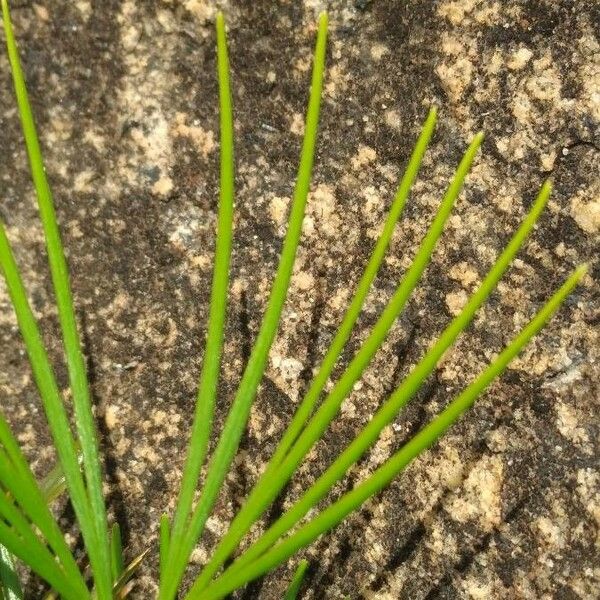
Plant Overview
Known as the "Eyelash Fern" or "Fan Fern," Actiniopteris semiflabellata is a tiny, architectural wonder that looks like a miniature collection of palm trees growing from the desert floor. Native to arid regions of Africa, Madagascar, and the Arabian Peninsula, this fern defies the typical "shade and swamp" stereotype of its relatives. It carries a prehistoric charm, looking less like a soft woodland plant and more like a delicate fossil come to life.
🔍 How to Identify
- 🌿 Frond Shape: The leaves are stiff, upright, and fan out in a perfect semi-circle, closely resembling long, curled eyelashes or tiny hand fans.
- 🎨 Texture & Color: The foliage has a dusty, silvery-green or blue-green hue, with a slightly leathery texture designed to lock in moisture.
- 📏 Compact Growth: It is a miniature species, usually clumping together in a low-profile tuft that rarely exceeds 6 inches in height.
🏡 In Your Garden
- 🏜️ The Desert Fern: This is a xerophytic fern, meaning it has evolved to survive in dry conditions. Unlike tropical ferns that crave humidity, this plant hates "wet feet" and requires a very gritty, fast-draining substrate like a cactus mix.
- ⛰️ Crevice Dweller: In nature, it grows in the cracks of rocks and cliffs. It is perfect for rock gardens, "nano-terrariums," or shallow decorative pots where its unique silhouette can be appreciated up close.
⚠️ Safety & Toxicity
- ✅ Safe Status: Actiniopteris semiflabellata is generally considered non-toxic to humans and common household pets like cats and dogs.
- 🌵 Mechanical Damage: While not poisonous, the fronds are somewhat brittle. It should be kept away from curious pets who might accidentally snap the delicate fans by brushing against them.
✨ Fun Fact
- ⏳ Resurrection Powers: Like some of its desert cousins, this fern is a master of survival. During extreme droughts, it can curl up and appear completely dead and brown, only to "resurrect" and unfurl into a vibrant green fan within hours of the first rainfall.

Detailed Care Instructions
To grow Actiniopteris Semiflabellata plant, you can follow these steps:
- Select a suitable location: Actiniopteris Semiflabellata prefers moderate to bright indirect light, so choose a spot where it can receive filtered sunlight or a bright window with some shade. Keep in mind that it thrives in a relatively humid environment.
- Prepare the soil: Actiniopteris Semiflabellata prefers well-draining soil that is rich in organic matter. You can mix regular potting soil with a bit of peat moss and perlite to improve the drainage.
- Propagation: This plant can be grown from spores or by division. If using spores, sow them on top of the prepared soil. Keep the soil moist and cover the pot with plastic wrap or a plastic bag to create a humid environment. Spores can take several weeks to germinate.
- Watering: Actiniopteris Semiflabellata prefers to be kept consistently moist but not waterlogged. Water the plant when the top inch of soil feels dry, but avoid overwatering as it can lead to root rot.
- Humidity: Mist the plant regularly or place a tray filled with water near the plant to increase humidity. Actiniopteris Semiflabellata appreciates higher humidity levels.
- Temperature: This plant prefers warm temperatures ranging from 65°F to 80°F (18°C to 27°C).
- Fertilization: Feed Actiniopteris Semiflabellata with a balanced liquid fertilizer diluted to half or quarter strength once a month during the growing season (spring and summer).
- Pruning: Trim any yellow, damaged, or dead fronds to maintain the plant's health and appearance.
- Repotting: Actiniopteris Semiflabellata may need to be repotted every year or two as it grows. Choose a slightly larger pot and use fresh potting soil.
- Pests and diseases: Actiniopteris Semiflabellata is relatively pest-free. However, it can be susceptible to mealybugs or scale insects. Inspect the plant regularly and treat any infestations promptly with an appropriate insecticidal soap or oil.
By following these steps, you can successfully grow Actiniopteris Semiflabellata plant and enjoy its unique beauty.

Place in a window with dappled sun or a spot in the middle of a room. Or directly in a window facing west or east.

Actiniopteris Semiflabellata is a plant that requires a moderate amount of watering. It should be watered once a week, or when the top inch of the soil feels dry to the touch. Overwatering can lead to root rot, so it is important to ensure that the soil is not constantly saturated.
When watering, it is best to use room temperature water that has been allowed to sit out for a day or two, as this will allow any chlorine or other chemicals to evaporate. Water should be applied directly to the soil, rather than onto the leaves, to avoid the risk of fungal growth.
It is also important to ensure proper drainage, as waterlogged soil can suffocate the roots of the plant. If the plant is in a pot, make sure that it has drainage holes and that excess water can easily flow out. If the plant is in the ground, ensure that the soil is well-draining and slopes away from the plant to prevent pooling of water.
In general, Actiniopteris Semiflabellata plants prefer slightly moist soil, but can tolerate short periods of drought. Pay close attention to the soil moisture level and adjust watering accordingly to keep the plant healthy and happy.
To fertilize this particular plant, use a balanced, slow-release fertilizer at half the recommended strength once a month during the growing season. Do not fertilize during the plant’s dormant stage. Water the plant well before applying the fertilizer to prevent it from burning the roots. Additionally, consider adding a layer of organic mulch around the base of the plant to help retain moisture and nutrients in the soil.
Actiniopteris Semiflabellata plant requires a well-draining soil with a pH level between 5.5 and 7.5. The soil should be rich in organic matter and have good water retention capacity. It is recommended to mix equal parts of peat moss, perlite, and garden soil to create a suitable growing medium for this plant. However, the exact type of soil may vary depending on the specific growing conditions and location of the plant. It is important to avoid using heavy clay soils that can retain too much water and lead to root rot. At the same time, sandy soils that drain too quickly may require frequent watering and fertilization. Regular soil testing and monitoring of soil moisture levels can help ensure optimal growth conditions for Actiniopteris Semiflabellata.
Actiniopteris Semiflabellata plant can be propagated by spores or by division of the root section. To propagate by spores, first, select a mature plant with healthy fronds. Collect the spores from the underside of the fronds by gently shaking them into a container. Next, fill a small pot with sterilized soil and scatter the spores on the surface of the soil. Spray the soil surface with water and cover the pot with plastic wrap to create a humid environment. Keep the pot in a warm, shaded area and mist the soil regularly to keep it moist. Within a few weeks, small ferns will appear, and you can transplant them into a bigger container as they grow.
To propagate by division, prepare a pot of soil and water it so that it is moist but not too wet. Dig up the parent plant, carefully separate the roots, and then choose a section with several healthy fronds to transplant into the pot. Make sure to keep the soil moist while the new plant takes root, and avoid exposing it to direct sunlight or extreme temperatures. With proper care, the new plant should start to grow within a few weeks.
Common pests of the actiniopteris semiflabellata include Mealybugs, spider mites, aphids. Make a habit of checking your actiniopteris semiflabellata frequently for pests so that any infestations can be caught and managed early.








