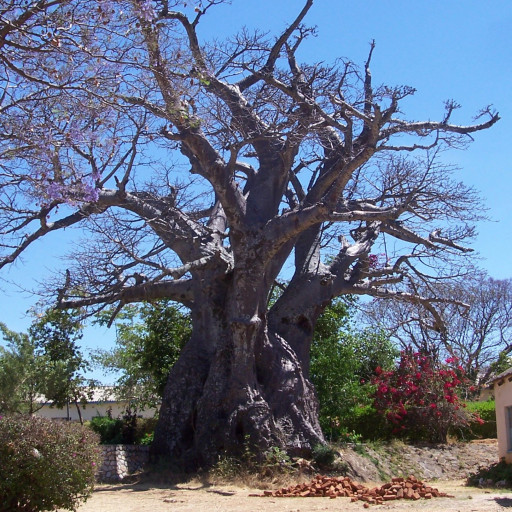
Plant Overview
Known as the "Tree of Life" or the legendary "Upside-down Tree," Adansonia digitata is a prehistoric giant native to the African savannah. African folklore suggests that the tree was so proud it offended the gods, who plucked it out of the ground and replanted it upside down to keep it quiet. This massive succulent is a symbol of endurance, capable of living for over 2,000 years in some of the harshest environments on Earth.
🔍 How to Identify
- 🐘 The Trunk: Massive, swollen, and bottle-shaped, the bark is smooth and grayish-brown, often resembling the wrinkled skin of an elephant.
- ✋ The Foliage: It features palmate leaves—meaning they spread out like the fingers of a hand—usually consisting of five to seven glossy green leaflets.
- 🔔 The Bloom: Spectacular, heavy white flowers hang upside down on long stalks. They have a waxy texture and a scent that attracts its primary pollinators: fruit bats.
🏡 In Your Garden
- 🏜️ Water Storage: Because the trunk is essentially a giant water reservoir, the Baobab is extremely sensitive to "wet feet." In a garden or container setting, it requires gritty, cactus-like soil to prevent the roots from rotting.
- 💤 Dormancy Nuance: This tree is deciduous and will drop all its leaves during the dry season (or winter). Do not panic and increase watering when this happens; the tree is simply "sleeping" and needs to stay dry to survive its dormancy.
⚠️ Safety & Toxicity
- ✅ Safe Status: The Baobab is remarkably non-toxic. In its native habitat, it is a vital food source for humans and wildlife alike.
- 🍃 Nutrient Wealth: The fruit pulp, known as "Monkey Bread," is a superfood rich in Vitamin C, and the leaves are often cooked like spinach. It poses no threat to curious pets or children.
✨ Fun Fact
- ✨ A Living Canteen: A single mature Baobab tree can store up to 30,000 gallons (over 110,000 liters) of water inside its trunk to survive intense droughts. This internal reservoir is so vast that hollowed-out living trees have historically been used as shops, bus stops, and even temporary shelters!

Detailed Care Instructions
| Color | Green With White Or Near-White Flowers |
| Soil Ph | 6-7.5 |
| Lighting | Full Sun |
| Soil Type | Rich, Well-Draining Soil |
| Bloom Time | Spring/Summer |
| Plant Type | Largest Succulent |
| Mature Size | 15-80 Feet Tall |
| Native Area | African Continent |
| Sun Exposure | Full Sun To Partial Shade |
| Hardiness Zones | 10-11 |
Growing Adansonia digitata, also known as the baobab tree, can be a rewarding project. Here are some steps to help you grow this plant:
- Obtain seeds: Look for baobab tree seeds either at a local nursery or online. It's important to get fresh seeds for better germination success.
- Soak seeds: Before planting, soak the seeds in warm water for 24 hours. This helps to soften the hard seed coat.
- Germination: Fill a container with a well-draining soil mix. Sow the baobab seeds about 1 inch deep into the soil. Keep the soil moist but not waterlogged.
- Temperature and sunlight: Baobab trees grow well in warm climates. Make sure to keep the seedlings in a warm place with plenty of sunlight. Ideally, the temperature should be between 68-86°F (20-30°C).
- Watering: Baobab trees are adapted to survive in dry conditions, so be careful not to overwater them. Allow the soil to dry out between waterings.
- Transplanting: Once the seedlings have grown to a suitable size, they can be transplanted to a larger pot or directly into the ground. Baobab trees have long taproots, so make sure to choose a deep pot or dig a deep hole for planting.
- Soil: Baobab trees grow best in well-draining soil with a slightly acidic to neutral pH range (around 6-7). Ensure the soil has good drainage to prevent waterlogging.
- Fertilizer: Baobab trees are generally low-maintenance and don't require much fertilizer. However, you can apply a balanced slow-release fertilizer during the growing season to provide some nutrients.
- Pruning: Prune your baobab tree sparingly as needed to shape the growth or remove dead or diseased branches. Be cautious not to prune excessively as it can affect the tree's growth.
- Patience: Baobab trees are slow-growing, and it may take several years for them to reach a mature size. Be patient and provide the tree with proper care and conditions.
Remember, growing baobab trees requires a long-term commitment as they can live for hundreds of years. Enjoy the process and watch your Adansonia digitata plant thrive and grow over time.

Place in a bright room that is sun drenched almost all day. Or directly in a south-facing window.

Adansonia Digitata is a type of plant that requires a specific approach when it comes to watering. To ensure its healthy growth, it's essential to follow these guidelines:
1. Determine the soil type: Adansonia Digitata prefers sandy, well-draining soil, which means that it can't tolerate standing water or soil that is too compact. The soil needs to be light and loose, so water can easily penetrate through it.
2. Frequency: The frequency of watering an Adansonia Digitata plant may vary based on its environment, but generally, it should be watered infrequently. Overwatering can lead to root rot and kill the plant. Water the plant once per week during the growing season and every two weeks during the dormant season.
3. Quantity: When watering, give the plant enough water to saturate the soil completely. Stop watering when water comes out of the drainage holes at the bottom of the pot or area around the roots.
4. Seasonal Variations: During the rainy season, decrease the frequency of watering due to the increased moisture in the air. In hotter climates, water the plant more frequently to prevent it from drying out.
5. Mulching: Add a layer of mulch to the soil around the Adansonia Digitata plant to help retain moisture levels. Mulch also helps to prevent weeds from growing around the plant.
It's important to monitor the plant and adjust watering as needed. One trick is to insert a finger into the soil, and if it feels dry to the touch, it's time to water the Adansonia Digitata plant.
- Begin fertilizing after the plant has been established for 6-12 months.
- Use a balanced fertilizer that contains equal amounts of nitrogen, phosphorus, and potassium.
- Apply the fertilizer around the base of the plant, avoiding direct contact with the trunk or roots.
- Do not over-fertilize as this can lead to nutrient burn or damage to the roots.
- Water the plant well after fertilizing to help distribute the nutrients.
- Repeat fertilization every 2-3 months during the growing season (spring and summer) to support healthy growth.
- Reduce or stop fertilization during the dormant season (fall and winter) to avoid excessive growth and potential damage to the plant.
Adansonia Digitata is a type of plant that requires a certain type of soil to thrive. Specifically, it prefers a well-draining soil that is rich in nutrients. This can be achieved by using a combination of sand, loam, and compost. It is important to avoid using heavy or clay soils, as they can retain too much moisture and cause root rot. Additionally, the pH level of the soil should be between 6.0 and 7.5. It is also recommended to add a layer of mulch around the base of the plant to help retain moisture and suppress weeds. Overall, it is important to ensure that the soil is properly prepared to provide the necessary nutrients and drainage for the Adansonia Digitata plant to grow and thrive.
Adansonia Digitata can be propagated through both sexual and asexual means. In sexual propagation, the plant is grown from seed. The seeds are large, round, and dark brown in color. They should be soaked in water for 24 hours prior to planting. It is important to plant the seeds in a loose, well-drained soil mix. They should be placed flat on the soil surface and covered with a thin layer of soil. The seeds need to be kept consistently moist and warm while they are germinating, which usually takes between three weeks and two months.
Asexual propagation can be achieved through stem cuttings. The stem cuttings should be taken during the active growing season. The cuttings should be made from stems that are at least one year old and have a diameter of at least three centimeters. The cuttings should be around 30 centimeters in length and should be taken just below a node. The leaves should be removed from the bottom half of the cutting.
The cutting should be dipped into rooting hormone powder to encourage root formation. It should then be planted in a mixture of sand and peat moss. The cutting should be kept moist and warm while it is rooting. Once roots have formed, the cutting can be transplanted into a larger container or directly into the ground.
It is important to note that Adansonia Digitata is a slow-growing tree and can take several years to reach maturity. Therefore, propagating this plant requires patience and dedication.








