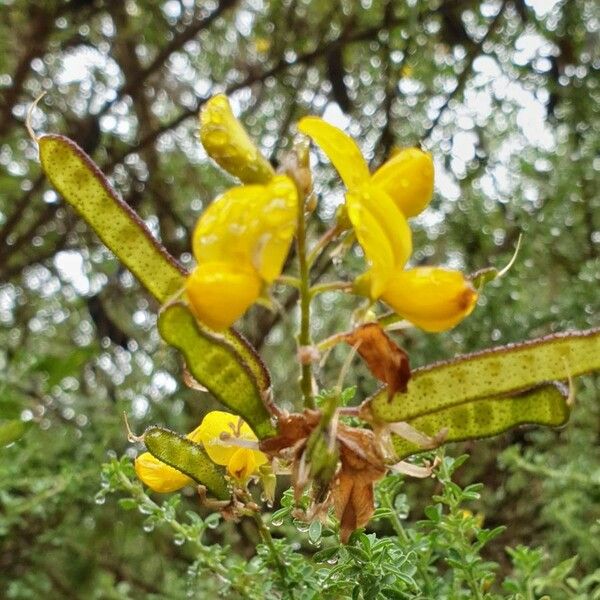
Plant Overview
Known as the Flat-podded Broom, this Mediterranean native is a sun-drenched shrub that paints hillsides in a vibrant, buttery yellow. Its Latin name, complicatus, refers to the way its leaves are often folded or the dense, tangled habit of its branches. It is a rugged survivor, often found clinging to rocky slopes where few other plants dare to grow.
🔍 How to Identify
- 🌿 The Foliage: Look for small, clover-like leaves (trifoliate) that are often covered in fine, silvery hairs on the underside, giving the plant a soft, shimmering appearance in the breeze.
- 🌼 The Flowers: It produces dense clusters of bright yellow "pea-shaped" flowers. Unlike some other brooms, these blooms are tightly packed at the ends of the branches.
- 🫛 The Seed Pods: The most defining feature is the seed pod. They are flattened and covered in sticky, dark glandular "warts," which distinguishes it from its smoother cousins.
🏡 In Your Garden
- ☀️ Sun & Soil Nuance: This plant is a "pioneer species," meaning it loves to be the first to inhabit poor, sandy, or acidic soils. It is incredibly drought-tolerant once established but requires excellent drainage to prevent root rot.
- ✂️ Growth Habit: It has a wild, bushy silhouette. While it’s beautiful for "rewilding" a corner of the garden, it dislikes heavy pruning. It is best to let it maintain its natural, slightly chaotic form rather than trying to shape it into a formal hedge.
⚠️ Safety & Toxicity
- 🚫 Status: Toxic if ingested.
- 🐾 Details: Like many members of the Broom family, it contains alkaloids (such as cytisine). If leaves or seeds are eaten by pets or children, it can cause nausea, vomiting, or more serious neurological symptoms. It is best placed in areas where livestock or curious pets won't graze on it.
✨ Fun Fact
- 🧬 The Soil Builder: The Flat-podded Broom is a natural fertilizer! It has a symbiotic relationship with soil bacteria that allows it to "fix" nitrogen from the air and pump it into the ground, actually improving the soil quality for the plants living around it.

Detailed Care Instructions

Place in a bright room that is sun drenched almost all day. Or directly in a south-facing window.

Adenocarpus Complicatus plant should be watered regularly but not excessively. The amount of water should vary depending on the humidity and temperature, as well as the soil type and drainage. The soil should never be allowed to dry out completely, but also should not be saturated or waterlogged. It can be helpful to water the plant deeply but infrequently, allowing the top layer of soil to dry out between watering sessions. The plant also benefits from occasional misting or humidity boosters to maintain moisture in the air around it. It is important not to water the leaves, as this can lead to fungal infections and other issues.
Adenocarpus Complicatus is a plant that grows best in well-draining soil that is rich in nutrients. The soil should have a pH level that is slightly acidic, ideally around 5.5 to 6.5. The plant also prefers sandy or loamy soil that is not too dense or compacted.
It is important to ensure that the soil is sufficiently moist but not overly saturated, as the plant does not thrive in standing water. Adding organic matter to the soil can help retain moisture while also providing nutrients for the plant to grow.
When choosing soil for Adenocarpus Complicatus, it is also important to consider the climate and location where the plant will be grown. For example, if the area is prone to drought or has a hot, dry climate, then soil that retains moisture well may be beneficial. On the other hand, if the area receives a lot of rain or has heavy clay soil, then a lighter, sandier soil may be necessary to avoid waterlogging and root rot.
Overall, the best soil for Adenocarpus Complicatus is one that is well-balanced, nutrient-rich, and well-draining, while also taking into account the specific needs of the plant based on its growth habits and environmental conditions.








