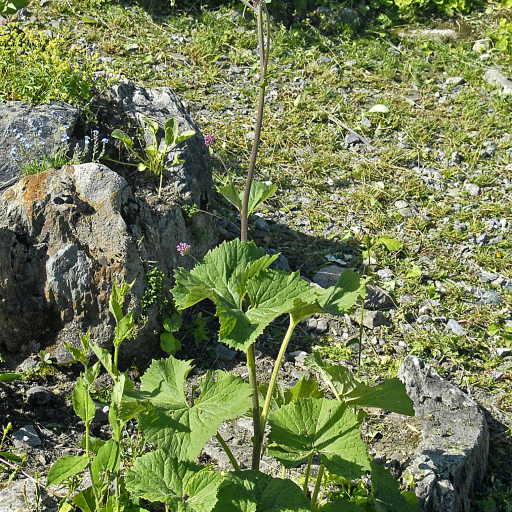
Plant Overview
Known as the Great Leopard's-bane or simply Adenostyles, this towering alpine beauty is a true monarch of the mountain meadows. Native to the high-altitude regions of Central and Southern Europe, it is often found standing guard near cool streams or tucked into moist, rocky crevices. Its lush, oversized foliage gives it a prehistoric appearance, making it a favorite for gardeners looking to add a touch of "wild mountain" drama to their landscapes.
🔍 How to Identify
- 🍃 Heart-Shaped Foliage: The leaves are massive, kidney-shaped, or heart-shaped with distinct, sharply toothed edges that look like a saw blade.
- 🌸 Fuzzy Blooms: Unlike many of its daisy-like cousins, this plant produces dense, umbrella-like clusters of tiny, tubular flowers in shades of soft pink to deep purple.
- 📏 Sturdy Stature: It is a tall perennial, often reaching heights of 3 to 5 feet, with thick, upright stems that remain sturdy even in the breezy conditions of its native alpine home.
🏡 In Your Garden
- 💧 The Moisture Lover: In a garden setting, this plant is not a fan of "dry feet." It thrives in heavy, moisture-retentive soil and is perfect for those damp, shady corners where other plants might struggle with root rot.
- 🏔️ Cool Climate Specialist: Because it originates from high altitudes, it dislikes intense, sweltering summer heat. It is best suited for temperate gardens or spots that receive morning sun followed by cooling afternoon shade.
⚠️ Safety & Toxicity
- 🚫 Not for Consumption: Like many members of the Asteraceae family found in the wild, Adenostyles alliariae is not edible and should never be used in cooking or herbal teas.
- 🐕 Toxicity Profile: It contains pyrrolizidine alkaloids, which can be toxic to the liver if ingested by humans, cattle, or household pets. It is generally safe to touch, but it is wise to wash your hands after pruning and keep curious pets away from the foliage.
✨ Fun Fact
The species name alliariae was chosen because its broad, crinkled leaves bear a striking resemblance to Garlic Mustard (Alliaria petiolata), though the two plants belong to entirely different botanical families!

Detailed Care Instructions
| Humidity | High |
| Lighting | Full Sun |
| Difficulty | Easy |
| Hardiness Zones | 7 - 9 |
Adenostyles Alliariae, also known as Alpine Lady's-mantle, is a beautiful flowering plant native to the Alps and Apennines regions in Europe. Here are some tips on how to grow Adenostyles Alliariae plant:
- Choose a suitable location: Adenostyles Alliariae plant prefers to grow in a well-drained soil with partial shade to full sun exposure. Ensure that the soil is rich in organic matter and has a pH level between 6 to 7.
- Planting: Plant the Adenostyles Alliariae seeds or seedlings in the garden in early spring or late summer. Make sure to space the plants at least 12 inches apart to allow them to grow and spread properly.
- Watering: Water the plant regularly, especially during dry periods. Avoid overwatering as it can lead to root rot. It is best to water the plant in the morning to allow the leaves to dry out before the evening.
- Fertilizing: Feed your Adenostyles Alliariae plant with a balanced fertilizer once a month during the growing season. Be sure to follow the manufacturer's instructions on the label for the proper dosage.
- Mulching: Mulch around the plant to help retain moisture in the soil and discourage weed growth. It also helps to regulate the soil temperature and protect the plant's roots during extreme weather conditions.
- Pruning: Trim off any dead or damaged leaves and flowers to encourage new growth and maintain the plant's overall appearance. You can also cut back the plant in late autumn to prepare it for the winter season.
- Pest and disease control: Keep an eye out for any pests or diseases that may affect your Adenostyles Alliariae plant, such as aphids or powdery mildew. Treat infestations promptly with natural or chemical remedies to prevent further damage.
By following these simple tips, you can successfully grow and care for your Adenostyles Alliariae plant, and enjoy its beautiful flowers throughout the growing season.

Place in a bright room that is sun drenched almost all day. Or directly in a south-facing window.

To water the Adenostyles Alliariae plant, it is important to provide consistently moist soil, without allowing it to become waterlogged. The plant prefers well-draining soil, so be sure to water thoroughly but not excessively. Water the plant at the base, near the soil, rather than misting the leaves. Keep an eye on the moisture level of the soil and adjust your watering frequency as needed based on the plant's specific requirements. Additionally, make sure to water the plant in the morning or evening to avoid evaporation during the heat of the day.
To fertilize the plant, apply a balanced, all-purpose fertilizer in early spring as new growth begins. Avoid over-fertilizing as this can cause nutrient imbalances and harm the plant. Make sure to follow the recommended dosage on the fertilizer package. Water the plant thoroughly after fertilizing to help nutrients penetrate the soil and reach the plant's roots. Repeat the fertilizing process once or twice throughout the growing season, following the same guidelines.
Adenostyles Alliariae plant prefers well-draining soil that is rich in organic matter. A loamy soil with a slightly acidic to neutral pH is ideal for this plant. It is important to avoid heavy, clayey soils as they can lead to poor drainage and waterlogging, which can be detrimental to the plant's health. Adding compost or other organic amendments to the soil can help improve its texture and fertility, providing the Adenostyles Alliariae plant with the nutrients it needs to thrive. Additionally, ensuring that the soil is consistently moist but not waterlogged will help promote healthy growth and flowering.
Propagation of Adenostyles Alliariae plants can be done through division or by taking stem cuttings.
To propagate through division, select a healthy and mature plant with multiple stems. Carefully dig up the plant, being careful not to damage the roots. Divide the plant into smaller sections, ensuring each section has a good portion of roots attached. Replant the divided sections in well-draining soil and water thoroughly.
To propagate through stem cuttings, select a healthy and mature stem from the plant. Cut a 4-6 inch section of the stem just below a leaf node. Remove the lower leaves from the cutting, leaving a few at the top. Dip the cut end of the stem in rooting hormone to encourage root growth. Plant the cutting in a pot filled with a well-draining potting mix. Keep the soil consistently moist and place the cutting in a warm, humid environment to encourage root development.
Regardless of the method used, it is important to provide the newly propagated plants with proper care and attention to ensure successful growth. Regular watering, adequate sunlight, and occasional fertilization can help the plants thrive and establish themselves in their new environment.








