Plant Overview
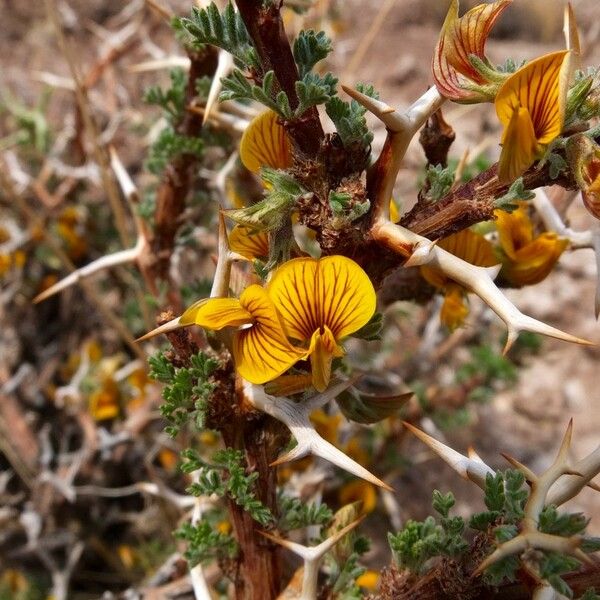
Meet the "Cuerno de Cabra" or Goat’s Horn, a rugged survivor of the high Andes mountains. Its Latin name horrida might sound intimidating, but it perfectly describes the dense, protective armor of spines this shrub uses to guard against the elements and hungry mountain goats. In the wild, it forms striking, golden-yellow mounds that stand out against the stark, rocky landscape of South America.
🔍 How to Identify
- 🌵 Spines: The most distinct feature is the network of long, rigid, and incredibly sharp spines. These are actually modified branches designed to protect the plant from grazing animals.
- 🌼 Flowers: During its blooming season, the shrub is covered in bright yellow, pea-shaped flowers. These blossoms often have delicate reddish or orange veins running through the petals.
- 🍃 Foliage: The leaves are very small, grey-green, and "pinnate" (resembling a tiny feather). They are often tucked away behind the thorns to reduce water loss in dry winds.
🏡 In Your Garden
- 🏔️ Mountain Hardiness: This plant is a specialist for rock gardens or high-altitude landscapes. It thrives in poor, rocky soil where other plants struggle, and it is exceptionally resistant to high winds and freezing temperatures.
- ☀️ Sun Seeker: To keep its compact shape and ensure a heavy bloom, it needs full, unfiltered sun. If grown in too much shade, the plant becomes leggy and loses its iconic "golden mound" appearance.
⚠️ Safety & Toxicity
- ⚔️ Physical Hazard: The Adesmia horrida is not known for being chemically toxic, but it is physically dangerous. The thorns are stiff enough to pierce leather gloves and can cause painful puncture wounds.
- 🐾 Pet & Child Safety: It is best planted as a "barrier plant" or in low-traffic areas. Keep it away from pathways or spots where dogs might run into it, as the spines can easily injure eyes or paws.
✨ Fun Fact
The genus name Adesmia comes from the Greek word adesmos, which means "unbound." This refers to the plant's stamens, which are free and separate, unlike many other members of the pea family where the stamens are fused into a tube.

Detailed Care Instructions
To water this plant, make sure to choose a location with well-draining soil. It is important not to overwater, as this plant prefers drier conditions. Water only when the soil is completely dry to the touch, and water deeply to encourage root growth. Avoid getting water on the foliage to prevent fungal infections. Water less frequently during the winter months when the plant is less active.
The soil that is best suited for [plant] should have a well-draining and somewhat sandy texture. It should not contain a lot of organic matter, as too many nutrients can harm the plant. Additionally, the soil should have a pH of around 7.5-8.5 and should be located in an area with full sun exposure. To improve drainage, it is recommended to mix sand or gravel into the soil. Overall, [plant] requires soil that is well-draining, low in nutrients, and has a slightly alkaline pH.








