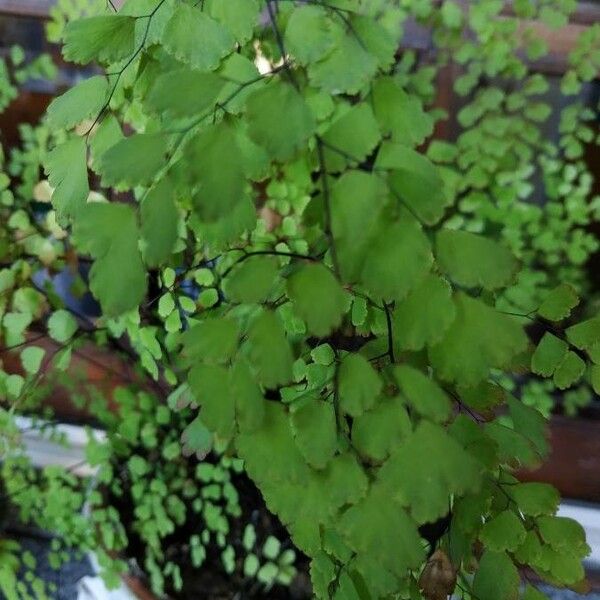
Plant Overview
Known as the Chilean Maidenhair Fern, this delicate beauty is a South American treasure found clinging to the misty slopes of the Andes. Its ethereal, floating appearance has earned it a reputation as one of the most graceful ferns in the world. While it looks fragile, it is a resilient survivor of the rocky, humid crevices of Chile and Argentina.
🔍 How to Identify
- 🌿 The Foliage: It features light green, fan-shaped leaflets (pinnules) that are arranged in a triangular, overlapping pattern, creating a soft, cloud-like silhouette.
- 🕷️ The "Maidenhair" Stems: The plant is famous for its wiry, hair-thin stems that are a striking, polished ebony or deep burgundy color, providing a sharp contrast to the green leaves.
- 🍃 Leaf Texture: The leaflets are incredibly thin and somewhat translucent, often with slightly scalloped or ruffled edges that give the plant a "lace-like" texture.
🏡 In Your Garden
- 💧 The Humidity Whisperer: This fern is a "diva" regarding air moisture. It thrives in high-humidity environments like terrariums or well-lit bathrooms, as dry indoor air will cause its delicate fronds to shrivel and turn brown almost overnight.
- ⛰️ Substrate Nuance: In the wild, it often grows in rocky soil near waterfalls. At home, it prefers a potting mix that stays consistently moist but never soggy. It dislikes being repotted frequently, as its fine, fibrous root system is sensitive to disturbance.
⚠️ Safety & Toxicity
- ✅ Non-Toxic: The Chilean Maidenhair Fern is generally considered safe and non-toxic for both humans and common household pets like cats and dogs.
- 🌿 Gentle Handling: While not poisonous, the fronds are physically delicate. Rough handling or placement in high-traffic areas can lead to mechanical damage and browning of the leaves.
✨ Fun Fact
The name Adiantum is derived from the Greek word "adiantos," which literally means "unwetted." If you submerge a frond in water and pull it back out, it will appear perfectly dry—the unique surface of the leaves causes water to bead and roll off instantly!

Detailed Care Instructions
To grow an Adiantum Chilense plant, also known as Chilean Maidenhair Fern, you can follow these steps:
- Choose a suitable location: Adiantum Chilense prefers indirect or filtered sunlight, so find a spot in your home or garden where the plant will receive bright but indirect light.
- Potting medium: Use a well-draining potting mix. You can create a mix by combining equal parts peat moss, perlite, and sand.
- Planting: Select a pot with drainage holes to prevent waterlogging. Gently place the Adiantum Chilense plant in the pot, ensuring that the crown of the plant (where the stem meets the roots) is level with or slightly above the soil surface.
- Watering: Keep the soil consistently moist, but not soggy. Water the plant when the top inch of soil feels dry. Avoid overwatering as this can lead to root rot.
- Humidity: Adiantum Chilense enjoys high humidity levels. You can create a humid environment by placing the pot on a tray filled with pebbles and water. As the water evaporates, it will increase the humidity around the plant.
- Temperature: The ideal temperature range for Adiantum Chilense is between 60-75°F (15-24°C). Avoid exposing the plant to extreme temperature fluctuations or drafts.
- Fertilization: Use a balanced houseplant fertilizer diluted to half the recommended strength during the growing season (spring and summer). Apply the fertilizer every 4-6 weeks to promote healthy growth.
- Pruning: Remove any discolored or damaged fronds by cutting them off at the base. Regularly remove dead or dying fronds to keep the plant looking attractive.
- Propagation: Adiantum Chilense can be propagated through division. Carefully separate the plant into smaller sections, ensuring that each section has roots attached. Plant the divided sections in individual pots and maintain proper care.
- Pests and diseases: Watch out for common houseplant pests like aphids, mealybugs, and spider mites. Regularly inspect the plant for any signs of infestation, and treat with appropriate organic or chemical methods if necessary.
By following these guidelines, you can successfully grow an Adiantum Chilense plant and enjoy its delicate and graceful fronds.
Adiantum Chilense plant should be watered thoroughly but infrequently. It's important to ensure that the soil is completely dry before watering again. The watering frequency can be adjusted depending on the weather conditions and the amount of sunlight the plant receives. This plant prefers moist soil but does not tolerate being oversaturated. It's beneficial to use room temperature water when watering this plant, and it's important to allow excess water to drain out of the container to prevent root rot. It's recommended to avoid getting water directly on the plant's foliage, as this can cause damage. Instead, watering from the base of the plant is ideal. Additionally, this plant benefits from occasional misting to increase humidity levels.
To fertilize this plant, use a balanced liquid fertilizer during the growing season, which is diluted to half strength. Apply this fertilizer once every two to four weeks. Be sure to apply it to the soil around the plant, and not directly onto the leaves. Additionally, ensure the soil is moist before fertilizing.
Adiantum Chilense plant prefers to grow in moist, well-draining soil with good fertilizer. The soil should be rich in organic matter, free of rocks and debris, and have a pH level of 6.0 to 7.5. It is important to avoid using any soil that is heavy or dense, as this can cause root rot and other problems. A mixture of peat moss, perlite, and sand or a high-quality potting mix would be ideal for this plant. Additionally, the soil should be kept moist but not overly wet, as Adiantum Chilense does not tolerate drought well.
To propagate this plant, you can start by taking a cutting from the stem of a healthy parent plant. Ensure that the stem is about 4-6 inches long and has a few leaves attached to it. Using a sharp and sterilized knife, cut the stem below a node or a point where a leaf is attached.
Remove the lower leaves of the cutting to create a bare stem of about an inch long. Apply rooting hormone to the bottom of the stem to stimulate rooting. Then, plant the cutting in a pot filled with moist and well-draining soil. Cover the pot with a clear plastic bag to create a mini greenhouse and ensure that the plant receives bright, indirect light. Mist the cutting regularly to keep the soil moist and promote humidity around the plant.
After a few weeks, check for new growth and roots. Once the cutting has developed roots, remove the plastic bag and gradually acclimate the new plant to its surroundings. Keep the soil moist but avoid overwatering to prevent root rot. Eventually, the new plant will grow into a mature plant as long as it is provided with the ideal growing conditions.








