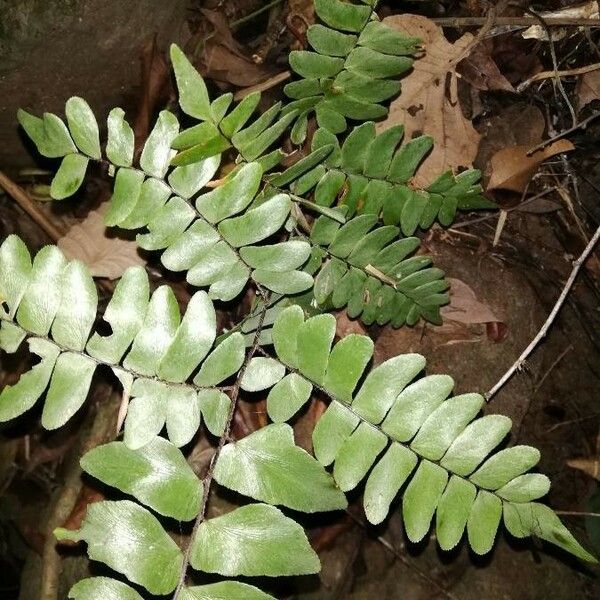
Plant Overview
Often called the Broad-leaved Maidenhair Fern, this tropical treasure is a bolder, more architectural relative of the common maidenhair. Originating from the shaded rainforest floors of Central and South America, it is prized for its signature jet-black, wiry stems that contrast beautifully against its vibrant green foliage. While it looks delicate, its wider leaflets give it a lush, full appearance that can make any corner of a room feel like a prehistoric jungle.
🔍 How to Identify
- 🌿 The Leaflets: Unlike the tiny, lace-like leaves of other maidenhairs, this variety features large, trapezoid-shaped leaflets (pinnules) that are noticeably broad and slightly leathery to the touch.
- 🖤 The Stems: It sports the classic Adiantum "ebony" stems—thin, polished, and deep black—which provide a striking structural framework for the green canopy.
- 📐 Growth Pattern: It typically grows in a fan-like arrangement, with fronds that can reach up to 15–20 inches in length, creating a dense, clumping habit.
🏡 In Your Garden
- ☁️ The Humidity Requirement: Because of its broad leaves, it loses moisture quickly. It thrives best in high-humidity environments like bathrooms or near a humidifier; dry air is its greatest enemy and will cause the leaf edges to crisp instantly.
- 💧 Thirsty Roots: This fern prefers "consistently moist" soil rather than "soggy" soil. It has a sensitive rhizome system that dislikes drying out completely, but it also needs a well-draining mix to prevent the roots from suffocating.
- 🌤️ Shadow Dweller: In the wild, it lives under the forest canopy. In your home, it prefers bright, indirect light. Direct afternoon sun will scorch and bleach the beautiful green pigment from its leaves.
⚠️ Safety & Toxicity
- ✅ Status: Non-toxic and Pet-Friendly.
- 🐾 Details: Adiantum latifolium is generally considered safe for cats, dogs, and children. While it isn't meant to be a snack, you don't need to worry if a curious pet takes a nibble of a dangling frond.
✨ Fun Fact
The genus name Adiantum is derived from the Greek word adiantos, which means "unwetted." If you splash water on the leaves, the droplets will bead up and roll right off without soaking the surface, leaving the plant perfectly dry!

Detailed Care Instructions
To grow Adiantum Latifolium, also known as the Delta maidenhair fern, follow these steps:
- Choose the right location: Adiantum Latifolium thrives in shady or partially shaded areas. Avoid placing it in direct sunlight, as it can scorch the delicate foliage.
- Prepare the soil: The plant prefers well-draining soil that is rich in organic matter. Amend the soil with compost or peat moss to improve its fertility and drainage capability.
- Watering: Keep the soil consistently moist, but not waterlogged. Water the plant when the top inch of soil feels dry to the touch. Mist the foliage regularly to provide humidity, as this plant prefers higher humidity levels.
- Fertilization: Apply a balanced, water-soluble fertilizer for ferns every two to four weeks during the growing season (spring and summer). Follow the instructions on the fertilizer package for proper dosage.
- Propagation: Adiantum Latifolium can be propagated through spores or division. Spores are tiny spore cases located on the underside of the fronds. Collect the spores, sow them in a sterile growing medium, and keep them moist until they germinate. Division involves separating the plant at the rootball into smaller sections and replanting them.
- Pruning: Remove any dead or yellowing fronds to maintain the plant's appearance and health. Avoid cutting off all the fronds at once, as it can stress the plant.
- Pest control: Monitor the plant for pests such as aphids, mealybugs, or spider mites. If an infestation occurs, treat the plant with an appropriate insecticidal soap or neem oil solution.
- Winter care: Adiantum Latifolium is tender and may not tolerate frost. If you live in a cold climate, bring the plant indoors before the first frost. Place it in a location with bright, indirect light, and maintain consistent humidity levels.
By following these steps, you can successfully grow Adiantum Latifolium and enjoy its graceful and delicate foliage in your home or garden.

Place in a dark room with little light, like a dark bedroom or a spot far away from a window or directly in a north-facing window.

Adiantum Latifolium is a plant that grows in soil, and as such, it has water requirements that must be met for it to thrive. To water this plant, you should first check the soil to ensure that it is dry to a depth of around 1 inch. If the soil is moist, do not water the plant as it can lead to root rot. However, if the soil is dry, you should water the plant slowly and thoroughly, making sure that the water reaches the root zone. You should avoid getting water on the leaves, as this can result in water spots or damage to the plant. Additionally, you should avoid letting the plant sit in water, as this can lead to root rot. To prevent this, make sure that the soil drains well and remove any water that has accumulated in the saucer or pot. Finally, it's important to note that the frequency of watering will depend on the plant's environment and climate, so it's best to keep a close eye on the soil and adjust watering as necessary.
To fertilize this plant, use a balanced, water-soluble fertilizer with equal amounts of nitrogen, phosphorus, and potassium. Dilute the fertilizer to half strength and apply it to the soil every four to six weeks during the growing season. Avoid applying fertilizer during the winter months when growth slows down. Always water the plant well before and after fertilizing to prevent burning the roots. Over-fertilizing can lead to leaf burn and other damage.
Adiantum Latifolium plant prefers a well-draining soil that is rich in organic matter. The soil should be moist but not waterlogged, as excessive water can lead to root rot. A pH range of 5.5 to 7.0 is ideal for this plant. Adding peat moss or compost can help improve soil quality and drainage. Avoid using soil mixes that contain synthetic fertilizers or high levels of nutrients, as these can damage the delicate fronds of the Adiantum Latifolium plant. Instead, use a slow-release organic fertilizer or a liquid organic fertilizer diluted to half strength during the growing season. Regularly misting the leaves can also help maintain a humid environment, which is important for the plant's health.
Adiantum Latifolium is a type of fern that can be propagated through spores or division. To propagate through spores, collect mature fronds with fully-developed sori (spore-producing structures) and place them in a paper bag. Let the fronds dry for a few days until the sori release spores. Sprinkle the spores onto a moist potting mix, cover the container with plastic wrap, and place it in a warm, bright location. Keep the soil moist and in about 2-4 weeks the spores should germinate.
To propagate by division, gently remove the plant from its pot and separate the roots into two or more clumps. Make sure each clump has healthy fronds and roots. Plant each clump in a new pot with fresh potting mix, keeping it moist and in a shaded location until the plant has established itself.








