Plant Overview
Nicknamed the "Christmas Jewels" plant, this Brazilian native is a stunning gem of the rainforest. Discovered in the Atlantic forests of Espírito Santo, it stands out among bromeliads for its elegant, weeping flower spikes that resemble strings of polished rubies and amber. It is a favorite for those looking to add a touch of tropical luxury to their indoor collection.
🔍 How to Identify
- 🍃 The Rosette: Features a compact, funnel-shaped rosette of glossy, strap-like green leaves that curve gracefully outward.
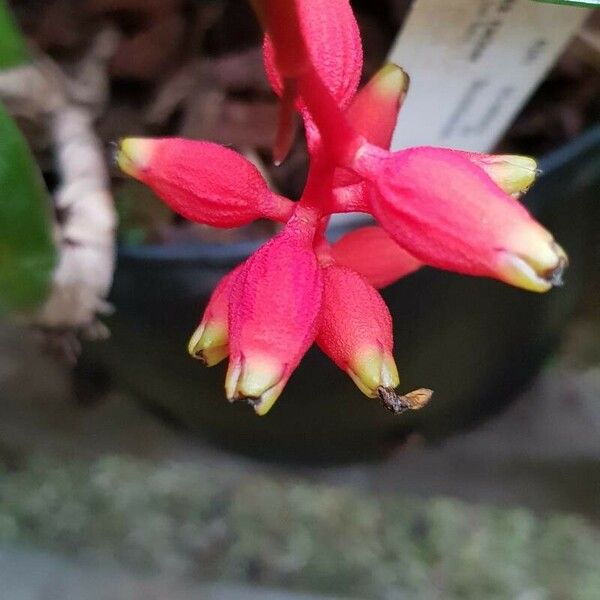
- 🍓 The Inflorescence: Unlike many upright Aechmeas, this species produces a unique pendulous (hanging) flower spike that drapes over the side of the pot.
- 💎 The "Jewels": The spike is adorned with brilliant, berry-like red calyxes topped with small, contrasting yellow flowers, giving it a beaded necklace appearance.
🏡 In Your Garden
- 🧺 Display Style: Because the flower spikes hang downward, this plant is most spectacular when grown in a hanging basket or mounted high on a "bromeliad tree" (driftwood) to allow the blooms to dangle freely.
- 💧 Hydration Nuance: As an epiphyte, it has a central "tank" or cup. Instead of just watering the soil, you must keep this central reservoir filled with fresh water. Use rainwater or distilled water if possible, as it is sensitive to the salts found in hard tap water.
⚠️ Safety & Toxicity
- ✅ Pet & Human Safe: Aechmea racinae is non-toxic to cats, dogs, and humans, making it an excellent choice for households with curious pets.
- 🧤 Leaf Texture: While it is safer than many of its "toothed" relatives, the leaf edges can still be slightly stiff or serrated. Handle with care when cleaning the leaves to avoid minor skin irritation.
✨ Fun Fact
This plant was named in honor of Racine Foster, a legendary plant hunter who discovered the species in Brazil in 1939. It earned the name "Christmas Jewels" because, in the Northern Hemisphere, it often times its spectacular berry-like bloom perfectly for the December holiday season.

Detailed Care Instructions
Aechmea Racinae, also known as "Silver Vase Plant," is a beautiful tropical plant that can be grown both indoors and outdoors. Here are some tips for growing and caring for Aechmea Racinae:
- Light: Aechmea Racinae prefers bright, indirect light. Place the plant near a window where it can receive plenty of indirect sunlight.
- Watering: Water the plant regularly, keeping the soil evenly moist but not waterlogged. It is important to allow the soil to dry out slightly between waterings to prevent root rot.
- Humidity: Aechmea Racinae prefers high humidity levels. To increase humidity around the plant, you can place a tray of water near the plant or use a humidifier.
- Temperature: Aechmea Racinae prefers warm temperatures between 65-80°F. Avoid exposing the plant to temperatures below 50°F as it can be damaging.
- Fertilization: Fertilize the plant with a balanced liquid fertilizer once a month during the growing season (spring and summer).
- Repotting: Repot Aechmea Racinae every 2-3 years to refresh the soil and provide more room for growth.
- Pruning: Remove any dead or yellowing leaves to promote new growth and maintain the plant's appearance.
- Pests: Watch out for common houseplant pests such as mealybugs, spider mites, and scale insects. If you notice any signs of pests, treat the plant with insecticidal soap or neem oil.
By following these tips and providing proper care, you can successfully grow and enjoy your Aechmea Racinae plant.
Aechmea Racinae plants should be watered thoroughly but infrequently. It is important to allow the soil to dry out slightly between waterings to prevent root rot. When watering, ensure that the water reaches all parts of the plant's root system. Water the plant at the base, avoiding getting water on the leaves as this can cause fungal issues. During the growing season, usually spring and summer, increase the frequency of waterings slightly, but still allow the top few inches of soil to dry out between waterings. In the winter months, reduce the frequency of waterings to prevent overwatering. Overall, it is best to err on the side of underwatering rather than overwatering to keep the plant healthy.
To fertilize Aechmea Racinae, use a balanced liquid fertilizer with an N-P-K ratio of around 10-10-10. Dilute the fertilizer to half the recommended strength and apply it to the soil around the base of the plant during the growing season, which is typically spring and summer. Avoid fertilizing during the winter months when the plant is dormant. Water the plant thoroughly after fertilizing to help distribute the nutrients evenly throughout the soil. Repeat this fertilizing routine every 4-6 weeks to support healthy growth and flowering.
Aechmea Racinae plants thrive best in a well-draining potting mix that is slightly acidic. It is recommended to use a mix that is specifically designed for bromeliads or epiphytic plants. These mixes usually contain a combination of orchid bark, perlite, and sphagnum moss to ensure good aeration and moisture retention. Avoid using heavy or compacted soil, as this can lead to root rot and poor growth. It is important to allow the soil to dry out slightly between waterings to prevent waterlogged conditions. Additionally, using a pot with adequate drainage holes will help prevent water from accumulating in the soil.
Aechmea Racinae plants can be propagated through division or offsets. To propagate through division, the mature plant should be carefully removed from its pot and divided into smaller sections. Each section should have healthy roots attached. These divisions can then be potted into individual containers with well-draining soil.
Alternatively, Aechmea Racinae plants produce offsets or "pups" around the base of the plant. These can be gently separated from the parent plant using a sharp, sterile knife or shears. The offsets can then be planted in small pots with soil and kept warm and moist until they establish roots.
Propagating Aechmea Racinae plants through division or offsets can help create new plants that are genetically identical to the parent plant. This method of propagation can be a great way to increase your collection of Aechmea Racinae plants or share them with others.







