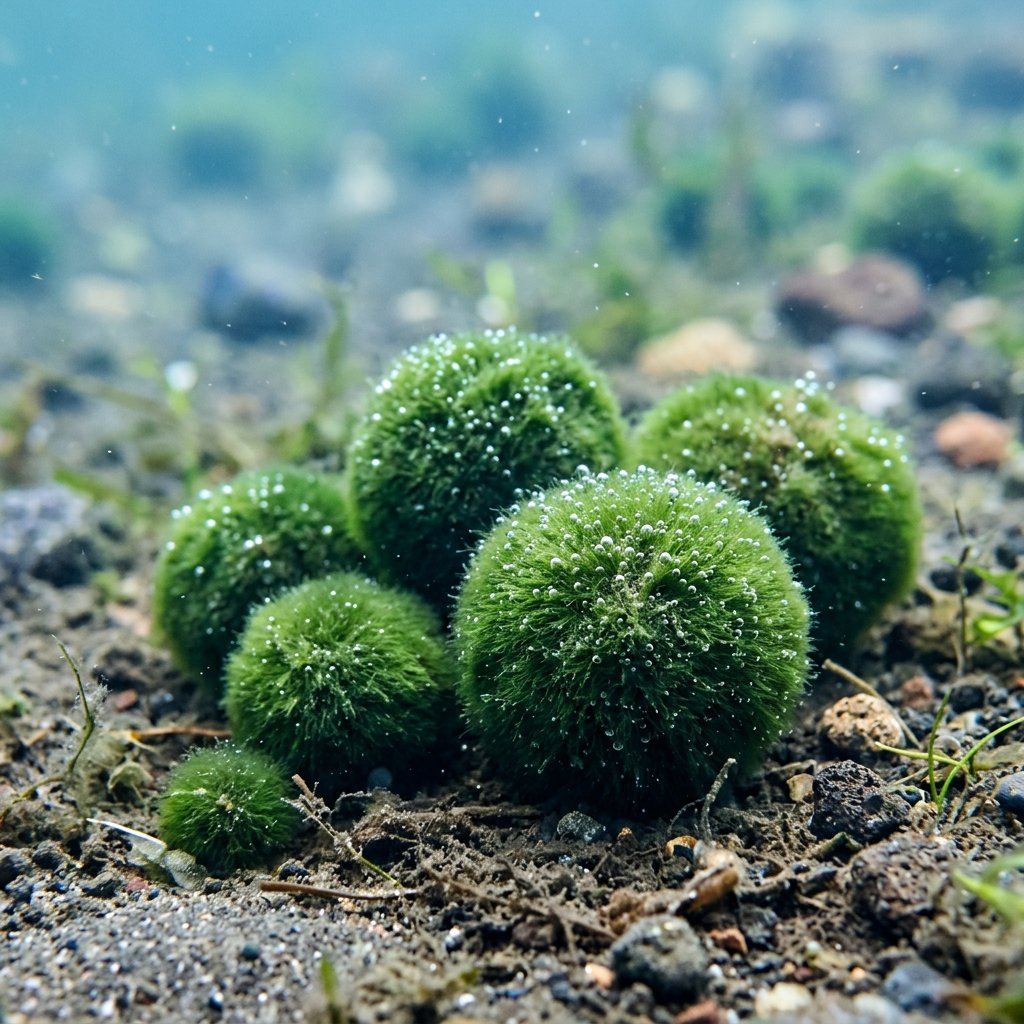
Plant Overview
Known affectionately as the "Marimo Moss Ball," these living green velveteen spheres are not actually moss, but a rare form of filamentous algae. In Japan, they are cherished as "National Treasures" and are considered symbols of luck, patience, and eternal love. Unlike most plants that grow toward the sun, these curious globes prefer to tumble along the dark, cool floors of freshwater lakes.
🔍 How to Identify
- 🟢 Velvet Texture: The surface is composed of thousands of tiny, densely packed algae filaments that feel like a soft, fuzzy sponge or a piece of velvet.
- 🧶 Perfect Symmetry: While they can be found as flat mats on rocks, the "ball" form is the most prized, created by the gentle rolling motion of lake currents.
- 🌊 Lush Greenery: They maintain a deep, forest-green color throughout. If they turn brown or white, it usually indicates a need for cleaner water or less direct light.
🏡 In Your Aquatic Garden
- 🔄 The Rolling Requirement: In their natural habitat, waves keep them spherical. In a home aquarium or jar, you must gently turn them every week to ensure all sides receive light and to prevent them from flattening out.
- 🌡️ Cool Temperament: Marimo are used to cold glacial lakes. They dislike high temperatures; if your room gets too hot in the summer, they appreciate a "spa day" in the refrigerator to cool down.
- ☁️ Low-Light Lovers: Because they live at the bottom of lakes, they are highly sensitive to direct sunlight, which can scorch them. They thrive in "low to medium" ambient room light.
⚠️ Safety & Toxicity
- ✅ Safe for All: Marimo are completely non-toxic to humans, cats, and dogs. They are actually a favorite "toy" for aquarium shrimp and ornamental fish.
- 🧼 Natural Filters: While safe, they act like a biological sponge. They can trap debris and waste in their filaments, so they should be gently squeezed and rinsed in cool water occasionally to keep them (and your pets) healthy.
✨ Fun Fact
According to Japanese folklore, the Marimo are the hearts of two star-crossed lovers who drowned in Lake Akan to be together. Because they grow so slowly—only about 5mm per year—large Marimo balls are often kept as family heirlooms, passed down from one generation to the next!

Detailed Care Instructions
| Humidity | High |
| Lighting | Shade |
| Difficulty | Easy |
| Hibernation | Cold Period |
| Temperature | 10°C - 25°C |
| Hardiness Zones | Min 10B |
Aegagropila Linnaei, commonly known as Marimo moss balls, is a popular and unique aquatic plant that can be grown in a home aquarium or as a decorative item. Here are some tips on how to grow and care for Aegagropila Linnaei:
- Obtaining Marimo moss balls: Purchase healthy and authentic Marimo moss balls from a reputable seller or aquarium store. Ensure they are vibrant green and free from any visible signs of damage or pests.
- Light requirements: Aegagropila Linnaei prefers indirect or moderate lighting conditions. Avoid direct sunlight, as it can lead to excessive growth and discoloration. Place the Marimo moss balls near a window or use artificial aquarium lighting.
- Water quality: Marimo moss balls require clean and well-filtered water. Regular partial water changes help maintain water quality. Use dechlorinated water or allow tap water to sit for 24 hours to eliminate chlorine. A pH level between 6.0-8.0 is ideal for the health of the moss balls.
- Temperature and water movement: Aegagropila Linnaei thrives in cool water conditions between 10-25°C (50-77°F). Gentle water movement or aeration is beneficial but avoid strong water currents that may dislodge the moss balls.
- Rolling or flipping: Occasionally, gently roll the Marimo moss balls to maintain their spherical shape. This helps ensure all sides receive adequate light exposure and prevents flat spots from forming.
- Avoid excessive handling: While Marimo moss balls are hardy plants, excessive handling can damage or disintegrate them. If you need to move or reposition them, do so with clean, wet hands or utensils to minimize damage.
- Nutrient requirements: Aegagropila Linnaei obtains its nutrients from the water. Some aquarists provide a gentle liquid fertilizer designed for aquatic plants to enhance growth and promote vibrant green color. However, they can survive without additional fertilization.
- Algae control: Aegagropila Linnaei naturally inhibits the growth of other algae due to its competitive behavior. However, if unwanted algae do appear, gently remove them from the moss balls to prevent infestation and maintain their appearance.
- Cleaning and maintenance: Keep the Marimo moss balls clean by gently rinsing them with dechlorinated water once a month. This helps remove any accumulated debris or algae and ensures their health.
- Observation and care: Regularly observe the Marimo moss balls for any signs of discoloration, browning, or damage. If necessary, trim or remove any damaged or decaying parts of the moss balls to maintain their overall health and appearance.
Remember, Marimo moss balls are slow growers and require patience. With proper care and maintenance, these fascinating plants can live for many years and provide an interesting addition to your aquarium or home décor.

Place in a dark room with little light, like a dark bedroom or a spot far away from a window or directly in a north-facing window.

Aegagropila Linnaei is a aquatic plant that requires a specific type of watering regimen. The following are the steps to water the plant:
1. Fill a container or bowl with filtered or distilled water. This will ensure that the plant is not exposed to any harmful chemicals or minerals found in tap water.
2. Place the Aegagropila Linnaei plant gently into the container of water. Ensure that the entire plant is submerged beneath the surface of the water.
3. Leave the plant in the container of water for 24 hours. During this time, the plant will absorb the water and any nutrients that it needs.
4. After 24 hours, remove the plant from the water and gently shake off any excess liquid.
5. Return the plant to its original container or tank, making sure it is properly secured in the substrate or anchor.
6. Repeat this watering process once a week for optimal growth and health of the plant.
To fertilize this plant, use a liquid aquarium fertilizer and apply at half the recommended dosage. Fertilize once a week during the growing season and reduce fertilization frequency during the winter months when the plant is dormant. Avoid over-fertilizing as it can lead to algae growth and harm the plant.
The appropriate type of soil to use with this plant is a nutrient-rich aquatic substrate that is specifically designed for use in aquariums or aquatic terrariums. The soil should be free of any harmful chemicals or contaminants that could harm the plant or aquatic life. It should be enriched with essential nutrients that are needed for healthy growth such as nitrogen, potassium, and phosphorus. The soil should also provide good drainage and aeration to prevent waterlogging and ensure the roots have access to oxygen. A soil with a slightly acidic pH level is ideal for this plant. The type of soil used will depend on the specific setup or environment in which the plant is being grown, but it should always be of high quality and well-suited to the needs of the Aegagropila Linnaei plant.
Propagation of this aquatic plant can be easily done through division. You can gently separate the plant into smaller sections and then plant them in separate pots or in an aquarium. It is important to ensure that each section has enough root and leaf matter to survive on its own. Additionally, you can also propagate the plant through the use of its small offshoots or runners. These can be carefully removed from the parent plant and replanted in a new location. It is important to keep the new plants in water and provide adequate lighting and nutrients to ensure successful propagation.







