Plant Overview
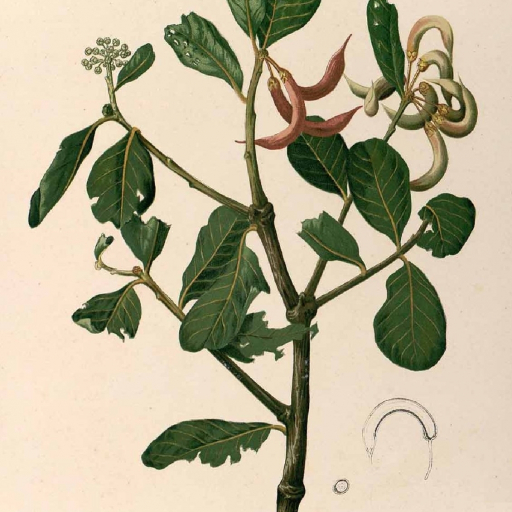
Known affectionately as the Black Mangrove or the Goat's Horn Mangrove, this resilient shrub is a master of the shoreline. Found throughout the Indo-West Pacific, it thrives where the land meets the sea, acting as a sturdy coastal guardian against erosion. It is famous for its "salty" personality—literally—as it has evolved clever ways to survive in environments that would kill most other plants.
🔍 How to Identify
- 🍃 Leathery Leaves: The foliage is thick, glossy, and oval-shaped. If you look closely at the surface, you may see tiny white sparkles; these are actual salt crystals excreted by the plant.
- 🌼 Honey-Scented Blooms: It produces small, white, bell-shaped flowers that grow in clusters (umbels). They emit a heavy, sweet fragrance that attracts a variety of pollinators.
- 🌙 The "Goat's Horn": Its most distinctive feature is the fruit—small, curved, and pointed pods that look exactly like miniature goat horns or tiny green bananas.
🏡 In Your Garden & Habitat
- 🌊 Salt Sweating: This plant is an "excreter." It pulls salt water in through its roots, filters what it needs, and pushes the excess salt out through specialized glands on its leaves.
- 🦀 Marine Nursery: In its natural estuarine habitat, its root system provides a vital "apartment complex" for small crabs, snails, and juvenile fish, making it a cornerstone of coastal biodiversity.
- 🌱 Growth Habit: It typically grows as a multi-stemmed shrub or a small tree. It prefers muddy, anaerobic soils where it can use its specialized roots to breathe.
⚠️ Safety & Toxicity
- ✅ Generally Safe: There are no known toxic effects for humans, dogs, or cats regarding physical contact with this mangrove.
- 🧂 Skin Sensitivity: Because the leaves are often coated in excreted salt, sensitive individuals might experience mild skin or eye irritation if they rub against the foliage and then touch their face.
✨ Fun Fact
The Black Mangrove is "cryptoviviparous." This means the embryo begins to grow inside the fruit while it is still hanging on the tree! By the time the "horn" falls into the water, it is already primed and ready to take root in the mud the moment it finds a soft spot.

Detailed Care Instructions

Place in a bright room that is sun drenched almost all day. Or directly in a south-facing window.

When the top few inches of soil dry out, water your plants. If the top few inches of soil are still moist, do not water your plant. Wait a few days, then poke your finger into the soil to see if anything has changed. Overwatering poses a disease risk, such as the development of fungal diseases in the roots. These plants have adaptations in there leaves that allow them to survive in low water supply.








