Plant Overview
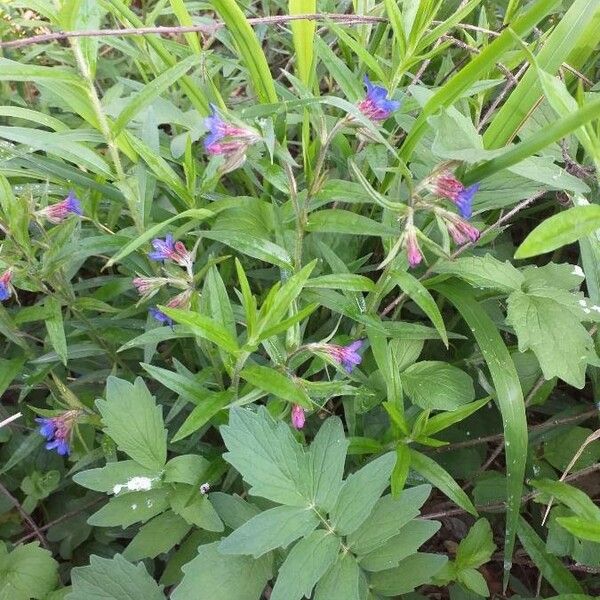
Known as the Purple Gromwell, this enchanting woodland resident is a master of transformation. Native to Europe and parts of Asia, it is often found dancing along the edges of ancient forests and limestone thickets. Its botanical name, Aegonychon, translates roughly to "Goat's Claw," referencing the curved shape of its nutlets, but it is the "Purple-Blue" (Purpurocaeruleum) transition of its flowers that truly captures the imagination of gardeners and hikers alike.
🔍 How to Identify
- 🎨 The Color Shift: The most striking feature is the flower cluster. Buds start as a deep, royal purple or reddish-violet and mature into a brilliant, electric gentian blue.
- 🌿 Lance-Shaped Foliage: The leaves are dark green, narrow, and covered in fine, stiff hairs, giving them a slightly rough texture typical of the Borage family.
- 🏃 Arcing Stems: The plant has a unique growth habit; it produces long, sterile "runners" that arch over and root at the tips, allowing the plant to "walk" across the forest floor.
🏡 In Your Garden
- 🌳 Woodland Preference: Because it originates in forest clearings, it thrives in dappled shade. It is an excellent choice for stabilizing slopes or filling gaps under deciduous trees where other plants might struggle with "dry shade."
- 🧪 Alkaline Lover: Unlike many woodland plants that prefer acidic leaf mold, the Purple Gromwell has a specific craving for limestone. If your soil is too acidic, it may refuse to flower or fail to "walk."
- ✂️ Minimal Disturbance: It has a deep, woody root system and dislikes being moved once established. It is best to plant it where it can stay for years to come.
⚠️ Safety & Toxicity
- 🟢 General Safety: Aegonychon purpurocaeruleum is generally considered non-toxic to humans and is not known for causing severe skin irritation.
- 🐾 Pet Caution: While not high on the list of poisonous plants, it belongs to the Boraginaceae family, many members of which contain pyrrolizidine alkaloids. It is best to keep curious cats and dogs from munching on the foliage to avoid potential stomach upset.
✨ Fun Fact
The seeds of the Purple Gromwell are incredibly hard and look like polished white porcelain or tiny pearls. They are so durable that they often remain visible on the ground long after the rest of the plant has withered away for the winter, earning it the old folk name "Stone-seed."

Detailed Care Instructions
Aegonychon purpurocaeruleum, also known as blue sapphire vine, can be successfully grown by following these steps:
- Choose a suitable location: Aegonychon purpurocaeruleum prefers full sun to partial shade and well-draining soil. Make sure to select a location that receives at least 6 hours of sunlight per day.
- Planting: Plant the blue sapphire vine in spring or early summer, when the soil has warmed up. Dig a hole twice as wide and deep as the root ball. Place the plant in the hole, backfill with soil, and water thoroughly.
- Watering: Keep the soil consistently moist but not waterlogged. Water the plant deeply once or twice a week, depending on the weather conditions.
- Fertilizing: Use a balanced fertilizer once a month during the growing season (spring and summer) to encourage healthy growth and blooming.
- Pruning: Prune the blue sapphire vine in late winter or early spring to remove dead or damaged branches and promote new growth.
- Support: Provide a trellis, fence, or other support for the vine to climb and grow vertically.
- Mulching: Apply a layer of mulch around the base of the plant to help retain moisture, suppress weeds, and regulate soil temperature.
- Pest and disease control: Keep an eye out for common pests and diseases such as aphids, powdery mildew, and spider mites. Treat any infestations promptly to prevent damage to the plant.
By following these steps, you can successfully grow and care for Aegonychon purpurocaeruleum in your garden.

Place in a bright room that is sun drenched almost all day. Or directly in a south-facing window.

The Aegonychon Purpurocaeruleum plant should be watered consistently and evenly to maintain proper moisture levels in the soil. As a general rule of thumb, the plant should be watered when the top inch of soil feels dry to the touch. When watering, make sure to water the plant at the base near the roots to avoid wetting the leaves, which can lead to disease. Avoid overwatering, as this can cause root rot and other issues. During the plant's growing season, it may require more frequent watering, while in the dormant season, reduce watering to prevent waterlogging. Additionally, using a well-draining soil mix can help prevent water from pooling around the roots.
To fertilize the Aegonychon Purpurocaeruleum plant, apply a balanced, water-soluble fertilizer in early spring before new growth begins. Follow the instructions on the fertilizer packaging for the correct dilution ratio. Reapply the fertilizer every 4-6 weeks during the growing season, making sure not to exceed the recommended dosage to prevent plant burn. Water the plant thoroughly after fertilizing to help distribute the nutrients to the roots. Avoid fertilizing during the dormant winter months.
Aegonychon Purpurocaeruleum plants prefer well-drained soil that is rich in organic matter. They thrive in a slightly acidic to neutral pH soil. A loamy or sandy soil mix is ideal for these plants, as it allows for proper drainage without becoming waterlogged. Adding perlite or sand to the soil mix can further improve drainage and prevent root rot. Additionally, incorporating compost or well-decomposed organic matter into the soil can provide essential nutrients for healthy growth and vibrant foliage. It is important to avoid heavy, clay-like soils that retain too much water, as this can lead to root rot and other issues. Overall, using a well-draining, nutrient-rich soil mix is key for successfully growing Aegonychon Purpurocaeruleum plants.
Aegonychon Purpurocaeruleum plant can be easily propagated through division. To propagate this plant, start by carefully digging up the mature plant in the spring or early fall. Gently separate the roots into smaller sections, ensuring that each division has several healthy stems and a good root system.
Plant the divisions in a suitable pot or garden bed, making sure to water them well and provide adequate sunlight. Keep the soil consistently moist but not waterlogged, and avoid fertilizing for the first few weeks to allow the plant to establish itself.
With the proper care and maintenance, the divided sections of Aegonychon Purpurocaeruleum should begin to grow and thrive, producing new foliage and potentially even flowering. Propagating this plant through division is a reliable and effective method for increasing your plant collection and ensuring its continued growth and beauty.








