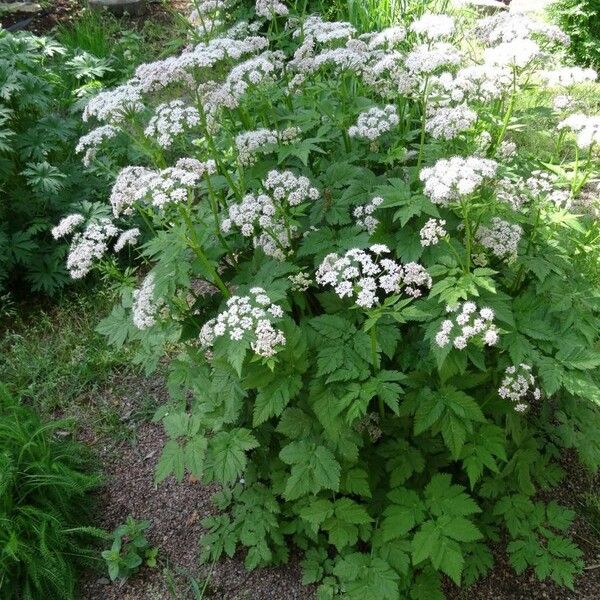
Plant Overview
Often called the "Elegant Alpine Goutweed," Aegopodium alpestre is the more refined, delicate cousin of the common garden Ground Elder. Originating from the mountain slopes and light woodlands of East Asia, this perennial is prized by collectors for its airy, fern-like foliage that creates a soft green mist across the garden floor. Unlike its aggressive relatives, this variety carries a sense of mountain tranquility, though it still possesses the hardy spirit of a survivor.
🔍 How to Identify
- 🌿 Lacy Foliage: The leaves are deeply divided and fern-like (bipinnate), appearing much more "shredded" and delicate than the broad leaves of common Goutweed.
- ☁️ Umbel Blooms: In early summer, it produces flat-topped clusters of tiny white flowers that resemble "Queen Anne’s Lace" hovering on slender stems.
- 🌱 Creeping Habit: It grows via underground rhizomes, forming a dense, low-growing carpet that rarely exceeds 12 inches in height.
🏡 In Your Garden
- 🌲 The Perfect Filler: This plant thrives in the "difficult" spots where grass won't grow—specifically in partial shade under the canopy of large trees or along cool, damp walls.
- 💧 Moisture Lover: Because of its alpine heritage, it prefers soil that stays consistently moist. It is much less drought-tolerant than common garden weeds and will "faint" (wilt) if left in the scorching afternoon sun.
- 🏃♂️ Contained Growth: While it is a "spreader," it is far less invasive than its cousins. However, if you have a small rockery, consider planting it in a buried pot to keep its wandering roots from visiting neighboring plants.
⚠️ Safety & Toxicity
- ✅ Generally Safe: Aegopodium alpestre is not known to be toxic to humans, cats, or dogs. In some cultures, related species are even used as pot herbs.
- 🚫 The Lookalike Danger: Because it belongs to the Apiaceae (carrot) family, it looks strikingly similar to highly toxic plants like Poison Hemlock or Water Hemlock. Never forage or consume this plant unless you are 100% certain of its identity in a controlled garden setting.
✨ Fun Fact
In traditional Chinese medicine, parts of this plant have been used for centuries to treat "Wind-Damp" conditions, which modern medicine identifies as joint pain and rheumatism—giving it a historical reputation as a "healer of the mountains."

Detailed Care Instructions
Aegopodium alpestre, commonly known as alpine ground elder, is a perennial plant that can be grown in gardens and other landscapes. Here are some steps to help you successfully grow this plant:
1. Choosing the Right Location
- Sunlight: Aegopodium alpestre prefers partial to full shade. While it can tolerate some direct sunlight, too much can stress the plant.
- Soil Type: It thrives in rich, moist, well-drained soil. You can enhance the soil's fertility by incorporating organic matter like compost.
2. Planting
- Timing: Plant Aegopodium alpestre in the spring or fall, when temperatures are milder.
- Spacing: Give plants enough space, as they can spread. Space them about 18-24 inches apart to allow for growth.
- Depth: Plant the seeds or seedlings at the same depth they were growing in their previous containers.
3. Watering
- Ensure the plants receive consistent moisture, especially during dry spells. However, avoid waterlogging, as this can lead to root rot.
4. Fertilization
- Use a balanced fertilizer in the spring to support healthy growth. Organic options, like compost or well-rotted manure, can also be beneficial.
5. Maintenance
- Weeding: Keep the planting area weed-free to reduce competition for nutrients and water.
- Mulching: Applying mulch can help to retain soil moisture and suppress weeds.
6. Pruning and Controlling Spread
- Aegopodium alpestre has a tendency to spread, so regular pruning may be necessary to keep it in check. You can cut back any overgrown areas to maintain form and prevent it from overtaking other plants.
7. Pests and Diseases
- Monitor for pests like aphids or snails. Organic insecticides or manual removal can help manage infestations.
- Ensure good air circulation around the plants to prevent fungal diseases.
8. Harvesting
- If you're growing Aegopodium alpestre for culinary use, young leaves can be harvested for salads or other dishes. Ensure that only the younger, tender leaves are picked for the best flavor.
9. Winter Care
- Depending on your climate, Aegopodium alpestre may require some winter protection, especially in colder zones. Mulching can help insulate the roots.
Final Tips
- Research local growing conditions and consider any specific requirements unique to your region.
- Be aware of its invasive potential in some areas; monitor its spread and control accordingly.
By following these guidelines, you can successfully grow and enjoy Aegopodium alpestre in your garden!

Place in a window with dappled sun or a spot in the middle of a room. Or directly in a window facing west or east.

Aegopodium alpestre is a perennial plant that thrives in specific moisture conditions. When watering this plant, consider the following detailed guidelines:
1. Soil Moisture Check: Before watering, assess the soil moisture. Insert your finger about an inch deep into the soil. If it feels dry at this depth, it’s time to water.
2. Watering Method: Use a watering can or hose with a gentle spray attachment to prevent disturbing the soil. Aim to water at the base of the plant to direct moisture directly to the root zone.
3. Watering Frequency: During the growing season, typically spring and summer, water more frequently, ensuring the soil remains consistently moist but not waterlogged. In cooler months, reduce watering as plant growth slows down.
4. Amount of Water: Provide enough water to seep deep into the root zone—about 1 to 2 inches per week is typically adequate. This can be adjusted based on rainfall and soil type. Clay soils retain moisture longer than sandy soils.
5. Avoid Overwatering: Ensure that the soil is well-draining to prevent root rot. It’s critical to avoid letting the plant sit in standing water.
6. Mulching: Applying a layer of organic mulch around the base can help retain soil moisture and reduce the frequency of watering.
7. Environmental Considerations: During hot, dry spells, you may need to water more frequently. Conversely, during periods of high rainfall, assess the moisture levels and adjust watering accordingly.
By following these guidelines, you can help ensure that Aegopodium alpestre receives the right amount of water for healthy growth.
To fertilize Aegopodium alpestre effectively, follow these guidelines:
- Soil Testing: Before fertilizing, conduct a soil test to determine nutrient levels and pH. This will help you choose the right type and amount of fertilizer.
- Type of Fertilizer: Use a balanced, slow-release fertilizer with an NPK ratio of around 10-10-10 or 14-14-14. Organic options like compost or well-rotted manure can also be beneficial.
- Application Timing: Apply fertilizer in early spring when new growth starts, and again in mid-summer if necessary. Avoid fertilizing late in the growing season to prevent tender growth that may be damaged by frost.
- Application Method:
- For granular fertilizers, spread the recommended amount evenly around the base of the plant, avoiding direct contact with the stems.
- For liquid fertilizers, dilute according to the package instructions and apply to the root zone.
- For granular fertilizers, spread the recommended amount evenly around the base of the plant, avoiding direct contact with the stems.
- Watering: Water the plant well after applying fertilizer to help distribute the nutrients into the soil and reach the roots.
- Frequency: Depending on the type of fertilizer used, you may need to reapply every 4-6 weeks during the growing season for optimal growth.
- Observation: Monitor the plant for signs of nutrient deficiency (yellowing leaves, stunted growth) or excess (burned leaf edges). Adjust fertilization as necessary based on these observations.
Following these guidelines will help ensure that Aegopodium alpestre receives the nutrients it needs for healthy growth.
Aegopodium alpestre thrives best in well-drained, fertile soils. It prefers a loamy or sandy loam texture, which provides a good balance of drainage and moisture retention. The ideal soil pH is slightly acidic to neutral, typically around 6.0 to 7.0.
Incorporating organic matter, such as compost or well-rotted leaf material, can enhance soil fertility and structure. This addition improves moisture retention while still ensuring good drainage, creating a suitable environment for root development.
Good drainage is crucial to prevent waterlogging, which can lead to root rot and other issues. If you have heavy clay soils, consider amending with sand or perlite to improve drainage. Overall, aim for a mix that promotes healthy growth and allows the plant to establish itself effectively.
Aegopodium alpestre can be propagated using a few different methods: division, seed propagation, and cuttings. Here’s a detailed guide for each method:
1. Division
Timing: The best time to divide the plant is in the spring or fall when the plant is actively growing or when it is dormant.
Steps:
- Preparation: Start by preparing the new planting area or pots with well-draining soil enriched with organic matter.
- Digging Up the Plant: Carefully dig around the base of the parent plant with a spade or fork, ensuring you retain as many roots as possible.
- Dividing the Plant: Once lifted, gently shake off excess soil. Using a sharp knife, divide the root clump into smaller pieces, ensuring each division has roots and at least one shoot.
- Replanting: Immediately replant the divisions in the prepared soil, ensuring they are at the same depth they were growing previously.
- Watering: Water thoroughly to help settle the soil around the roots.
2. Seed Propagation
Timing: Sow seeds in late winter or early spring.
Steps: - Collecting Seeds: Gather seeds from the mature plant when they have dried and turned brown.
- Sowing Seeds: Prepare the sowing area by loosening the soil and incorporating organic matter. Scatter the seeds evenly and cover them lightly with soil.
- Watering: Water gently to avoid displacing the seeds.
- Germination: Keep the soil moist and maintain a suitable temperature. Germination may take several weeks, so be patient.
- Transplanting: Once seedlings have a few true leaves and are large enough to handle, they can be transplanted to a permanent location.
3. Cuttings
Timing: The best time for taking cuttings is in early summer.
Steps: - Taking Cuttings: Select healthy stems from the parent plant and take cuttings approximately 4-6 inches long. Make the cuts just below a leaf node.
- Preparing Cuttings: Remove any lower leaves to prevent rot and encourage rooting.
- Rooting Medium: Place the cuttings in a rooting hormone (optional) and then insert them into a tray or pot filled with a well-draining potting mix.
- Watering: Mist the cuttings and keep the medium consistently moist but not soggy. Covering the tray with a plastic dome can help retain humidity.
- Root Development: After a few weeks, check for root development by gently tugging on the cuttings. If there is resistance, roots have formed.
- Transplanting: Once adequate roots have developed, transplant the cuttings into larger pots or directly into the garden.
Care After Propagation
Regardless of the method used, it is important to provide adequate care after propagation:
- Watering: Maintain consistent watering to prevent drought stress.
- Light: Place propagations in a location with suitable light conditions, ideally partial shade.
- Fertilization: After a few weeks, you can start applying a diluted liquid fertilizer to promote growth.
Note
Keep in mind that this plant can be invasive in some regions, so take care to manage spread if you are propagating outdoors.








