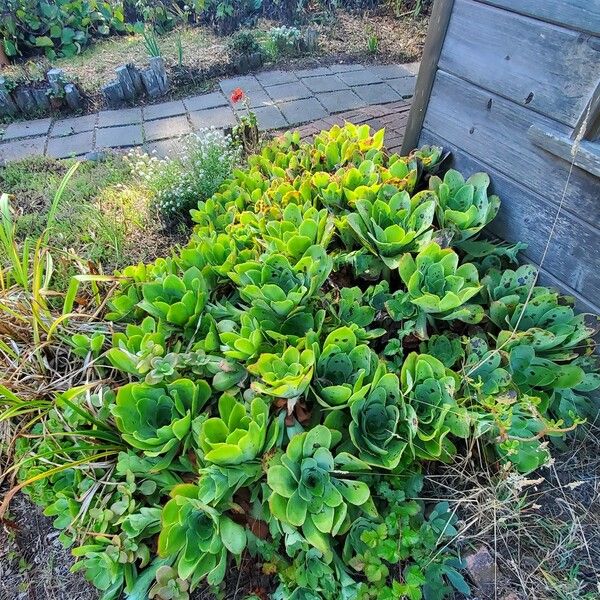
Plant Overview
Known as the Lanzarote Houseleek, this architectural beauty hails from the rugged volcanic slopes of the Canary Islands. It is a master of minimalism, sporting geometric rosettes that look as though they were sculpted from pale green jade and dipped in ruby wine. In its native habitat, it clings to cliff faces, proving that elegance and resilience can go hand-in-hand.
🔍 How to Identify
- 🎨 Rosette Geometry: It forms large, symmetrical, saucer-shaped rosettes that can reach up to 8 inches in diameter.
- 🍷 Red Margins: The thick, fleshy leaves are a pale, glaucous green, but they develop striking reddish-pink edges and tips, especially when "stressed" by bright sunlight.
- 🪵 Woody Stems: Unlike some low-growing succulents, this species develops thick, silvery-grey branches that give it a shrub-like appearance as it matures.
🏡 In Your Garden
- 🌋 Volcanic Roots: Because it originates from porous volcanic rock, it demands "gritty" soil with exceptional drainage. It hates "wet feet," so avoid heavy potting soils that retain moisture, which can lead to rapid root rot.
- 💤 Summer Slumber: This plant is winter-active and summer-dormant. Don't panic if the rosettes close up or look slightly shriveled during the peak of summer; it is simply "sleeping" to conserve water. Reduce watering significantly during these hot months.
⚠️ Safety & Toxicity
- 🐾 Pet Friendly: The Lanzarote Aeonium is generally considered non-toxic to cats, dogs, and humans, making it an excellent choice for a "pet-safe" indoor or outdoor garden.
- 🧤 Minor Irritant: While not poisonous, the sap inside the leaves can occasionally cause mild skin irritation for individuals with very sensitive skin. It is best to wear gloves if you are doing extensive pruning or propagation.
✨ Fun Fact
The Aeonium lancerottense is "monocarpic," meaning "once-fruiting." When a rosette finally reaches maturity, it produces a spectacular, cone-shaped cluster of pale pink flowers. Once the seeds are set, that specific rosette will die, but it usually leaves behind several "pups" or offsets around the base to continue the cycle!

Detailed Care Instructions
To grow Aeonium Lancerottense, also known as Lancerotte Aeonium, follow these steps:
- Choose a suitable location: Aeonium Lancerottense prefers a bright location with indirect sunlight. It can tolerate full sun but may need some shade in hot summer months.
- Prepare the soil: The plant requires well-draining soil. You can mix regular potting soil with sand or pumice to improve drainage.
- Planting: If you're growing Aeonium Lancerottense in a pot, make sure it has drainage holes. Fill the pot with the prepared soil mix and place the plant gently, covering the roots with soil. If planting outdoors, dig a hole slightly larger than the plant's root ball and backfill with the soil mix.
- Watering: Aeonium Lancerottense likes moderate watering, so water the plant thoroughly but allow the soil to dry out before watering again. It's crucial not to overwater, as this can cause root rot.
- Fertilizing: Feed the plant with a balanced organic fertilizer during the growing season (typically spring and summer). Follow the instructions on the fertilizer packaging for application rates.
- Pruning: Regular pruning is not necessary for Aeonium Lancerottense, but you can remove any dead or damaged leaves as needed. This will help maintain the plant's appearance.
- Propagation: Propagate Aeonium Lancerottense through stem cuttings. Take a cutting with a clean, sharp knife and let it callus for a few days. Plant the cutting in a well-draining soil mix, and mist it occasionally to keep the humidity high during root establishment.
- Winter care: Aeonium Lancerottense is quite cold-sensitive and needs protection from freezing temperatures. If you live in a region with frost, it's best to bring the plant indoors during winter or provide frost protection.
By following these steps, you should be able to successfully grow Aeonium Lancerottense and enjoy its unique beauty in your garden or as a potted plant.
To water this plant, it is important to first check the moisture level of the soil. This can be done by sticking a finger about an inch deep into the soil and feeling for dampness. If the soil feels dry, it is time to water.
When watering, it is important to make sure the water is able to fully soak into the soil and reach the roots. This can be done by slowly pouring water at the base of the plant until it starts to drain out the bottom of the pot. Be sure to allow the excess water to drain completely before placing the plant back in its usual spot.
It is also important to avoid overwatering this plant, as it can lead to root rot. It is recommended to wait until the top inch of soil is dry before watering again, typically once every 7-10 days. Additionally, it is good practice to reduce watering during the winter months when the plant's growth slows down.
To ensure the optimal growth and health of this plant, fertilize it during the active growing season with a balanced, water-soluble fertilizer. Apply the fertilizer sparingly, making sure to follow the packaging instructions carefully, as over-fertilization can lead to damage or burn. Additionally, you can supplement the soil with organic matter to provide a slow-release source of nutrients for the plant. Avoid fertilizing during the dormant period, as the plant will not absorb nutrients effectively and may even be damaged by excess fertilizer.
The soil that is recommended for growing Aeonium Lancerottense is a well-draining soil mix that is prepared by mixing together equal parts of coarse sand, perlite, and organic matter such as compost or peat moss. The soil should be slightly acidic with a pH between 6.0 and 6.5. This plant prefers soil that is rich in nutrients and has good water retention capabilities, without becoming waterlogged. In addition, Aeonium Lancerottense thrives in soil with good airflow, which helps prevent fungal problems. It is important to avoid using heavy, compacted soils that may stunt the growth of this plant or lead to root rot.
- Choose a healthy parent plant: Select a mature, healthy Aeonium Lancerottense plant from which you want to propagate.
- Sterilize your cutting tool: Use a sharp knife or scissors to cut a stem or offset from the parent plant. Make sure the cutting tool is clean and sterilized to prevent any possible diseases.
- Cut the stem or offset: Look for a stem or offset that is about 3-5 inches long, and cut it at an angle. If taking an offset, use your fingers to gently twist it off the main stem.
- Let the cutting callus: After cutting, leave the stem or offset in a warm and dry location for several days or until it forms a callus. This will help to prevent disease and to protect the cutting from rot.
- Prepare the potting mix: Fill a small pot or tray with cactus or succulent soil. This type of soil allows for good drainage.
- Plant the cutting: Once the cutting has called, gently insert the stem or offset into the potting mix. Make sure the soil is firm around its base.
- Water the cutting: Water the cutting after planting, paying attention not to overwater it. Allow the soil to dry out completely before the next watering.
- Place the cutting in a bright location: Place the newly potted cutting in a bright location, but avoid direct sunlight. Aeonium Lancerottense requires bright, indirect light to thrive and grow.
- Wait for roots and growth: After a few weeks, the cutting should develop roots and start to grow. Once the plant has established roots and started to grow, you can transplant it into a larger container or outdoors if weather permits.
- Maintain the plant: Keep the newly propagated plant in a bright, dry location with good air circulation. Water it regularly but do not overwater it, and fertilize it with a balanced fertilizer during the growing season.








