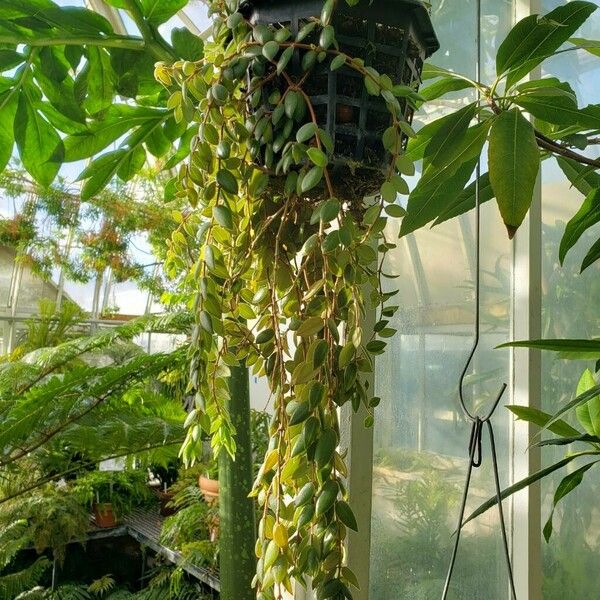
Plant Overview
Known as the "Slim Lipstick Plant," Aeschynanthus gracilis is a graceful epiphyte that drapes like living lace from the high branches of Southeast Asian rainforests. This plant earned its nickname because its vibrant, tubular red flowers emerge from dark, bud-like sheaths, looking remarkably like a tube of lipstick being pushed out of its case. It is a sophisticated choice for indoor gardeners looking for a trailing plant that offers both delicate foliage and a dramatic floral show.
🔍 How to Identify
- 🌿 The Foliage: Unlike the thicker leaves of its cousins, this variety features small, narrow, and pointed elliptical leaves that are often covered in a fine, velvety fuzz.
- 💄 The "Lipstick" Bloom: The flowers are brilliant scarlet-red tubes with a yellowish throat, emerging from a dark, hairy calyx (the "lipstick tube").
- 🧶 The Stems: Its vines are exceptionally slender and flexible, creating a soft, cascading effect rather than the stiff growth seen in other Aeschynanthus species.
🏡 In Your Garden
- ☁️ Humidity is Key: Coming from tropical misty forests, this plant craves high humidity. If the air is too dry, it may drop its leaves or refuse to bloom; a bathroom with a window or a frequent misting routine works wonders.
- 🪵 Airy Feet: In the wild, it grows on tree trunks (as an epiphyte), not in the ground. Because of this, it hates heavy, soggy soil. Use a chunky mix with orchid bark or perlite to ensure its roots can "breathe."
- ☀️ Light for Color: While it can survive in lower light, it needs bright, indirect sunshine to produce those iconic red flowers. A spot near an east-facing window is usually the "sweet spot."
⚠️ Safety & Toxicity
- ✅ Status: Non-Toxic.
- 🐾 Details: Great news for pet owners! Aeschynanthus gracilis is generally considered non-toxic to cats, dogs, and horses. It is a safe way to add a tropical pop of color to a home with curious four-legged friends.
✨ Fun Fact
The flowers of the Lipstick Plant have evolved a specific tubular shape to "fit" the long, curved beaks of sunbirds. In their native habitat, these birds act as the primary pollinators, sipping nectar while getting dusted with pollen to carry to the next vine!

Detailed Care Instructions
Aeschynanthus Gracilis, also known as lipstick plant, can be grown successfully with the following tips:
- Light: Place the plant in a location where it can receive bright, indirect sunlight. Avoid direct sunlight as it can burn the leaves.
- Temperature: Aeschynanthus Gracilis thrives in temperatures between 65-75°F (18-24°C). Avoid exposing it to drafts or sudden temperature changes.
- Watering: Keep the soil consistently moist but not soggy. Allow the top inch of soil to dry out before watering again. Use room temperature water to avoid shocking the plant.
- Humidity: Aeschynanthus Gracilis prefers high humidity levels. You can increase humidity by misting the plant regularly or placing a humidity tray nearby.
- Fertilization: Feed the plant with a balanced liquid fertilizer every 2-4 weeks during the growing season (spring and summer). Avoid fertilizing in the fall and winter when the plant is dormant.
- Pruning: Trim the plant to encourage new growth and maintain a compact shape. Remove any leggy or dead branches to promote healthy growth.
- Repotting: Repot the plant every 1-2 years in a well-draining potting mix. Choose a pot that is one size larger than the current one to allow for growth.
By following these tips, you can successfully grow and care for Aeschynanthus Gracilis and enjoy its beautiful foliage and vibrant flowers.

Place in a window with dappled sun or a spot in the middle of a room. Or directly in a window facing west or east.

The plant requires regular watering, but the soil should be allowed to dry out slightly between watering. It is important not to overwater, as this can lead to root rot. Watering should be done at the base of the plant rather than from above to avoid getting the foliage wet. Rainwater or distilled water is preferred, as tap water can be hard and contain chemicals that could harm the plant. It is also important to avoid getting water on the leaves, which can cause water spots and damage the delicate foliage. Additionally, the plant should be kept in a well-draining soil mix and placed in a bright, indirect light location for optimal growth.
To fertilize the Aeschynanthus Gracilis plant, use a balanced liquid fertilizer with equal parts of nitrogen, phosphorus, and potassium. Dilute the fertilizer to half strength and apply it to the plant's soil every 2-4 weeks during the growing season. Avoid over-fertilizing, as this can harm the plant. Water the plant after fertilizing to help distribute the nutrients throughout the soil.
When planting Aeschynanthus Gracilis, it is recommended to use a well-draining soil mixture that is slightly acidic with a pH between 5.5 and 6.5. A good soil mixture can be made by combining equal parts of perlite, coarse sand, and peat moss. This mixture will help to ensure that the soil does not become waterlogged, which can lead to root rot. Additionally, Aeschynanthus Gracilis prefers to have soil that is fertile and rich in organic matter, so adding compost or other organic fertilizers to the soil mixture is also beneficial. It is important to avoid using heavy soils that retain moisture for prolonged periods of time, as this can cause stress and damage to the plant. Overall, the ideal soil for Aeschynanthus Gracilis should be well-draining, slightly acidic, and rich in organic matter.
Aeschynanthus Gracilis can be propagated through stem cuttings. To do this, select a healthy and mature stem from the parent plant. Use a sharp and sterilized knife to cut a piece of the stem that is at least 3-4 inches long.
Remove any leaves from the lower 1-2 inches of the cutting. Dip the cut end in rooting hormone to encourage root growth, although this step is optional.
Plant the cutting in a small pot with well-draining soil. Keep the soil moist but not waterlogged, and place the pot in a warm and humid environment. You can cover the cutting with a plastic bag or a clear plastic dome to create a mini greenhouse effect.
Check the cutting regularly for signs of new growth, which indicates that roots are forming. Once roots have developed, you can transplant the cutting into a larger pot with regular potting soil.
It is important to keep the new plant in a warm and humid environment for a few weeks after transplanting to help it establish and grow. Regularly water the plant and provide it with bright, indirect light to ensure healthy growth.
Common pests of the aeschynanthus gracilis include Scale insect, spider mites, aphids. Make a habit of checking your aeschynanthus gracilis frequently for pests so that any infestations can be caught and managed early.








