Plant Overview
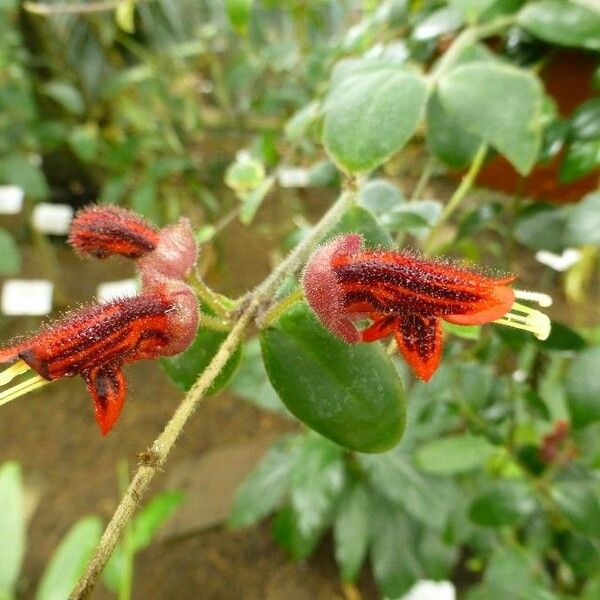
Known as the "Tricolor Lipstick Plant," Aeschynanthus tricolor is a show-stopping tropical epiphyte hailing from the humid rainforests of Southeast Asia. It earns its evocative nickname from the way its vibrant, tubular flowers peek out of dark calyxes, looking exactly like a tube of lipstick being twisted open. This specific variety is a collector's favorite because of its stunning "tricolor" blooms that feature intricate stripes of crimson, orange, and deep maroon.
🔍 How to Identify
- 💄 The "Lipstick" Bloom: The most iconic feature is the tubular, two-lipped flower. In this variety, the petals are bright red with yellow or orange throats and dark, purplish-black striping.
- 🍃 Foliage Texture: It features small, pointed, oval leaves that are slightly waxy to the touch. They grow in opposite pairs along cascading, wiry stems.
- 🌿 Growth Habit: This is a naturally trailing or "pendulous" plant. In the wild, it grows on tree branches, but in the home, it creates a lush "curtain" of green when placed in a hanging basket.
🏡 In Your Garden
- ☁️ The Epiphyte Edge: Because it grows on trees in the wild, its roots need a lot of oxygen. It hates "wet feet," so use a chunky orchid-style potting mix. If the soil is too dense, the plant may suffer from sudden leaf drop.
- ☀️ Light & Humidity: To get those famous blooms, you need bright, indirect light. If it’s too dark, the plant will stay green but never flower; if it's too sunny, the leaves will bleach. High humidity is its "love language"—mist it regularly or keep it in a bright bathroom to mimic its jungle home.
- ✂️ Pruning for Fullness: Lipstick plants can get "leggy" over time. Pruning the stems back after the flowering cycle encourages the plant to branch out, resulting in a bushier, more flower-heavy display.
⚠️ Safety & Toxicity
- 🐾 Pet-Friendly: Great news for pet parents! Aeschynanthus tricolor is generally considered non-toxic to cats and dogs, making it a safe choice for a lively household.
- 🖐️ General Handling: While not poisonous, the milky sap can occasionally cause mild skin irritation for people with high sensitivity. It is always best to wash your hands after pruning or taking cuttings.
✨ Fun Fact
In their native habitats, these plants are "ornithophilous," meaning they are specifically designed to be pollinated by birds. Their long, curved tubes and bright red colors are perfectly evolved to attract sunbirds, which have long beaks designed to reach the nectar deep inside the flower!

Detailed Care Instructions
To grow an Aeschynanthus Tricolor plant, also known as the lipstick plant, you can follow these steps:
- Choose the right location: Select a spot with bright, indirect sunlight or filtered light. Avoid direct sunlight as it can burn the leaves.
- Temperature and humidity: The lipstick plant prefers warm temperatures between 60-80°F (15-27°C). Also, it thrives in a humid environment, so misting the leaves or using a humidifier can be beneficial.
- Potting mix: Use a well-draining potting mix that retains moisture. A mix of peat moss, perlite, and orchid bark works well.
- Pot selection: Select a pot with drainage holes to prevent waterlogging. Choose a pot slightly larger than the current root ball of your plant.
- Watering: Keep the soil evenly moist, but not soggy. Water the plant when the top inch of soil feels dry. Aeschynanthus Tricolor doesn't tolerate drought or overwatering, so finding the right balance is crucial.
- Fertilizing: Feed the plant with a balanced, water-soluble houseplant fertilizer once a month during the growing season (spring and summer). Follow the instructions on the packaging for proper dilution.
- Pruning: Regularly trim back leggy or overgrown stems to encourage bushier growth. Pinch off spent flowers or old foliage to maintain the plant's appearance.
- Propagation: Aeschynanthus Tricolor can be propagated through stem cuttings. Select a healthy stem, remove the lower leaves, dip the cutting in rooting hormone (optional), and plant it in moist soil. Keep the cutting warm and humid until it develops roots.
- Pests and diseases: Monitor your plant for common houseplant pests like mealybugs or spider mites. If you notice any infestation, treat it with an appropriate insecticide or try natural remedies like neem oil.
Remember to observe your plant closely and adjust care according to its specific needs. With proper attention and care, your Aeschynanthus Tricolor should thrive and grow beautifully.

Place in a window with dappled sun or a spot in the middle of a room. Or directly in a window facing west or east.

To properly water the Aeschynanthus Tricolor plant, you need to follow these guidelines:
1. Observe the soil: Before watering, check the moisture level of the soil. Stick your finger about one inch deep into the soil near the plant's base. If it feels dry at that depth, it's an indicator that it's time to water.
2. Use the right water type: Aeschynanthus Tricolor prefers to be watered with room temperature water. You can use tap water that has been left to sit overnight or use rainwater, which is preferred due to its lower mineral content.
3. Watering method: Use a watering can or a small watering pot with a narrow spout. This will allow you to target the soil directly without getting the leaves wet. Pour the water slowly and evenly over the soil until it starts to drain out from the bottom of the pot.
4. Drainage is crucial: It's important to have a pot with drainage holes to prevent water from pooling at the bottom. Aeschynanthus Tricolor plants are vulnerable to root rot, so make sure the excess water can easily escape.
5. Frequency and quantity: Typically, Aeschynanthus Tricolor plants prefer slightly moist soil. Water the plant thoroughly, but make sure the soil is not overly saturated or waterlogged. Always allow the top inch or two of the soil to dry out between waterings.
6. Seasonal adjustments: During the plant's active growing season, which is usually spring and summer, you may need to water slightly more frequently. In the dormant season, reduce the frequency of watering, allowing the soil to dry out more between waterings.
7. Environmental factors: Consider the growing environment of your Aeschynanthus Tricolor when determining watering needs. If it's exposed to high temperatures, bright light, or has low humidity, it may require more frequent watering. Similarly, if the plant is in a cool or shaded area, it may require less frequent watering.
8. Monitor for signs of overwatering or underwatering: Keep an eye on your plant for signs of stress. Wilting, yellowing leaves, or root rot can be symptoms of overwatering. If the soil becomes too dry and starts pulling away from the edges of the pot, it may indicate underwatering.
Remember that while these guidelines are beneficial, it's always important to observe and adjust watering practices based on the specific needs of your Aeschynanthus Tricolor.
To fertilize the Aeschynanthus Tricolor plant, follow these instructions:
- Choose a balanced water-soluble fertilizer formulated for houseplants. Look for a fertilizer with an equal ratio of nitrogen (N), phosphorus (P), and potassium (K). For example, a 10-10-10 or 20-20-20 blend would be suitable.
- Dilute the fertilizer according to the instructions on the packaging. Generally, a dilution ratio of 1/4 to 1/2 teaspoon per gallon of water works well.
- Water the plant thoroughly before applying the fertilizer. This helps prevent root burn and ensures the nutrients are evenly distributed.
- Pour the diluted fertilizer solution onto the soil around the base of the plant. Take care to avoid splashing the foliage to prevent any potential damage.
- During the growing season (spring and summer), fertilize the Aeschynanthus Tricolor plant every two to four weeks. Reduce the frequency to once a month during the dormant period (fall and winter).
- Always monitor the plant for any signs of over or under-fertilization. Symptoms of over-fertilization include leaf tip burn or crispy edges, while under-fertilization may lead to pale or stunted growth.
- If the soil is consistently moist or if there is a buildup of fertilizer salts, flush the soil periodically. To do this, water the plant with plain water until it drains out of the bottom, leaching out any excess salts or residual nutrients.
Remember, fertilizing should be done in conjunction with proper watering, adequate light exposure, and overall care to ensure the Aeschynanthus Tricolor plant thrives.
Aeschynanthus Tricolor plants thrive best in well-draining soil that is rich in organic matter. The ideal soil type for this plant is a loose, well-aerated potting mix that ensures proper water drainage while retaining enough moisture for the roots.
The soil should be slightly acidic to neutral, with a pH level ranging from 6.0 to 7.0. It is beneficial to use a soil mix that is specifically formulated for tropical or indoor plants, as it typically contains the necessary nutrients and organic matter to support healthy growth.
Aeschynanthus Tricolor plants prefer a soil mix that is composed of a combination of materials such as peat moss, coco coir, perlite, and orchid bark. These components offer excellent drainage while also retaining enough moisture to sustain the plant.
Adding small amounts of sand or limestone to the soil mix can help to promote optimal pH levels and improve overall drainage. Additionally, incorporating well-decomposed compost into the soil can provide essential nutrients and enhance the soil structure.
It is crucial to avoid using heavy clay soil or garden soil, as they tend to retain excess water and can lead to root rot. Furthermore, avoid using soils that are high in fertilizers, as they can burn the delicate roots of the Aeschynanthus Tricolor plant.
Regularly inspect and monitor the moisture levels of the soil to prevent overwatering, as this can be detrimental to the plant's health. Adjust the watering frequency and amount based on the specific needs of the plant and the environmental conditions.
Remember to repot the Aeschynanthus Tricolor plant every two to three years to provide fresh, nutrient-rich soil for optimal growth.
Aeschynanthus Tricolor is a plant that can be propagated through several methods, including stem cuttings, layering, or division. Here is a detailed description of how to propagate Aeschynanthus Tricolor using stem cuttings:
- Select a healthy parent plant: Choose a well-established and robust Aeschynanthus Tricolor plant as the parent from which you will take the stem cuttings. Ensure that the plant is disease-free and has no signs of pest infestation.
- Prepare the materials: Gather all the necessary materials, including a sharp pair of sterilized pruning shears or scissors, clean pots or containers, a well-draining potting mix, and rooting hormone (optional).
- Take a stem cutting: Identify a suitable stem on the parent plant that is approximately 4-6 inches long and has at least two sets of leaves. Make a clean cut just below a leaf node, using a sharp tool to avoid damaging the stem.
- Remove lower leaves: Trim off the lower leaves, leaving only a few sets of leaves at the top of the cutting. This helps reduce moisture loss and encourages root development.
- Optional: Apply rooting hormone: If desired, dip the lower end of the cutting into rooting hormone powder or solution to promote root growth. This step is not mandatory but can enhance the success rate.
- Prepare the rooting medium: Fill a pot or container with a well-draining potting mix. It should be a lightweight mix that retains some moisture without becoming waterlogged.
- Plant the cutting: Create a small hole in the potting mix and gently place the stem cutting into it, ensuring that at least one node is buried below the soil's surface. Firmly press the soil around the cutting to provide stability.
- Provide appropriate conditions: Place the potted cutting in a warm and well-lit area, but avoid direct sunlight, as it may scorch the cutting. Maintain a temperature of around 70°F (21°C) and provide high humidity to encourage root formation.
- Watering and care: Keep the potting mix slightly moist but not overly damp to prevent rot. Avoid overwatering, but also ensure that the cutting doesn't dry out completely. Mist the cutting regularly to maintain humidity levels.
- Wait for root development: Over time, the cutting will develop roots. You can gently tug on the stem after a few weeks to check for resistance, indicating root growth.
- Transplanting: Once the cutting has established a robust root system, usually after a couple of months, it is ready to be transplanted into a larger pot or the desired growing location.
Remember to monitor the cutting regularly for any signs of pests, diseases, or deficiencies. With proper care and attention, your Aeschynanthus Tricolor stem cutting will develop into a healthy and thriving plant.
Common pests of the aeschynanthus tricolor include Scale insect, mealybugs, spider mites, aphids. Make a habit of checking your aeschynanthus tricolor frequently for pests so that any infestations can be caught and managed early.








