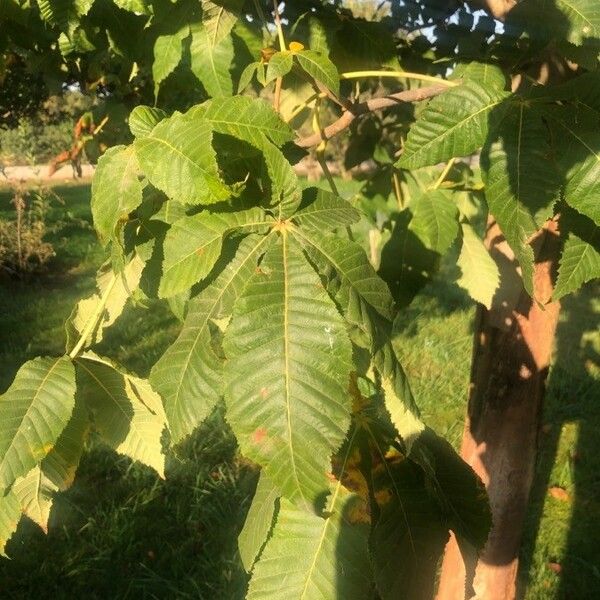
Plant Overview
Known as Bush’s Buckeye, this rare natural hybrid is a stunning botanical bridge between the hardy Ohio Buckeye and the vibrant Red Buckeye. First discovered in the wild where the ranges of its parent species overlap, it carries the best traits of its lineage: the resilience of a woodland native paired with striking, multi-colored flower spikes that look like they belong in a tropical garden.
🔍 How to Identify
- 🍃 The Foliage: Look for "palmate" leaves that resemble a spreading hand, usually featuring five pointed, serrated leaflets that turn a subtle yellow in the autumn.
- 🌸 The Bicolor Blooms: Unlike its parents, this hybrid produces upright flower clusters (panicles) that often show a beautiful gradient from creamy yellow to salmon-pink or soft red.
- 🌰 The "Buck Eye": It produces a leathery, slightly bumpy husk that splits open to reveal a smooth, dark brown seed with a pale circular scar, famously resembling the eye of a deer.
🏡 In Your Garden
- 💧 Moisture is Key: Bush’s Buckeye naturally thrives near stream banks and bottomlands. In a garden setting, it appreciates "cool feet," meaning it needs consistent moisture and a good layer of mulch to prevent the soil from baking.
- 🌳 Space-Saving Beauty: Because it tends to grow as a large shrub or a small, multi-stemmed tree, it is a perfect specimen for smaller landscapes where a full-sized Ohio Buckeye would be too overwhelming.
- 🦋 Pollinator Magnet: The unique tubular flowers are a favorite stop for hummingbirds and long-tongued bees, making it a functional piece of a "living landscape."
⚠️ Safety & Toxicity
- 🚫 Toxic Status: All parts of the plant—including the leaves, bark, and especially the seeds (nuts)—are poisonous to humans and most animals if ingested.
- 🐾 Pet & Livestock Warning: The plant contains saponins and glucosides which can cause severe gastrointestinal distress or neurological issues in dogs, cats, and horses. It is best planted away from areas where pets might be tempted to chew on fallen nuts.
✨ Fun Fact
🧬 This plant is named after Benjamin Franklin Bush, a legendary self-taught botanist from Missouri who spent his life exploring the Ozarks and discovered hundreds of new plant species in the late 1800s!

Detailed Care Instructions
Aesculus x bushii, also known as Bush's buckeye, is a deciduous shrub or small tree that is native to the southeastern United States. Here are some tips on how to grow and care for Aesculus x bushii:
- Planting: Choose a location that receives full sun to partial shade and has well-draining soil. Plant the Aesculus x bushii in the spring or fall, making sure to dig a hole that is the same depth as the root ball and twice as wide.
- Watering: Keep the soil consistently moist but not waterlogged, especially during the first growing season. Once established, Aesculus x bushii is drought-tolerant and only requires watering during prolonged dry spells.
- Fertilizing: Apply a balanced fertilizer in the spring just before new growth appears. Follow the manufacturer's instructions for the correct application rate.
- Pruning: Prune Aesculus x bushii in late winter or early spring to remove any dead or damaged branches and to shape the plant. Avoid heavy pruning, as this can damage the plant and inhibit flowering.
- Mulching: Apply a layer of mulch around the base of the plant to help retain moisture, suppress weeds, and insulate the roots from extreme temperatures.
- Pests and diseases: Aesculus x bushii is relatively pest and disease-resistant, but it may be susceptible to fungal diseases like powdery mildew. Monitor the plant regularly for any signs of pests or diseases and treat them promptly.
By following these tips, you can successfully grow and care for Aesculus x bushii in your garden.
To water this plant, it is important to consider its specific watering needs. It is recommended to water this plant deeply but infrequently, allowing the soil to partially dry out between waterings. It is important to avoid overwatering, as this can lead to root rot and other issues. When watering, aim to water directly at the base of the plant rather than from above, as this can help prevent disease. It is also recommended to use a well-draining soil mix and consider adding a layer of mulch to help retain moisture in the soil.
To fertilize Aesculus × Bushii, apply a balanced, slow-release fertilizer in the early spring before new growth begins. Avoid over-fertilizing, as this can cause excessive vegetative growth. Follow the manufacturer's instructions for the specific type of fertilizer you choose. Water the plant thoroughly after fertilizing to help the nutrients penetrate the soil and reach the roots. Repeat the fertilization process annually to support healthy growth and blooming.
Aesculus × Bushii plant prefers well-draining soil that is rich in organic matter. The soil should have a slightly acidic to neutral pH level, ranging from 6.0 to 7.5. It is recommended to use loamy soil, which is a mix of sand, silt, and clay, for this plant. The soil should be moist but not waterlogged, and it should be able to hold on to nutrients well. It is important to ensure that the soil is not too heavy or compacted, as this can restrict root growth and drainage. Adding compost or aged manure to the soil can help improve its fertility and overall health. This plant does not tolerate saline soil, so it is essential to avoid using soil that has a high salt content.
Aesculus × Bushii plants can be propagated through several methods including seeds and cuttings.
- Propagation from seeds:
- Collect ripe seeds from the plant in the fall.
- Remove the fleshy seed coat and soak the seeds in water for 24 hours to soften the seed coat.
- Plant the seeds in a well-draining potting mix, cover lightly with soil, and water thoroughly.
- Place the pots in a warm, sunny location and keep the soil moist but not waterlogged.
- Germination may take several weeks to several months, so be patient.
- Propagation from cuttings:
- Take hardwood cuttings in late winter or early spring when the plant is dormant.
- Cut 6-8 inch sections from the plant, making sure to include at least one node.
- Remove the lower leaves and dip the cut end in rooting hormone to encourage root growth.
- Plant the cuttings in a well-draining potting mix and cover with a plastic bag or dome to create a humid environment.
- Place the cuttings in a warm, bright location but out of direct sunlight.
- Keep the soil consistently moist and mist the cuttings regularly to maintain humidity.
- Roots should begin to form in 4-8 weeks, at which point the cuttings can be transplanted into individual pots.
By following these propagation methods, you can successfully grow new Aesculus × Bushii plants from seeds or cuttings.








