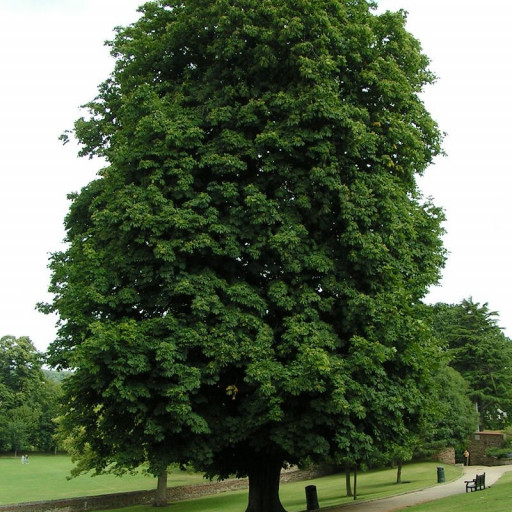
Plant Overview
Often called the "Conker Tree," the Horse Chestnut is a symbol of strength and grandiosity. Native to the mountain forests of Southeast Europe, it has traveled the world to grace city parks and large estates with its spectacular spring "candles" and glossy autumn seeds. While its name suggests a treat, this tree is a majestic ornamental showpiece rather than a food source.
🔍 How to Identify
- 🍃 Palm-Like Leaves: The foliage is unmistakable, featuring large, hand-shaped leaves usually consisting of 5 to 7 leaflets that fan out from a central point.
- 🕯️ Floral "Candles": In late spring, the tree produces stunning, upright clusters of white flowers with yellow or red centers, making the entire canopy look like it is covered in birthday candles.
- 🟢 Spiky Fruit: The seeds (conkers) are encased in a thick, green, leathery husk covered in short, blunt spikes that split open when they hit the ground in autumn.
🏡 In Your Garden
- 🌳 Space Requirements: This is a "legacy tree." It grows a massive, spreading canopy and requires significant space to thrive. It is best suited for large lawns or parks where its roots won't interfere with foundations.
- 🍂 Seasonal Nuance: It is a hardy survivor but is frequently visited by the "Leaf Miner" moth. If you notice the leaves turning brown and crispy in mid-summer, don't panic—it’s usually a cosmetic issue that won't harm the long-term health of the tree.
⚠️ Safety & Toxicity
- 🚫 Toxicity Warning: Despite the name, these are not the chestnuts you roast on an open fire. Every part of the tree, especially the seeds, contains aesculin, which is toxic to humans.
- 🐾 Pet Safety: Conkers are dangerous for dogs. If swallowed, they can cause digestive blockages or poisoning characterized by vomiting and abdominal pain. Always clear fallen seeds if your pets are prone to scavenging.
✨ Fun Fact
The seeds were once used as a substitute for soap because they contain high levels of saponins. In the UK, they are famous for the game of "Conkers," where children (and competitive adults) use threaded seeds to try and smash their opponent's conker into pieces!

Detailed Care Instructions
| Color | White |
| Soil Ph | 4.5-6.5 |
| Humidity | Normal |
| Lighting | Full Sun |
| Toxicity | Poisonous |
| Soil Type | Moist, Well-Drained Light, Medium, And Heavy Soils |
| Bloom Time | May |
| Difficulty | Medium |
| Plant Type | Deciduous Tree |
| Mature Size | 50-75 Feet High, 40-70 Feet Wide |
| Native Area | Greece, Albania, Bulgaria |
| Temperature | 15°C - 35°C |
| Sun Exposure | Full Sun, Part Sun |
| Hardiness Zones | 4-7 |
To grow Aesculus hippocastanum, or the common horse chestnut tree, follow these steps:
- Choose the right location: Horse chestnut trees prefer full sun to partial shade and well-drained soil. Make sure the selected spot provides enough space for the tree to grow, as they can reach up to 80 feet in height with a spread of 40-50 feet.
- Prepare the soil: Horse chestnut trees prefer slightly acidic to neutral soil (pH 6.0-7.5). If your soil is too alkaline, you can amend it with organic matter such as compost or peat moss. Ensure good drainage by adding sand or perlite if necessary.
- Plant the tree: Dig a hole twice the width of the root ball but no deeper. Place the tree in the hole, ensuring the top of the root ball remains level with or slightly above the soil line. Backfill the hole with soil, gently firming it around the tree.
- Water regularly: Keep the soil consistently moist, especially during the first year of growth. Water deeply and thoroughly, allowing the soil to dry slightly between waterings. Avoid waterlogged or overly dry conditions. Mulching around the base of the tree can help retain moisture and suppress weeds.
- Prune if necessary: Horse chestnut trees generally require minimal pruning, but you can remove dead, damaged, or overcrowded branches in late winter or early spring. Prune with clean, sharp tools and make clean cuts just outside the branch collar.
- Fertilize sparingly: Horse chestnuts are generally tolerant of poor soil conditions, so fertilizing is often unnecessary. However, if your soil is particularly poor or lacking nutrients, you can apply a balanced, slow-release fertilizer in early spring.
- Protect from pests and diseases: Horse chestnuts can be susceptible to leaf diseases, such as leaf blotch and leaf miner. Monitor the tree for signs of disease and take appropriate action, such as pruning affected branches or using an appropriate fungicide if necessary. Consult with a local arborist or extension service to identify and treat any specific pest or disease issues in your area.
- Be patient: Horse chestnut trees typically take several years to establish and start producing their characteristic flowers and fruits. Exercise patience, and with proper care and maintenance, your Aesculus hippocastanum plant will grow and thrive.

Place in a bright room that is sun drenched almost all day. Or directly in a south-facing window.

To water this particular plant, it is important to first check the soil moisture level with a moisture meter or by sticking your finger about an inch into the soil. If the soil is dry to the touch, it is time to water the plant.
When watering, it is best to thoroughly saturate the soil until the water drains out of the bottom of the pot or container. Avoid letting the plant sit in standing water, as this can lead to root rot.
The frequency of watering may depend on the climate and environment the plant is in, but generally it is recommended to water once a week during the growing season and reduce frequency during dormant periods.
It is also important to note that this plant prefers well-draining soil. If the soil is not draining properly, it can cause water to accumulate around the roots and lead to root rot.
For optimal growth and health, apply a balanced fertilizer with equal amounts of nitrogen, phosphorus, and potassium in early spring before new growth appears. Repeat this application once in mid-summer. Use a slow-release fertilizer to prevent burning the roots. Follow the manufacturer's instructions for the appropriate amount to use based on the plant's size and age. Water the plant thoroughly after fertilization to distribute the nutrients evenly and prevent nutrient burn. Avoid fertilizing too late in the growing season, as this can encourage new growth that may not have enough time to harden off before winter.
The soil mixture suitable for Aesculus Hippocastanum typically comprises equal parts of loamy soil, peat moss, and coarse sand. The soil should be well-draining and slightly acidic with a pH ranging from 5.5 to 7.0. It is essential to ensure that the soil is moist but not waterlogged or overly dry. Additionally, organic matter such as compost or aged manure can be mixed into the soil to provide the plant with essential nutrients. Regular fertilization with a balanced fertilizer will also help ensure the plant's successful growth and flowering. Overall, the ideal soil mixture for Aesculus Hippocastanum is one that is well-draining, slightly acidic, and rich in organic matter.
To propagate this plant, take hardwood cuttings in late autumn or winter when the plant is dormant. Choose a stem that is about pencil-thick and 30cm long. Cut the stem into 3-4 segments and remove any buds from the base of each segment. Leave 2-3 buds at the tip of each segment. Dip the cuttings in rooting hormone and plant them in a pot filled with a mixture of compost and sand. Place the pot in a sheltered spot and keep the soil moist but not waterlogged. The cuttings should take about six months to root.
Common pests of the horse chestnut include Spider mites, larvae. Make a habit of checking your horse chestnut frequently for pests so that any infestations can be caught and managed early.








