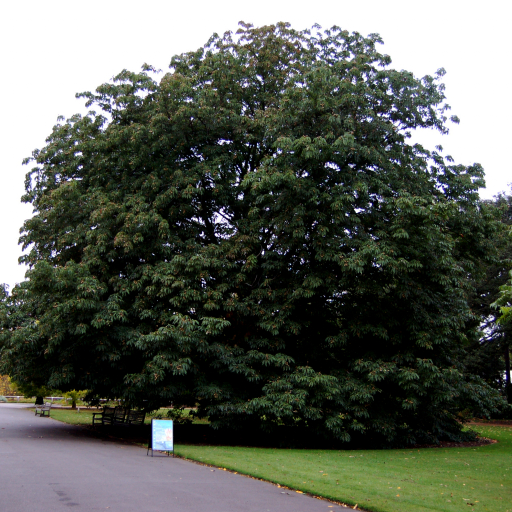
Plant Overview
Often called the Indian Horse Chestnut, this Himalayan native is a true showstopper in any large landscape. With its majestic canopy and striking "candle-like" flower spikes, it brings a touch of mountain elegance to temperate gardens. Unlike its spiky-fruited European cousin, this tree offers a smoother, more refined aesthetic that has made it a favorite in botanical gardens and grand estates for centuries.
🔍 How to Identify
- 🍃 Leaf Structure: Features large, "hand-shaped" (palmate) leaves with 5 to 9 leaflets that fan out from a central point, often emerging with a bronze tint before turning a lush green.
- 🌸 The "Candles": Produces upright, conical clusters of white flowers flecked with yellow and red spots, appearing like ornate floral candelabras in late spring or early summer.
- 🌰 The Fruit: Unlike the prickly "conkers" of the common horse chestnut, the seed cases of the Indian variety are smooth and leathery, containing a glossy, mahogany-colored nut.
🏡 In Your Garden
- 🌳 Space is Key: This is a massive deciduous tree that can reach heights of 70 feet. It is best used as a "specimen tree" where it has room to spread its wide, rounded crown without crowding buildings.
- 💧 Himalayan Hydration: Reflecting its mountain valley origins, this tree thrives in deep, fertile soil that remains consistently moist. It is less drought-tolerant than other chestnuts and may drop leaves early if left to go thirsty in a heatwave.
- 🛡️ Disease Resistance: One of its best garden virtues is its natural resistance to the "Leaf Miner" moth, a pest that often turns the leaves of the common Horse Chestnut brown and crispy by mid-summer.
⚠️ Safety & Toxicity
- 🚫 Toxicity Status: Poisonous if ingested.
- 🐾 Pets & Kids: All parts of the tree, especially the seeds (nuts) and bark, contain saponins. While they look remarkably like edible chestnuts, eating them can cause severe stomach upset, vomiting, and neurological distress in humans, dogs, and horses.
- 🧤 Skin Contact: Generally safe to touch, though the sap may cause mild irritation for those with very sensitive skin.
✨ Fun Fact
🧼 Natural Soap: In its native Himalayan regions, the seeds of the Aesculus indica are sometimes crushed and used as a traditional laundry detergent. The high saponin content creates a natural soapy lather that can clean delicate fabrics!

Detailed Care Instructions
To grow Aesculus Indica, also known as Indian horse chestnut, you can follow these steps:
- Find a suitable location: Aesculus Indica thrives in full sun or partial shade. Choose a location with well-draining soil that is rich in organic matter.
- Prepare the soil: Before planting, loosen the soil and remove any weeds or rocks. Incorporate organic matter such as compost or well-rotted manure to improve fertility.
- Sow seeds or plant saplings: You can either sow seeds directly in the ground or purchase saplings from a reliable nursery. Sow the seeds in early spring or plant the saplings in the desired location, ensuring you provide enough spacing between plants.
- Watering: Aesculus Indica requires regular watering to keep the soil consistently moist, especially during dry periods. However, avoid overwatering as excessive moisture can cause root rot.
- Mulching: Apply a layer of organic mulch around the base of the plant to retain soil moisture, suppress weed growth, and regulate soil temperature.
- Fertilization: Apply a balanced, slow-release fertilizer in early spring to provide essential nutrients for healthy growth. Follow the manufacturer's instructions for the appropriate dosage.
- Pruning: Prune your Aesculus Indica plant during the dormant season to remove any dead or diseased branches and promote better air circulation. This will help prevent diseases and encourage healthy growth.
- Pest and disease control: Keep an eye out for common pests such as aphids, leaf miners, and scale insects. Treat infestations with appropriate insecticides or natural remedies. Additionally, monitor for any signs of leaf spot or powdery mildew and apply fungicides if necessary.
- Support: If your Aesculus Indica is a tree variety and grows too tall or weak, consider staking it or providing support to ensure proper growth and stability.
- Regular maintenance: Continuously monitor the plant for any signs of stress, disease, or nutrient deficiencies. Proper maintenance practices, including watering, fertilization, and pest control, will help your Aesculus Indica thrive.
Remember to adapt the care instructions according to your specific climate, as environmental conditions can vary.

Place in a bright room that is sun drenched almost all day. Or directly in a south-facing window.

To properly water Aesculus Indica, it is important to consider its soil moisture requirements. You should aim to keep the soil consistently moist, but not waterlogged. One way to achieve this is to water deeply and thoroughly, allowing the water to soak in slowly and evenly. It is also important to avoid getting the foliage and flowers wet while watering, as this can increase the risk of fungal diseases. Additionally, you should monitor the plant closely during periods of high heat or drought, as it may require additional watering to maintain its moisture levels. Overall, the key to successfully watering Aesculus Indica is to strike the right balance between moisture and drainage, providing consistent hydration without allowing the soil to become waterlogged.
To successfully fertilize an Aesculus Indica plant, you will need to provide it with adequate nutrients. Begin by spreading a balanced fertilizer around the plant's root zone during the early spring or late winter months.
Make sure to use a slow-release fertilizer, which will provide nutrients over a longer time period and reduce the risk of fertilizer burn. Water the plant thoroughly after applying the fertilizer.
During the growing season, you can also use liquid fertilizers to provide supplementary nutrients to the plant. Dilute the liquid fertilizer according to the package instructions and apply it around the root zone of the plant.
You should avoid over-fertilizing the Aesculus Indica plant as it can cause excessive foliage growth at the expense of flowers and fruits. Additionally, too much fertilizer can also damage the plant's roots.
Regularly monitor the plant's growth and adjust your fertilization schedule accordingly. With proper fertilization, your Aesculus Indica plant should thrive and produce beautiful flowers and fruits.
Aesculus Indica plants require a well-draining soil that is rich in organic matter. They prefer a slightly acidic to neutral soil pH range of 5.0 to 7.5. Soil that is too heavy or compact will not allow for adequate root growth and can result in poor health and growth of the plant. It is recommended to mix the planting site with an equal amount of coarse sand and mature compost to help improve drainage while providing a fertile growing medium for the plant. Additionally, the soil should be kept consistently moist but not waterlogged to prevent root rot and other moisture-related issues.
There are several ways to propagate this plant. One way is through seed propagation, where the seeds should be collected from the plant when they are fully ripe, kept in a cool and dry place, and then sowed in a potting mix. The pots should be watered regularly and kept in a warm and humid environment until the seedlings emerge.
Another method is through vegetative propagation, where stem cuttings can be taken from the plant. The cuttings should be taken from the current year's growth, have 2-3 nodes, and be about 4-6 inches long. The cuttings should be dipped in rooting hormone and planted in a well-draining potting mix. They should be kept in a warm and humid environment until they develop roots and are ready to be transplanted.
Layering is another method of propagation where a low hanging stem of the parent plant is bent down to the ground, and a portion of the stem is buried in the soil without severing it from the parent plant. The stem will develop roots at the buried portion, and a new plant will grow from it. Once the new plant has established roots and shoots, it can be cut off from the parent plant and transplanted.








