Plant Overview
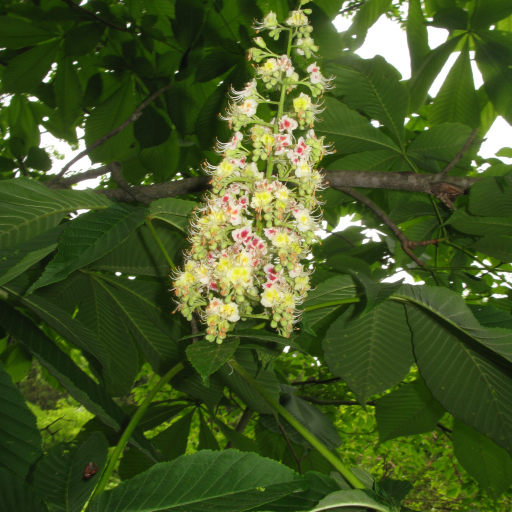
Commonly known as the Japanese Horse-chestnut or Tochinoki, this majestic deciduous tree is a titan of the Japanese forest. Often found along mountain streams, it is celebrated for its massive, architectural foliage and upright "candelabra" flower spikes. While it resembles its European cousin, it brings a more refined, tropical-looking elegance to large gardens and parks where its broad canopy can truly stretch.
🔍 How to Identify
- 🍃 Fan-Like Leaves: It features enormous palmate leaves composed of 5 to 7 leaflets that radiate from a central point, often reaching over 12 inches across, creating a dense, lush green umbrella.
- 🕯️ Flower Pyramids: In late spring, the tree produces striking upright clusters (panicles) of creamy-white flowers, each marked with a splash of red or yellow at the base to guide pollinators.
- 🌰 The "Conker" Fruit: It produces thick, leathery husks that lack the sharp spines of the European Horse-chestnut. Inside lies a glossy, mahogany-brown seed known as a nut or conker.
🏡 In Your Garden
- 🌳 Space is Essential: This is not a tree for small urban yards; it requires significant "elbow room" and deep soil to accommodate its expansive root system and massive mature height.
- 💧 Thirsty Roots: Unlike some drought-tolerant species, the Japanese Horse-chestnut thrives in consistently moist, fertile soil and appreciates a spot near water or a low-lying area that doesn't dry out completely.
- 🍂 Seasonal Cleanup: Be prepared for a "messy" but rewarding autumn; the large leaves and heavy nuts fall all at once, creating a beautiful golden-brown carpet that provides excellent mulch if shredded.
⚠️ Safety & Toxicity
- 🚫 Status: Toxic if Raw: All parts of the tree, especially the seeds (conkers), contain saponins and esculin, which are toxic to humans and pets.
- 🐾 Pet Warning: Keep a close eye on dogs during the autumn; ingesting the nuts can cause severe gastrointestinal distress, tremors, or coordination issues.
- 🖐️ Sap Sensitivity: While rare, the sticky buds and sap may cause mild skin irritation for sensitive individuals during pruning.
✨ Fun Fact
In Japan, these nuts were historically a vital "famine food." Because they are naturally bitter and toxic, they must be soaked in running water for days and treated with wood ash to make them edible. Once processed, they are used to make Tochi-mochi, a traditional and earthy-flavored rice cake!

Detailed Care Instructions
To grow Aesculus turbinata, commonly known as Japanese Horse Chestnut, you can follow these steps:
- Choose an appropriate location: Aesculus turbinata prefers a sunny or partially shaded area with well-draining soil. The pH level of the soil should be slightly acidic to neutral.
- Propagation: You can propagate Aesculus turbinata from seeds or by transplanting a young sapling. If starting from seeds, gather fresh seeds and soak them in water for 24 hours before planting.
- Germination: Fill a nursery pot or seed tray with a well-draining potting mix. Sow the seeds about 1 inch deep and cover them lightly with soil. Moisten the soil gently, and place the pot in a warm location with indirect sunlight.
- Seedling care: Keep the soil consistently moist but avoid overwatering. The seeds may take several weeks to germinate. Once the seedlings develop a few sets of true leaves, you can transplant them into larger pots or directly into the ground.
- Transplanting: If transplanting into the ground, choose a spot with enough space for the mature tree as it can reach heights of 20-40 feet. Dig a hole slightly larger than the root ball of the sapling and place it in the hole. Backfill with soil and gently firm it around the roots.
- Watering: Water the newly planted tree thoroughly and then regularly as needed. Aesculus turbinata prefers moist soil but does not tolerate waterlogged conditions.
- Mulching: Apply a layer of organic mulch around the base of the tree to help retain moisture, suppress weeds, and regulate soil temperature. Avoid piling mulch against the trunk to prevent rot.
- Pruning: Prune any dead or damaged branches in late winter or early spring when the tree is dormant. This will promote healthy growth and improve the overall shape of the tree.
- Fertilizing: Aesculus turbinata generally does not require regular fertilization. However, you can apply a slow-release balanced fertilizer in early spring if the tree shows signs of nutrient deficiency.
- Protecting from pests and diseases: Monitor the tree for common pests such as leaf miners or scale insects. Treat infestations promptly using appropriate organic or chemical insecticides. Aesculus turbinata is generally resistant to most diseases.
With proper care and suitable growing conditions, your Aesculus turbinata plant should thrive and grow into a beautiful and majestic tree.

Place in a bright room that is sun drenched almost all day. Or directly in a south-facing window.

To water this plant, first check the moisture of the soil by inserting your finger about an inch deep into the soil. If it feels dry, it's time to water. Use a watering can or hose to thoroughly moisten the soil around the base of the plant, being careful not to get the foliage wet. Water slowly and deeply to ensure the water penetrates into the root zone. Avoid over-watering as this can cause root rot. The frequency of watering will depend on a variety of factors including the size of the plant, type of soil, temperature, and amount of sunlight it receives. It's important to monitor the soil moisture regularly to make sure it's not too wet or too dry.
To fertilize this plant, use a balanced fertilizer with equal amounts of nitrogen, phosphorus, and potassium. Apply the fertilizer in the spring just before new growth appears. Water the plant well before and after fertilizing. Avoid fertilizing during the summer months as this may damage the plant. Always follow the instructions on the fertilizer package for proper application rates.
Aesculus Turbinata, a tree or shrub species, typically grows best in well-draining soil that is rich in organic matter. It prefers a slightly acidic to neutral soil pH ranging from 6.0 to 7.0. The ideal soil type is loamy or sandy loam that provides good aeration and drainage while retaining moisture. Heavy clay soils should be avoided as they tend to become waterlogged and hinder root growth. Adding compost, peat, or aged manure can improve soil fertility and texture. It is also important to choose a planting location with adequate sunlight and protection from strong winds.
Aesculus Turbinata plant can be propagated through seeds or hardwood cuttings. When propagating from seeds, the process should be done in the fall. The seeds should be collected and allowed to dry for a week before sowing. It is best to stratify the seeds by placing them in a container with moist sand at a temperature of 40°F to 50°F for 60 to 90 days before sowing.
When propagating from hardwood cuttings, the best time to take cuttings is in the late fall or early winter. Select healthy, straight stems and remove the leaves. Cut the stem into 6 to 8 inch sections and dip the ends in rooting hormone. Then, plant the cuttings in a pot filled with a well-draining soil mix. Water the cuttings thoroughly and cover the pot with a clear plastic bag to maintain humidity. Place the pot in a bright, but shaded area, and continue to water as needed until the cuttings show signs of new growth.








