Plant Overview
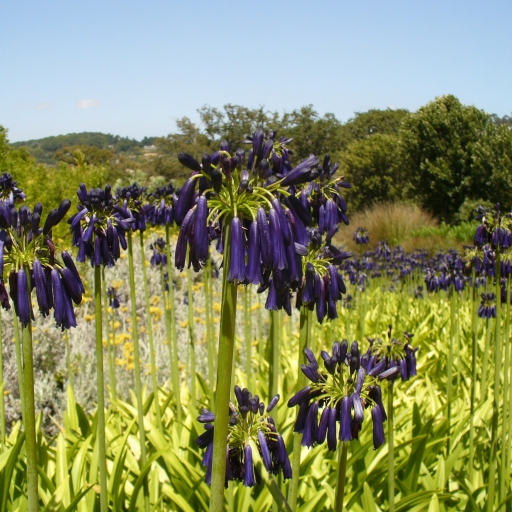
Known as the "Drooping Agapanthus" or the "Drakensberg Lily," this elegant perennial stands out from its cousins with its distinctive, downward-nodding blossoms. Native to the high-altitude grasslands of Southern Africa, it brings a touch of architectural drama to the garden, looking less like a common border plant and more like a delicate, living chandelier. Unlike the evergreen varieties many gardeners are used to, this species is deciduous, retreating underground to sleep through the cold winter months.
🔍 How to Identify
- 🔔 Pendulous Blooms: The most striking feature is the clusters of tubular flowers that hang vertically downward, rather than pointing outward like a typical starburst.
- 🍃 Strap-like Foliage: It features long, leathery, dull-green leaves that form a dense clump at the base, typically reaching about 2 feet in length.
- 📏 Tall Flower Spikes: The leafless flowering stems (scapes) are impressively sturdy and tall, often towering above the foliage to display the deep blue or violet bells.
🏡 In Your Garden
- ❄️ Winter Dormancy: Because it is deciduous, don't panic when the leaves turn yellow and die back in autumn. This is its natural cycle to survive frost; it will emerge stronger and larger in the spring.
- ☀️ Sun Seeker: It thrives in full sun but appreciates "cool feet." Mulching the base helps retain moisture while the tall stems soak up the heat required to produce those deep purple pigments.
- 🌱 Root Sensitivity: Like most members of its family, it has fleshy, brittle roots that dislike being disturbed. Choose its permanent home carefully, as "moving house" can cause the plant to skip a flowering season out of protest.
⚠️ Safety & Toxicity
- 🚫 Toxic if Ingested: All parts of the plant contain saponins, which are toxic to humans, dogs, and cats. If eaten, it can cause mouth irritation, nausea, and digestive upset.
- 🧤 Skin Irritant: The clear sap inside the leaves and stems can cause "phytophototoxicity" or simple contact dermatitis in some people. It is wise to wear gloves when pruning or dividing the clumps.
✨ Fun Fact
While most Agapanthus species are prized purely for their looks, Agapanthus inapertus has a history in traditional Zulu medicine, where it was historically used in poultices to treat heart disease and paralysis—though modern gardeners should definitely stick to just admiring its beauty!

Detailed Care Instructions
| Humidity | Normal |
| Lighting | Full Sun |
| Difficulty | Medium |
| Hibernation | Cold Period |
| Temperature | 12°C - 25°C |
| Hardiness Zones | Max 7A |
To grow Agapanthus Inapertus plants, follow these steps:
- Choose a suitable location: Agapanthus Inapertus thrives best in full sun to partial shade. Select a spot in your garden that receives 6-8 hours of direct sunlight. The soil should be well-drained and slightly acidic.
- Prepare the soil: Before planting, loosen the soil and remove any weeds or debris. If the soil is heavy, add organic matter like compost or well-rotted manure to improve drainage.
- Planting: Dig a hole twice the size of the root ball. Place the plant in the hole, ensuring that the top of the root ball is level with the soil surface. Space multiple plants at least 18 inches apart to allow for growth.
- Watering: Water the plant deeply after planting to settle the soil and encourage root establishment. Agapanthus Inapertus prefers moist but not waterlogged soil. Water it regularly, especially during dry spells, but avoid overwatering to prevent root rot.
- Mulching: Apply a layer of organic mulch, such as wood chips or straw, around the plant to help retain moisture, suppress weeds, and maintain a more consistent soil temperature.
- Fertilization: Agapanthus Inapertus benefits from occasional feeding. Apply a balanced, slow-release fertilizer in early spring and follow the package instructions for application rates. Be careful not to over-fertilize, as it can lead to more foliage growth than flowers.
- Pruning: After flowering, it is beneficial to remove dead flowers and old foliage to tidy up the plant. However, be cautious not to cut back too much, as the leaves provide energy for next year's growth.
- Winter protection: In colder regions, agapanthus may need protection from freezing temperatures. Add a layer of mulch around the plant in late autumn to insulate the roots. In extreme cases, you may need to move potted plants indoors or provide additional cover for the plant.
By following these steps, you can successfully grow Agapanthus Inapertus plants and enjoy their beautiful clusters of blue or purple flowers.
To properly water this plant, first, ensure that it is situated in a well-draining soil mix. When watering, use a watering can or hose with a gentle spray attachment to slowly add water to the soil. Avoid getting any water on the foliage, as this can lead to disease or damage. Water deeply every 7-10 days during periods of active growth, allowing the soil to dry slightly between waterings. In periods of drought or high heat, increase watering frequency as needed. In winter, reduce watering to once every two weeks or less.
To fertilize the plant, use a balanced fertilizer with an N-P-K ratio of 10-10-10 or 20-20-20. Apply the fertilizer in early spring or summer, following the recommended dosage on the label. Water the plant thoroughly after fertilizing to help the nutrients reach the roots. Avoid over-fertilizing as it can damage the plant and lead to excessive foliage growth at the expense of flowering.
Agapanthus inapertus is a plant that grows best in well-draining soil with a pH level ranging from slightly acidic to slightly alkaline. It prefers a soil that is rich in organic matter and healthy soil microorganisms. The soil should be loose and not compacted, as this can restrict the growth of the plant's roots. To enhance soil quality, gardeners can mix in organic compost or well-rotted manure. Avoid using heavy clay soil, as it can hinder water drainage and nutrient absorption. Additionally, the soil should be moist, but not waterlogged, as excessive moisture can lead to root rot. Overall, Agapanthus inapertus thrives in a nutrient-rich, well-draining soil with a slightly acidic to slightly alkaline pH range.
Agapanthus Inapertus plant can be propagated through division of the root clumps. The first step is to carefully dig up the plant and separate the root clumps into several sections. Each section should have at least one healthy shoot and a portion of the root system. Any damaged or dead portions of the plant should be removed.
The separated root clumps can be planted in a spot with well-draining soil and partial shade. It’s important to keep the soil moist, but not waterlogged. Over time, each section will grow and establish itself as a new plant.
Additionally, Agapanthus Inapertus plant can also be propagated through seeds. The seeds should be collected when the seed pods have dried and cracked open. The seeds can be sown in a pot with well-draining soil and covered lightly. The pot should be placed in a warm and brightly lit location. The soil should be kept moist, but not waterlogged. It may take several weeks for the seeds to germinate. Once the seedlings have established themselves, they can be transplanted to individual pots or to a suitable spot in the garden.








