Plant Overview
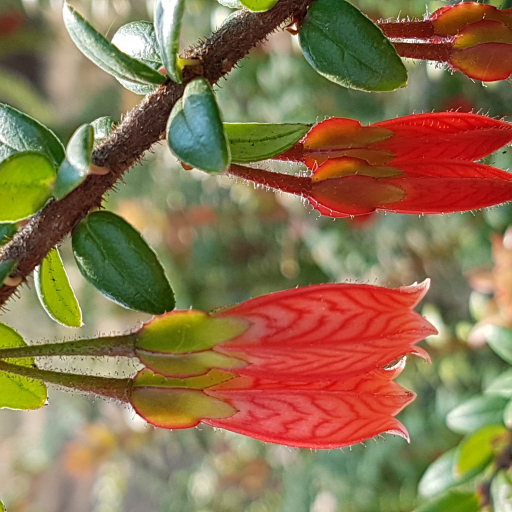
Known affectionately as the "Fire Fern" or "Creeping Agapetes," this stunning Himalayan native isn't actually a fern at all. It is an epiphytic shrub that clings to trees in the misty mountain forests of Nepal and Bhutan. With its arching, snake-like branches and glowing, lantern-shaped flowers, it looks like something plucked straight from a prehistoric jungle or a fantasy novel.
🔍 How to Identify
- 🌿 The Foliage: Small, leathery, lance-shaped leaves are densely packed along the stems. They are a deep, glossy green, often appearing bronze when they first emerge.
- 🏮 The Flowers: Its most striking feature—pendent, tubular blooms that hang like rows of miniature Chinese lanterns. These flowers are usually bright red or hot pink with distinct dark V-shaped patterns (chevrons).
- 🪵 The Caudex: At the base, the plant often develops a "caudex"—a large, woody, swollen tuber. In the wild, this helps the plant store water while clinging to mossy tree trunks.
🏡 In Your Garden
- ☁️ Cool and Airy: Because it hails from high altitudes, this plant dislikes extreme heat. It craves high humidity and cool nights, making it a perfect candidate for a "cool" greenhouse or a bright, misty bathroom.
- 🪴 Drainage is Key: Since it grows on trees in nature, its roots hate "wet feet." Use a chunky orchid mix or peat-based soil with plenty of perlite. It actually prefers being slightly root-bound in a hanging basket, which allows its long stems to cascade downward naturally.
⚠️ Safety & Toxicity
- 🟢 General Safety: Agapetes serpens is generally considered non-toxic to humans and common household pets. It does not possess any known stinging hairs or irritants.
- 🐾 Pet Precaution: While not poisonous, the leathery leaves can be a choking hazard or cause mild stomach upset if a curious cat or dog decides to use the cascading stems as a chew toy. It is always best to keep decorative plants out of reach of nibbling pets.
✨ Fun Fact
Despite its exotic appearance, the Fire Fern is a close cousin to the common Blueberry and the Rhododendron! They all belong to the Ericaceae family, which explains its love for acidic soil and its bell-shaped blossoms.

Detailed Care Instructions

Place in a window with dappled sun or a spot in the middle of a room. Or directly in a window facing west or east.

The presence of a dry surface layer of soil does not indicate that the plant requires water. Instead, stick your finger 1-2" (3-5 cm) deep in the soil to feel dampness or moisture content. If the soil seems dry, it's time to water your greens. If the soil is still moist, however, it is better not to water your plant and instead wait a day or two. Overwatering or waterlogging raises the risk of root rot. So if the soil takes longer than a week to dry, check the light conditions because it's likely that the plant isn't getting enough light. It's fine if the upper layer of soil is dry between waterings, but the deeper soil layer should always have some moisture.
These plant needs regular fertilizing during growing seasons. Fertilizing your plants in dormant state during the winter, might result in scorching or browning of the leaf tips. If mature plants display signs of nutrient insufficiency, fertilizer administration is necessary to restore the plant to its previous state.
You may use All Purpose Plant Food or Green Plant Food for your Agapetes








