Plant Overview
Commonly known as the Pavement Mushroom, Agaricus bitorquis is nature’s urban rebel. It is famous for its incredible physical strength, often found cracking through thick asphalt or lifting heavy paving slabs in its quest to reach the surface. While it bears a striking resemblance to the common button mushroom, this hardy species is built for the "concrete jungle" rather than the deep forest.
🔍 How to Identify
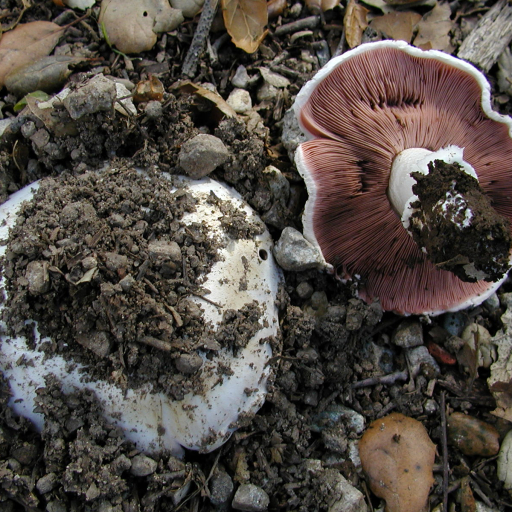
- 🍄 The Cap: A thick, fleshy, and white-to-cream cap that is often flattened on top. Because it pushes through dirt and pavement, the cap is frequently covered in grit or debris.
- 🍫 The Gills: In young specimens, the gills are a delicate pink, but they eventually turn a deep chocolate brown as the spores mature.
- 💍 The Double Ring: Its specific name bitorquis (meaning "two-collared") refers to the distinct double-edged ring on the stem, which looks like two thin bands wrapped around the middle.
- 💪 The Stem: Exceptionally sturdy and short, designed to act like a hydraulic jack to displace heavy earth.
🌲 Habitat & Ecology
- 🛣️ Urban Dweller: This is one of the few mushrooms you are likely to find in the middle of a city. It thrives in compacted soil along roadsides, garden paths, and even emerging through cracks in tennis courts.
- 🍂 Decomposition: It plays a vital role in urban ecology by breaking down organic matter buried beneath the surface, recycling nutrients back into the soil even in heavily developed areas.
- 🌧️ Seasonal Surge: While it can appear throughout the summer, it most frequently pops up in late spring and autumn after heavy rains provide the moisture needed for its powerful growth.
⚠️ Safety & Toxicity
- 🛑 WARNING: While Agaricus bitorquis is technically an edible species, it is considered risky to consume in urban settings.
- 🧪 Bio-Accumulator: Fungi act like sponges. Because this mushroom grows near roads and industrial areas, it often absorbs high levels of heavy metals (like lead and cadmium) and pollutants from car exhaust.
- 🤢 Look-alikes: Always exercise caution, as it can be confused with toxic white mushrooms or even the deadly "Destroying Angel" by the untrained eye. If it turns bright yellow when bruised or smells like chemicals/ink, avoid it entirely.
✨ Fun Fact
The Pavement Mushroom can exert enough turgor pressure (internal water pressure) to lift objects many times its own weight. Scientists have measured these mushrooms exerting enough force to displace heavy stones that would require a human to use a crowbar!

Detailed Care Instructions
Agaricus bitorquis, also known as pavement mushroom or spring agaricus, is a type of edible mushroom that can be grown at home. Here are the steps to grow Agaricus bitorquis plant:
- Spawn selection: Start by purchasing mushroom spawn or tissue culture from a reputable supplier. Make sure to choose Agaricus bitorquis specifically.
- Substrate preparation: Agaricus bitorquis grows well on a compost substrate made up of a mixture of organic materials. Collect materials such as straw, horse manure, hay, gypsum, and crushed limestone. Mix them together in a ratio of 70% straw, 20% horse manure, and 10% gypsum and crushed limestone. Wet the mixture thoroughly and let it sit for a few days.
- Pasteurization or sterilization: The substrate needs to be pasteurized or sterilized to kill any competing organisms that may hinder mushroom growth. Pasteurize the substrate by heating it to around 60-70 degrees Celsius for several hours. Sterilization can be done by pressure cooking the substrate at 15 psi for around 2 hours.
- Inoculation: Once the substrate has cooled down, mix it with the mushroom spawn or culture. The spawn contains mycelium, which is the vegetative part of the fungus. Spread the spawn evenly throughout the substrate.
- Incubation: Place the inoculated substrate in a dark and humid environment with temperatures around 21-24 degrees Celsius. This will allow the mycelium to colonize the substrate. Keep the substrate moist but avoid excessive watering.
- Casing: After the mycelium has colonized the substrate, introduce a casing layer. This can be a mixture of peat moss, vermiculite, and limestone. The casing layer helps retain moisture and provides a favorable environment for fruiting. Spread the casing layer evenly over the colonized substrate.
- Fruiting: Once the casing layer has been applied, maintain a humidity level of around 90% and temperatures between 16-18 degrees Celsius. Provide indirect light, as Agaricus bitorquis prefers low light conditions. Mist the casing and maintain humidity throughout the fruiting process.
- Harvesting: Mushrooms will begin to appear after a few weeks. Harvest the mushrooms when the caps are fully mature but before the gills start to turn dark. Twist or cut the mushrooms at the base to remove them from the substrate. Be gentle to avoid damaging the mycelium.
Remember, growing mushrooms can be a delicate process and requires attention to detail. It may take some practice to achieve successful harvests.
To water this type of plant, it is important to first keep in mind the environment in which it naturally grows. Agaricus Bitorquis typically thrives in a moist and cool habitat, so it is important to mimic these conditions when watering it.
One way to do this is to water the plant deeply and consistently, making sure to saturate the soil without causing it to become waterlogged. It is important to avoid letting the soil dry out completely, as this can cause the plant to wilt and become stressed.
It may be helpful to use a watering can or hose with a gentle flow to water the plant evenly and avoid disturbing the soil or causing any damage to the delicate roots. It is also important to ensure that any excess water draining from the pot is removed promptly, to prevent fungal growth or other issues.
Regular monitoring of the plant's moisture levels can help to ensure that it is receiving the appropriate amount of water, and adjustments can be made as needed based on environmental conditions and the plant's individual needs. Overall, consistent and careful watering practices can help to promote healthy growth and development of the Agaricus Bitorquis plant.
To successfully fertilize Agaricus Bitorquis, first make sure the plant is healthy and well-watered. Then, choose a high-quality organic fertilizer with a balanced N-P-K ratio and apply according to the instructions on the package. Make sure to spread the fertilizer evenly around the base of the plant without touching the stem or leaves. Water the plant thoroughly after fertilizing to help the nutrients reach the roots. Repeat the fertilizer application every 6-8 weeks during the growing season for optimal plant growth and yield.
The ideal soil for growing Agaricus bitorquis plants should be rich in organic matter and have a pH range of 6.5 to 7.5. The soil should also have good drainage and aeration to prevent waterlogging and suffocation of roots. It is recommended to use a mixture of peat moss, vermiculite, and compost to meet the soil requirements of these plants. The soil should be well-moistened but not soaked to ensure healthy growth. Proper composting and sterilization techniques should also be employed to prevent fungal and bacterial diseases in the soil.
Agaricus Bitorquis is a type of mushroom. It can be propagated through spores, which are produced by the mature mushrooms. To collect spores, the cap of a mature mushroom should be placed on a clean piece of paper or glass dish, with the gills facing downwards. After a few hours, spores will start to drop onto the paper or dish. These spores can be collected and used to grow new mushrooms.
To grow a new mushroom from the spores, a sterile substrate must be prepared. A common substrate for Agaricus Bitorquis is a mixture of straw and horse manure. This mixture should be pasteurized to kill off any unwanted bacteria or fungi. Once the substrate has cooled, the spores can be sprinkled on top and mixed in.
The substrate should be kept at a temperature between 20-25°C and misted regularly to keep it moist. After a few weeks, white mycelium should begin to grow throughout the substrate. Once the mycelium has colonized the substrate, small pins or primordia will start to form. These will eventually grow into mature mushrooms.
It is important to maintain a sterile environment when propagating Agaricus Bitorquis, as any contamination can lead to a failed crop. Gloves, masks, and a clean workspace should be used at all times.







