Plant Overview
Known affectionately as the Florida Hobblebush or Pipestem, this elegant evergreen shrub is a hidden gem of the American Southeast. It earns the name "Hobblebush" because its low-hanging, arching branches can easily trip up an unwary hiker. With its glossy foliage and delicate white bells, it brings a touch of wild woodland grace to any shaded landscape.
🔍 How to Identify
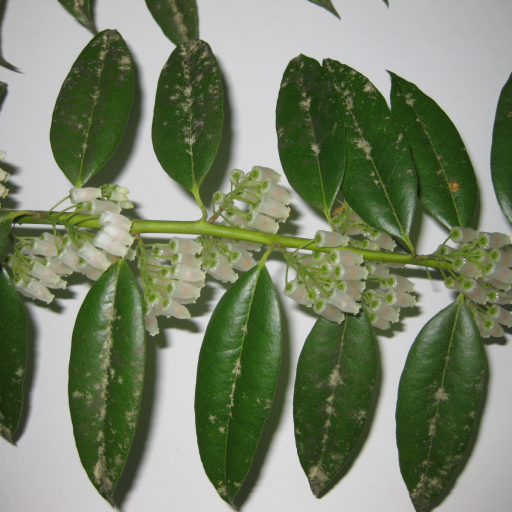
- 🌿 The Foliage: The leaves are lance-shaped, leathery, and a deep, lustrous green. They stay vibrant all year round, often taking on a subtle bronze tint in cooler weather.
- 🔔 The Flowers: In late spring, the plant produces clusters of small, white, urn-shaped flowers that dangle beneath the branches like tiny porcelain bells.
- 🎋 The Stems: Its growth habit is distinctively "fountain-like," with long, arching stems that can reach up to 12 feet tall if left unpruned.
🏡 In Your Garden
- 💧 Moisture Lover: Unlike many ornamental shrubs, the Florida Hobblebush thrives in damp, boggy soil. It is a perfect solution for those "trouble spots" in your yard where water tends to settle.
- 🌑 Shade Specialist: This plant is a true woodland native; it actually prefers deep to partial shade. Too much direct afternoon sun can scorch its beautiful glossy leaves.
- ✂️ Natural Form: Because it has such a graceful, arching shape, it is best used as a background screen or a foundation plant where it has room to spread. Heavy shearing into "hedges" often ruins its natural elegance.
⚠️ Safety & Toxicity
- 🚫 Status: Toxic to ingest.
- 🐾 Pet & Human Safety: Like its cousins the Azaleas and Rhododendrons, Agarista populifolia contains grayanotoxins. If leaves or flowers are eaten, they can cause stomach upset, drooling, or more serious heart issues in pets and livestock.
- 🧤 Skin Contact: While generally safe to touch, some people with sensitive skin may experience mild irritation when pruning, so gloves are always a good idea.
✨ Fun Fact
The nickname "Pipestem" isn't just for show! Historically, the straight, older branches of this shrub were found to have a soft, easily removable pith in the center. Early settlers and travelers would hollow out these stems to create makeshift stems for tobacco pipes.

Detailed Care Instructions
| Humidity | Normal |
| Difficulty | Medium |
| Hibernation | Cold Period |
| Hardiness Zones | 7 - 9 |
To grow Agarista populifolia, also known as Florida Leucothoe or Fringe Tree, you can follow these steps:
- Climate and location: This plant prefers moist, acidic soil and partial shade to full shade. It grows well in USDA hardiness zones 7-10, which include the southeastern United States.
- Soil preparation: Before planting, prepare the soil by loosening it and adding organic matter like compost or aged manure to improve drainage and fertility. Aim for a pH between 4.5 and 6.5.
- Planting: Dig a hole that is wide and deep enough to accommodate the root ball of the plant. Place the plant into the hole, making sure it is planted at the same depth as it was in its nursery container. Backfill the hole with soil, gently firming it around the roots.
- Watering: Agarista populifolia prefers consistent moisture, especially during dry periods or when first planted. Water the plant thoroughly after planting, and then water regularly, ensuring the soil remains evenly moist but not waterlogged.
- Mulching: Apply a layer of organic mulch, like wood chips or straw, around the base of the plant to help retain moisture, suppress weeds, and protect the roots from temperature fluctuations.
- Pruning: Prune the plant as needed to maintain its desired shape and size. Pruning is typically done in late winter or early spring before new growth starts.
- Fertilizing: Agarista populifolia generally doesn't require regular fertilization, especially if the soil is already nutrient-rich. However, you can apply a slow-release balanced fertilizer in early spring if you notice signs of nutrient deficiency.
- Pests and diseases: This plant is relatively pest and disease-free, but keep an eye out for common garden pests like aphids, scale insects, or spider mites. Treat any infestations promptly with appropriate insecticides or organic methods.
- Propagation: Agarista populifolia can be propagated from softwood stem cuttings taken in early summer or by collecting and planting seeds in the fall.
Remember to check local regulations and guidelines before planting this species, as it can be invasive in some areas outside its native habitat.

Place in a window with dappled sun or a spot in the middle of a room. Or directly in a window facing west or east.

To water the Agarista populifolia plant, follow these steps:
1. Observe the plant's soil moisture: Before watering, check the soil moisture level by inserting your finger into the soil up to about an inch. If it feels dry, it's time to water the plant.
2. Gather the necessary equipment: Get a watering can or a hose with a spray nozzle. Having a watering can with a long spout helps to reach the root zone directly.
3. Choose the right time for watering: Water the Agarista populifolia plant early in the day or during the evening. Avoid watering during the hottest part of the day as it can cause water to evaporate quickly and potentially damage the plant.
4. Water at the base: Stand next to the plant and pour water slowly directly at the base, aiming for the soil around the roots. This allows the roots to absorb the water effectively.
5. Slow and steady watering: Avoid rushing through the process. It is better to give a slow and steady stream of water to ensure thorough saturation. Pour water until you see it starting to flow out from the drainage holes in the container.
6. Avoid waterlogging: Prevent over-watering by ensuring proper drainage. If the plant is in a pot, make sure the pot has drainage holes at the bottom to allow excess water to escape. If the Agarista populifolia plant is in the ground, ensure the soil has good drainage.
7. Monitor the water requirements: Agarista populifolia plants prefer consistently moist soil, so keep an eye on the moisture levels regularly. In hot and dry weather, the plant may require more frequent watering.
8. Adjust watering frequency: Modify the watering frequency according to the plant's needs and environmental conditions. Be cautious not to let the soil dry out completely between waterings, but also avoid over-watering, as it can lead to root rot.
Remember, each plant has different water requirements, so it's always beneficial to observe the plant's response to watering and make adjustments accordingly.
To fertilize your Agarista Populifolia plant, follow these instructions:
- Choose a balanced, slow-release fertilizer specifically designed for acid-loving plants.
- Dilute the fertilizer according to the package instructions, typically mixing it with water in a watering can or sprayer.
- Apply the fertilizer to the soil around the base of the plant. Avoid getting it on the leaves or stems.
- Use caution not to over-fertilize, as this may harm the plant. It's generally better to err on the side of under-fertilizing, especially if you're unsure.
- Water the plant thoroughly after applying the fertilizer to help distribute it into the soil.
- Depending on the fertilizer type, application frequency may vary. Generally, a single application in early spring and another in early summer is sufficient for most Agarista Populifolia plants.
- Monitor the plant's growth and health to determine if additional fertilization is needed. Signs of nutrient deficiency may include yellowing leaves or stunted growth.
- Regularly check the soil pH as Agarista Populifolia plants prefer acidic conditions. Adjust the pH if necessary using organic amendments specifically formulated for acid-loving plants.
Note: It's always recommended to read and follow the instructions provided on the fertilizer packaging for specific guidelines and precautions.
The Agarista Populifolia plant thrives in a specific type of soil that offers optimal growing conditions. The recommended soil for this plant is typically well-draining and loamy in texture. It should have a good balance of organic matter, such as compost or peat moss, to provide essential nutrients and retain moisture.
The pH level of the soil should preferably be slightly acidic, ideally ranging between 5.5 and 6.5. This acidic environment facilitates the plant's nutrient absorption and promotes healthy growth.
Furthermore, it is important to ensure the soil is well-aerated. This allows the roots to access oxygen and facilitates their healthy development. The presence of sufficient airflow within the soil can also prevent the formation of waterlogged conditions, which can be detrimental to the Agarista Populifolia plant.
When planting the Agarista Populifolia, it is recommended to mix the existing soil with organic matter and occasionally add some peat moss to provide additional acidity. This will mimic the plant's natural preferences and ensure it receives the necessary nutrients for optimal growth.
Regular inspection of the soil's moisture level is advisable to avoid overwatering or underwatering the plant. Maintaining moist soil without allowing it to become soaked will promote the plant's well-being.
Overall, the Agarista Populifolia plant thrives in well-draining, loamy soil with a slightly acidic pH. Ensuring adequate moisture and nutrient content, as well as proper aeration, will contribute to the plant's successful growth and vitality.
- Obtain a healthy specimen: Start by finding a healthy Agarista populifolia plant from which to propagate. Look for a mature and disease-free plant with strong stems and vibrant foliage.
- Preparing the cutting tools: Before you start the propagation process, make sure your cutting tools are clean and sharp. Sterilize the tools, such as pruning shears or a sharp knife, by wiping them with rubbing alcohol or dipping in a diluted bleach solution. This helps prevent the spread of diseases.
- Choosing the right cutting: Identify a suitable stem for cutting. Choose a non-flowering stem with several healthy leaves. Ideally, the stem should be about 4-6 inches long and contain at least two leaf nodes.
- Making the cutting: Using the sterilized cutting tool, make a clean cut just below a leaf node. Ensure the cut is at a 45-degree angle, as this increases the surface area for rooting.
- Removing lower leaves: Carefully remove the lower leaves from the cutting, leaving only a couple of leaves at the top. This reduces water loss from transpiration and directs energy towards root development.
- Optional rooting hormone: To promote faster root growth, you can dip the cut end of the stem in a rooting hormone powder or gel. This is not essential, but it may increase the chances of successful rooting.
- Preparing the rooting medium: Agarista populifolia plants typically root well in a well-draining medium. You can create a suitable rooting mix by combining equal parts perlite and peat moss or vermiculite. Alternatively, you can use a commercial seed starting mix.
- Planting the cutting: Make a hole in the prepared rooting medium using a pencil or a dibber. Carefully insert the cut end of the Agarista populifolia stem into the hole, ensuring it is stable and upright. Gently press the rooting medium around the stem to provide support.
- Providing appropriate conditions: Place the planted cutting in a warm and humid location with indirect light. Avoid exposing it to direct sunlight, as this may cause excessive heat and drying. Mist the cutting regularly to maintain humidity and prevent dehydration.
- Ensuring proper care: Check the moisture level of the rooting medium regularly. It should be consistently damp but not waterlogged. Ensure that excess water can drain freely from the container to prevent root rot. Mist the leaves occasionally to keep them hydrated.
- Monitoring root development: Over time, the Agarista populifolia cutting should develop roots. Gently tug on the stem after a few weeks to check for resistance, indicating root growth. Once a good root system has developed, the cutting can be transitioned to a larger pot or planted outdoors.
- Gradual acclimatization: If transplanting the rooted cutting outdoors, gradually expose it to increasing amounts of direct sunlight and outdoor conditions over a period of weeks. This process, known as hardening off, helps the plant adapt to the change in environment.
By following these steps, you can successfully propagate an Agarista populifolia plant and enjoy its unique beauty and characteristics in your garden or indoor collection.








