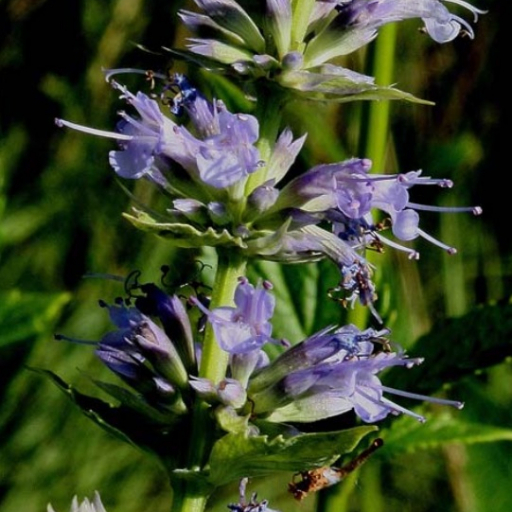
Plant Overview
Known as the Purple Giant Hyssop, this towering native of North America is a true architectural marvel for the wilder parts of your garden. Unlike its smaller cousins, this plant can reach impressive heights, acting as a natural skyscraper for late-summer pollinators. It carries an earthy, herbal scent and is often found on the edges of woodlands, bridging the gap between deep forest and open meadow.
🔍 How to Identify
- 🌿 Sturdy Square Stems: As a member of the mint family, it features distinctive four-sided stems that are thick and robust enough to support its great height.
- 🍃 Toothed Foliage: The leaves are large, ovate (heart-shaped), and have jagged, saw-like edges. They look remarkably similar to Figwort leaves, which is how it earned its scientific name.
- 💜 Crowded Flower Spikes: The blooms appear as dense, fuzzy cylinders of pale purple or lavender flowers. These spikes are packed with tiny individual tubular blossoms that open gradually from the bottom up.
🏡 In Your Garden
- 🐝 The Ultimate Pollinator Magnet: If you want a garden buzzing with life, this is your plant. It is a top-tier nectar source for bumblebees, honeybees, and endangered butterflies like the Silver-spotted Skipper.
- 🌱 Taproot Patience: This plant develops a deep taproot to help it withstand dry spells. Because of this, it resents being moved once it’s tucked into the soil, so choose its "forever home" carefully.
- 📏 Height Strategy: Because it can grow up to 6 feet tall, it’s best placed at the back of a border. It provides a beautiful, textured backdrop for shorter perennials and won't flop over as easily as other tall wildflowers.
⚠️ Safety & Toxicity
- ✅ Safe for Humans: There are no known toxicities associated with this plant for humans; in fact, various Agastache species have a long history of being used in herbal teas.
- 🐾 Pet Friendly: It is generally considered non-toxic to dogs and cats. However, because of its height and rough texture, it isn't a plant pets usually try to snack on.
- 🚫 Allergy Note: While not toxic, the heavy pollen count during its peak bloom might trigger sensitive individuals if planted directly under a bedroom window.
✨ Fun Fact
Despite its name and minty family tree, the Purple Giant Hyssop doesn't smell like licorice (anise) like its popular cousin, Agastache foeniculum. Instead, it has a subtle, spicy scent that many gardeners describe as a mix between oregano and medicinal herbs!

Detailed Care Instructions
To grow Agastache Scrophulariifolia, also known as purple giant hyssop, follow these steps:
- Climate and location: Purple giant hyssop grows best in full sun to partial shade. It can tolerate a wide range of soil types but prefers well-draining soil. This plant is native to North America, mainly found in eastern and central parts of the continent, so it thrives in USDA hardiness zones 4-8.
- Seed selection: Purchase Agastache Scrophulariifolia seeds from a reputable nursery or seed supplier. Make sure the seeds are fresh and viable.
- Germination: Start the seeds indoors around 6-8 weeks before the last frost date in your area. Sow the seeds on the surface of a well-draining seed-starting mix and gently press them into the soil. Don't bury them too deep, as they need light to germinate. Mist the soil surface with water to keep it moist.
- Temperature and moisture: Agastache Scrophulariifolia seeds require warm temperatures (around 70-75°F or 21-24°C) for successful germination. Using a propagation mat or placing the seed tray on top of the refrigerator can help maintain the required temperature. Keep the soil consistently moist but not soggy during the germination period, which can take 1-2 weeks.
- Transplantation: Once the danger of frost has passed and the seedlings are well-established, transplant them into your garden. Choose a location with well-draining soil and adequate sunlight. Space the plants about 12-18 inches apart to allow for their mature size, as purple giant hyssop can grow up to 4 feet tall and 2 feet wide.
- Watering and care: Keep the soil consistently moist, especially during the plant's first growing season. Agastache Scrophulariifolia has moderate water needs and is somewhat drought-tolerant once established. Water deeply but infrequently, allowing the top inch or so of soil to dry out before watering again.
- Mulching and weed control: Apply a layer of organic mulch around the base of the plant to help retain soil moisture and suppress weed growth. This will also help insulate the roots during colder months.
- Pruning and deadheading: To encourage continuous flowering, deadhead the spent flowers regularly. Cut back the stems in late fall or early spring to promote new growth and maintain the plant's shape.
- Fertilization: Agastache Scrophulariifolia generally doesn't require heavy fertilization if the soil is adequately nourished. However, you can apply a slow-release, balanced fertilizer in early spring or use compost and organic amendments to enrich the soil.
- Pest and disease control: Purple giant hyssop is relatively resistant to pests and diseases. However, keep an eye out for common issues like aphids, spider mites, and powdery mildew. Promptly address any problems using appropriate natural or chemical remedies.
By following these guidelines, you can successfully grow Agastache Scrophulariifolia in your garden and enjoy its beautiful purple flowers and aromatic foliage.

Place in a bright room that is sun drenched almost all day. Or directly in a south-facing window.

Agastache Scrophulariifolia is a type of plant that requires frequent watering to thrive properly. It is important to use an adequate amount of water while avoiding excessive water that can lead to root rot or other plant diseases. You can water Agastache Scrophulariifolia by using a watering can or hose to supply a steady stream of water to the base of the plant, without wetting the leaves or foliage. It is recommended that you water the plant regularly, at least every other day, or more often during hot and dry weather conditions. Ensure that the soil around the plant is moist but not waterlogged. To determine when it is time to water Agastache Scrophulariifolia, you can use a moisture meter or check the surface of the soil with your finger. If the soil feels dry, it is time to water the plant. Additionally, it is important to note that watering in the morning or evening is recommended as it will prevent the plant from suffering from heat stress.
To fertilize this plant, start by selecting a balanced, slow-release fertilizer. Begin fertilizing in early spring, right after new growth begins to emerge. Apply the fertilizer according to package instructions, making sure to spread it evenly around the plant's base. Water the plant thoroughly after fertilizing to help the nutrients reach the roots. Avoid over-fertilizing, as this can lead to rapid growth, weakened stems, and reduced flowering. Continue fertilizing once every four to six weeks throughout the growing season.
Agastache scrophulariifolia prefers a well-drained soil with a pH range of 6.0 to 7.5. A loamy soil that is rich in organic matter is ideal for this plant. It should not be planted in soils that are compacted or heavy clay as these types of soil can cause drainage problems. A pH level outside of the recommended range can lead to nutrient deficiencies or excesses which can harm the plant. Additionally, avoid using soils that have been recently fertilized as they can also cause damage to the plant. If necessary, the soil can be amended with organic matter to improve its quality and nutrient content.
To propagate this plant, you will need to carefully divide it at the root system. Ensure that the division has sufficient roots and a few stems. Plant the division into a well-draining soil mix that is moist but not excessively wet. Keep the newly propagated plant in a shaded area to allow for root growth and hydration. Water the plant as needed. After the plant has established itself in its new environment, it can be transplanted into its permanent location.








