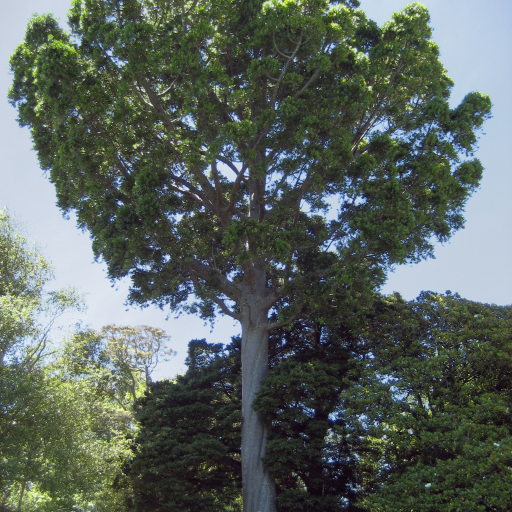
Plant Overview
Known as the Queensland Kauri, this living pillar of the Australian rainforest is a true "gentle giant." Belonging to an ancient family of conifers dating back to the Jurassic period, it is often called the "Smooth-barked Kauri" for its sleek, mottled trunk that looks more like a marble column than a typical tree. In its native habitat, it stands like a majestic sentinel, reaching far above the canopy to touch the clouds.
🔍 How to Identify
- 🌲 The Trunk: The bark is exceptionally smooth and ranges in color from copper-brown to a soft grey. As the tree ages, the bark peels off in large, rounded flakes, leaving a beautiful mosaic pattern.
- 🍃 The Foliage: Unlike most conifers that have needles, the Kauri has thick, leathery, oval-shaped leaves. They are a deep, glossy green and feature fine, parallel veins.
- 🌕 The Cones: It produces large, heavy, globe-shaped female cones that look like green ornaments. When they mature, they don't just open; they completely disintegrate to release winged seeds.
🏡 In Your Garden
- 🏗️ Space Requirements: While it can be kept in a large pot for several years as a stunning "architectural" indoor plant, remember that this tree eventually wants to be a titan. It develops a deep taproot, meaning it hates being moved once it is in the ground.
- 💧 Soil & Humidity: It thrives in deep, well-draining soil and appreciates consistent moisture. Because it originates from the subtropics, it loves humidity and protection from harsh, drying winds while it is young.
⚠️ Safety & Toxicity
- 🟢 Status: Generally non-toxic and safe for homes and public spaces.
- 💧 The Resin: Like many ancient conifers, the tree produces a thick, sticky sap or resin. While not poisonous, it is incredibly difficult to wash off skin or fur and may cause mild irritation to those with very sensitive skin.
✨ Fun Fact
In the 19th century, the resin of the Kauri tree was a prized commodity. It was harvested to create high-quality varnishes and "Kauri gum," which was even used in early linoleum flooring and dental impressions!

Detailed Care Instructions
To grow an Agathis robusta plant, also known as the Queensland kauri or smooth-barked kauri, follow these steps:
- Climate: Ensure you live in a suitable climate for Agathis robusta, which is typically found in subtropical to tropical regions. The plant thrives in warm and humid conditions. However, it can tolerate mild frosts for short periods.
- Location: Choose a location with full or partial sun. Agathis robusta prefers well-drained soil that is rich in organic matter.
- Propagation: You can propagate Agathis robusta either from seeds or cuttings. Seeds can take several weeks to germinate, so it requires patience. Alternatively, take cuttings from the semi-ripe wood in late spring or early summer and place them in a rooting hormone before planting them in a well-moistened potting mixture.
- Planting: Whether using seeds or cuttings, plant them in well-prepared soil or potting mix. Ensure each seed or cutting has enough space to grow properly. Plant the seed or cutting at a similar depth as its height.
- Watering: Keep the soil consistently moist but not waterlogged. Water the plant regularly, especially during dry spells. Reduce watering during winter, as the plant is less active during that time.
- Fertilization: Apply a slow-release balanced fertilizer in spring and summer to promote healthy growth. Follow the label instructions to avoid over-fertilizing, which could damage the plant.
- Pruning: Prune the plant to maintain a desired shape or to remove any dead or diseased branches. You can also prune to control the size of the tree.
- Mulching: Apply a layer of organic mulch around the base of the plant to help retain moisture, suppress weeds, and regulate soil temperature.
- Protection: Protect young Agathis robusta plants from strong winds, as they can be susceptible to wind damage. Consider staking or providing a windbreak if necessary.
- Patience: Agathis robusta is a slow-growing tree, so be patient with its growth. It can take several years to reach its full potential.
Remember to research specific care requirements to ensure the best growing conditions for your Agathis robusta plant, as different climates and environments may have additional factors to consider.

Place in a bright room that is sun drenched almost all day. Or directly in a south-facing window.

1. Determine the watering needs of the plant based on its environment and growth stage.
2. Check the soil moisture level by sticking your finger about an inch or two into the soil.
3. Water the plant when the soil feels dry to the touch, but avoid overwatering as this can lead to root rot.
4. Water deeply but infrequently, allowing the water to soak deeply into the soil.
5. Use room temperature water and avoid getting water on the leaves as this can lead to fungal growth.
6. Consider using a watering can or a drip irrigation system to prevent water from pooling and to ensure even watering.
7. Adjust the watering schedule based on seasonal changes and humidity levels.
To fertilize this plant, use a slow-release, balanced fertilizer with equal amounts of nitrogen, phosphorus, and potassium. Apply the fertilizer in early spring, just before new growth emerges. Use the recommended amount according to the label instructions and make sure to water the plant thoroughly after application. Avoid over-fertilizing as it can lead to burning of the roots and foliage damage.
The Agathis Robusta plant requires well-draining soil that is rich in nutrients and slightly acidic. A suitable soil mix for this plant should consist of 50% loam, 25% organic compost, and 25% sand or perlite to improve drainage. It is also recommended to amend the soil with peat moss or pine bark to lower the pH level. Avoid using heavy clay soils or those that are prone to waterlogging as they can cause root rot and other fungal diseases. It is important to maintain a consistent moisture level in the soil, as the plant cannot tolerate drought or waterlogged soil. Regular fertilization with a balanced, slow-release fertilizer is also recommended to promote healthy growth.
To propagate this plant, you will need to collect its seeds when they are ripe. The seeds should be planted in a well-draining soil mixture in pots or trays. The soil should be kept moist, but not waterlogged. The seeds will need to be kept in a warm, well-lit area that is sheltered from direct sunlight until they germinate, which can take several weeks. Once the seedlings have emerged, they can be transplanted into larger pots or planted outdoors in a suitable location. The young plants will need to be protected from harsh weather conditions and pests until they are well established. With proper care and attention, this plant can grow into a large, majestic tree.








