Plant Overview
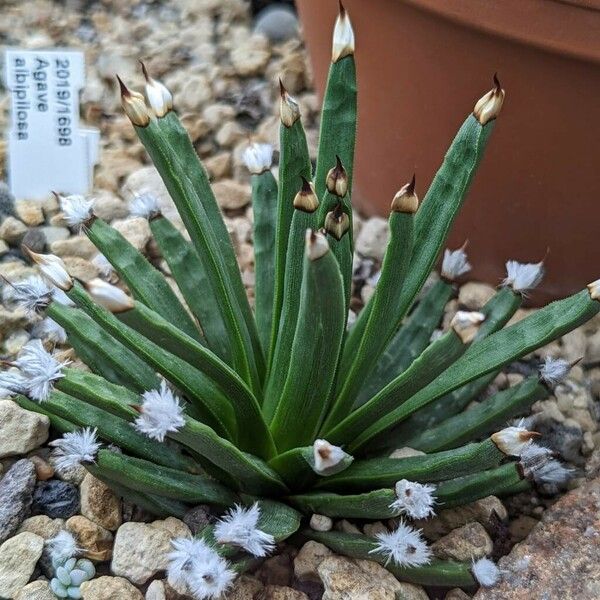
Commonly known as the White-Haired Agave, this rare and mesmerizing succulent was only recently discovered by science in 1997. It hails from the sheer limestone cliffs of the Huasteca Canyon in Mexico, where it clings to vertical rock faces like a living jewel. Its "shaggy" appearance has made it a holy grail for succulent collectors, blending the ruggedness of a desert plant with a delicate, snowy aesthetic.
🔍 How to Identify
- ☁️ The Cotton Tufts: Its most iconic feature is the puff of white, wooly fibers located at the very tip of each leaf, making the plant look like it is capped with tiny cotton balls.
- 🟢 Rosette Structure: It forms a tight, perfectly symmetrical globose (round) rosette of narrow, stiff, deep-green leaves that curve slightly inward.
- 📏 Compact Size: Unlike its giant "Century Plant" cousins, this agave stays small and manageable, rarely exceeding 12 inches in diameter.
🏡 In Your Garden
- ⛰️ Cliff-Dweller Roots: Because it naturally grows on vertical cliffs, this plant demands exceptional drainage. If you grow it in a pot, use a very gritty, mineral-heavy cactus mix and avoid letting water sit in the "crown" (the center) to prevent rot.
- ☀️ Sun & Patience: It thrives in bright, indirect light or morning sun. It is a notoriously slow grower, so don't expect it to double in size overnight—patience is the key to seeing those signature white tufts develop fully.
⚠️ Safety & Toxicity
- 🌵 Physical Irritant: While not "deadly," the sap contains calcium oxalate crystals that can cause significant skin irritation or "agave dermatitis" (an itchy rash).
- 🐾 Pet Safety: It is generally considered non-toxic if nibbled, but the stiff, pointed leaves and irritating sap make it a poor choice for households with curious puppies or kittens.
✨ Fun Fact
For decades, botanists drove right past this species because, from a distance, its thin leaves and white tips look exactly like common tufts of dry grass clinging to the canyon walls!

Detailed Care Instructions
To grow an Agave Albopilosa plant, follow these steps:
- Choose a suitable location: Agave Albopilosa prefers a sunny location with well-draining soil. Make sure the area has good air circulation.
- Prepare the soil: Agave Albopilosa can tolerate various soil types but prefers sandy or rocky soil. Ensure the soil is well-draining by adding sand or gravel if needed.
- Planting: Dig a hole that is wider and slightly deeper than the root ball of the plant. Place the plant in the hole and backfill it with soil, gently firming it around the roots. Ensure that the crown of the plant remains at or slightly above ground level.
- Watering: Agave Albopilosa has moderate water needs. Water the plant deeply but infrequently, allowing the soil to dry out between waterings. Avoid overwatering, as excessive moisture can cause root rot.
- Mulching: Apply a layer of organic mulch around the base of the plant to help retain moisture and suppress weeds.
- Pruning: Agave Albopilosa generally does not require much pruning. Remove any dead or damaged leaves using clean, sharp pruning tools.
- Fertilizing: Agave Albopilosa is generally low-maintenance and does not require frequent fertilization. However, you can apply a slow-release, low-nitrogen fertilizer in spring or early summer to provide some nutrients.
- Winter protection: If you live in a colder climate, consider protecting the plant during winter. Agave Albopilosa is generally hardy to around 20°F (-6°C), but extreme cold temperatures can damage or kill the plant. Provide a layer of mulch around the base of the plant and cover it with frost blankets or move it to a more protected spot if necessary.
By following these steps and providing proper care, your Agave Albopilosa plant should thrive and grow successfully.

Place in a bright room that is sun drenched almost all day. Or directly in a south-facing window.

To properly water Agave Albopilosa, it is important to consider a few key factors. First, you need to be mindful of the plant's specific watering needs to ensure its health and growth.
1. Soil Moisture: Before watering, check the moisture level of the soil by inserting your finger about an inch deep into the soil. If it feels dry at this depth, it is an indication that the plant requires watering.
2. Water Quantity: When watering Agave Albopilosa, it is crucial not to overwater. This succulent plant is adapted to arid conditions and prefers well-draining soil. Aim to provide enough water to thoroughly moisten the soil without causing waterlogging. A general rule of thumb is to water until you see a small amount of water draining out from the pot's drainage holes.
3. Watering Frequency: The frequency of watering largely depends on factors such as temperature, humidity, and the specific environment where the plant is kept. As a guideline, it is generally recommended to allow the soil to dry out between watering sessions. This means you should wait until the top one to two inches of soil are dry before watering again. The frequency may vary throughout the year, with reduced watering during winter or colder months when the plant is in a dormant phase.
4. Watering Technique: When watering Agave Albopilosa, try to direct the water at the base of the plant rather than overhead. This helps prevent the leaves from becoming saturated, as excess moisture on the leaves can lead to rot or fungal issues.
5. Seasonal Adjustments: During the plant's active growing season, which is typically in spring and summer, it may require more frequent watering compared to dormant periods. Monitor the soil moisture regularly and adjust your watering schedule accordingly.
Remember, it is always better to underwater than overwater Agave Albopilosa, as this plant can tolerate periods of drought. It is important to strike a balance and provide adequate moisture without causing root rot or other water-related issues. By adjusting your watering practices based on the plant's needs and paying close attention to the soil moisture, you can help ensure the healthy growth and longevity of your Agave Albopilosa plant.
To fertilize Agave Albopilosa, follow these instructions:
- Choose a balanced, water-soluble fertilizer with equal nitrogen (N), phosphorus (P), and potassium (K) ratios. Look for a slow-release or organic fertilizer if possible.
- Dilute the fertilizer according to the manufacturer's instructions. Generally, a 1:2 or 1:3 ratio of fertilizer to water is recommended.
- Apply the diluted fertilizer to the soil around the plant, avoiding direct contact with the plant's leaves or center.
- Ensure the soil is slightly moist before applying the fertilizer, as dry soil can make it difficult for the plant to absorb the nutrients.
- Fertilize the Agave Albopilosa plant once every 2-3 months during the growing season, which is typically from spring to early fall.
- Monitor the plant for signs of over-fertilization, such as burned or wilting leaves. If this occurs, reduce the frequency or strength of fertilization.
- Water the plant thoroughly after fertilization to help distribute the nutrients evenly into the soil.
Remember to always follow the specific instructions provided by the fertilizer manufacturer, as different products may have different application rates.
Agave Albopilosa is a type of plant that has specific soil requirements for optimal growth. The ideal soil for this plant should have certain characteristics to ensure proper drainage, aeration, and nutrition for the roots. Here are the details on the soil to use:
- Well-draining: Agave Albopilosa prefers a soil that allows excess water to drain quickly, preventing waterlogging and the risk of root rot. Avoid heavy or compacted soil types.
- Sandy or loamy texture: The soil should have a sandy or loamy texture that allows good drainage while also retaining some moisture. This type of soil helps prevent the roots from suffocating or becoming excessively dry.
- Porosity: The soil should be porous to promote aeration of the roots. This helps prevent the root system from becoming waterlogged and allows the plant to take up oxygen more efficiently.
- pH level: Agave Albopilosa thrives in slightly acidic to neutral soil conditions. A pH range of 6.0 to 7.5 is ideal for this plant. Avoid highly acidic or alkaline soils.
- Organic matter: Incorporating organic matter into the soil can help improve its overall structure and nutrient content. This can be achieved by adding compost, well-rotted manure, or other organic amendments. However, be cautious not to over-amend the soil, as Agave Albopilosa prefers leaner soil conditions.
- Fertilization: Agave Albopilosa is adapted to low-nutrient environments, so avoid excessive fertilization. In most cases, these plants do not require regular feeding. It is best to apply a slow-release, low-nitrogen fertilizer sparingly, if needed.
- Water retention: While the soil needs to be well-draining, it is also important to choose a soil mix that retains some moisture. Agave Albopilosa can tolerate drought but still requires occasional watering. The soil should strike the right balance between drainage and water retention.
When planting Agave Albopilosa, ensure that the soil meets these requirements to create a suitable environment for the plant's roots to establish and grow. Remember to consider local climate conditions and adjust watering accordingly to maintain soil moisture levels that suit this particular Agave species.
Agave Albopilosa plants can be propagated through several methods. One common method is through the use of offsets or pups.
To propagate Agave Albopilosa through offsets, you will need a mature plant that has produced offsets. Carefully remove the offset from the mother plant by gently cutting or pulling it away. Ensure that the pup has its own root system attached.
Next, prepare a well-draining potting mix that consists of a combination of coarse sand, perlite, and well-draining potting soil. Plant the offset into the potting mix, making sure that the roots are covered and the plant is firmly positioned.
Water the newly potted offset lightly, allowing the soil to dry out slightly between watering to prevent overwatering and root rot.
Place the pot in a location that receives bright indirect sunlight, as Agave Albopilosa plants thrive in sunny conditions.
Monitor the plant for signs of growth, which may include new leaves emerging from the center of the plant or new roots appearing at the base. This indicates successful propagation.
In addition to offset propagation, Agave Albopilosa can also be propagated through seed germination. Collect seeds from mature flowers or purchase them from a reputable source.
Fill a seed tray or small pots with a well-draining mix, similar to the one used for offset propagation. Lightly press the seeds into the soil and cover them with a thin layer of the same mix.
Water the seeds lightly, ensuring that the soil remains slightly moist but not saturated. Place the seed tray or pots in a warm location with indirect sunlight.
Keep the soil consistently moist until germination occurs, which typically takes several weeks. Once the seedlings have grown a few inches tall and have developed a robust root system, they can be transplanted into individual pots.
Agave Albopilosa plants propagated through offsets or seeds may take a few years to reach maturity and resemble the characteristics of the parent plant. Proper care and maintenance, including suitable sunlight exposure, well-draining soil, and occasional watering, will ensure the successful growth and development of the new plants.
Common pests of the tufted agave include Scale insect, mealybugs, thrips. Make a habit of checking your tufted agave frequently for pests so that any infestations can be caught and managed early.








