Plant Overview
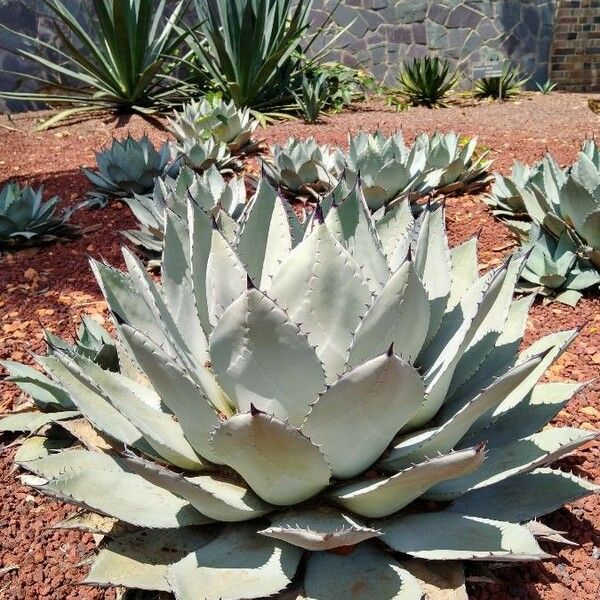
Often called the Bent-Spine Agave, Agave flexispina is a striking architectural gem hailing from the arid highlands of North-Central Mexico. This succulent is prized for its symmetrical, steel-blue rosettes that look almost like frozen sculptures in a desert landscape. It is the perfect choice for minimalist rock gardens or collectors seeking a high-drama silhouette that stays relatively compact.
🔍 How to Identify
- 🎨 Leaf Color: Features stunning powdery blue to glaucous gray leaves that are thick, rigid, and slightly concave.
- ↪️ Spine Character: The margins are lined with prominent, dark reddish-brown teeth that characteristically "flex" or curve back toward the center of the plant.
- 📐 Rosette Shape: It forms a tight, globular rosette that typically reaches about 12 to 24 inches in diameter, maintaining a neat, spherical appearance.
🏡 In Your Garden
- 🏜️ Drainage is Vital: Because it evolved in rocky, mountainous regions, this Agave is highly susceptible to root rot; it requires "gritty" mineral-heavy soil that allows water to escape the roots immediately.
- ☀️ Sun and Stress: It craves intense light to maintain its vibrant blue hue. In cooler weather or high sun, the tips of the spines may turn a deeper, more dramatic mahogany color.
⚠️ Safety & Toxicity
- 🌵 Physical Hazard: The terminal spines (the tips of the leaves) are needle-sharp and can easily puncture skin. It is best planted away from narrow walkways or "high-traffic" areas.
- 🧪 Sap Irritation: The internal sap contains calcium oxalate crystals. If a leaf is broken, the juice can cause "Agave dermatitis"—a burning, itchy rash on the skin. Keep away from curious pets and always wear gloves when pruning.
✨ Fun Fact
The species name flexispina is a direct Latin translation for "flexible spine," referring to the wavy, hooked nature of the teeth along its leaf edges, which look almost like a row of miniature shark fins.

Detailed Care Instructions
To successfully grow Agave flexispina plants, here are some steps to follow:
- Choose the right location: Agave flexispina thrives in full sun to partial shade. Plant it in a spot that receives at least 6 hours of direct sunlight per day. Make sure the location has well-draining soil, as Agave plants do not tolerate excessive moisture.
- Prepare the soil: Agave flexispina prefers sandy or loamy soil. Before planting, amend the soil with organic matter like compost or well-rotted manure to improve drainage and nutrient content.
- Planting: Dig a hole that is slightly wider and deeper than the root ball of the plant. Gently loosen the roots and place the plant in the hole, making sure it is at the same level as the surrounding soil. Backfill the hole with soil, gently firming it around the roots.
- Watering: Initially, water the plant deeply to encourage root establishment. Once established, Agave flexispina is drought-tolerant and only requires watering during extended dry periods. Avoid overwatering, as excessive moisture can cause root rot.
- Mulching and weed control: Apply a layer of organic mulch around the plant to help retain soil moisture, suppress weed growth, and insulate the roots from extreme temperatures. Maintain a weed-free area around the plant to prevent competition.
- Fertilization: Agave plants typically do not require regular fertilization. However, you can apply a slow-release, balanced fertilizer in spring to provide some additional nutrients.
- Pruning: Agave flexispina does not require regular pruning. However, you may need to remove any dead or damaged leaves to maintain the plant's appearance and prevent disease.
- Cold protection: Agave flexispina is hardy to USDA zones 8-11, but it may need protection in colder climates. If you live in an area with freezing temperatures, cover the plant with a frost cloth or move it indoors during winter.
- Pests and diseases: Agave plants are generally resistant to pests and diseases. However, keep an eye out for common issues like aphids, snails, or fungal infections. If necessary, treat the affected areas with appropriate organic or chemical solutions.
Taking care of Agave flexispina plants should mainly involve providing the right growing condition and occasional maintenance. With proper care, your Agave flexispina should grow well and thrive.

Place in a bright room that is sun drenched almost all day. Or directly in a south-facing window.

To properly water this type of plant, it is important to consider the soil and climate conditions. The ideal soil for this plant is well-draining soil that is not too wet or dry. Watering should be done only when the soil is completely dry to avoid overwatering. The frequency of watering will depend on the climate, but during hot, dry weather, it may require more frequent watering. When watering, it is best to water the soil around the base of the plant and avoid getting water on the leaves or stem. Proper watering is important for the health and growth of this plant.
For the plant in question, it is recommended to fertilize it every month with a balanced liquid fertilizer during the growing season (spring and summer). During the dormant season (fall and winter), fertilizer applications should be reduced to once every three months. It is important to dilute the fertilizer according to the manufacturer's instructions and apply it to the soil around the base of the plant, avoiding contact with the leaves. Over-fertilization can lead to leaf burn and damage the plant. Water the plant well before and after fertilizing to prevent dryness or burning of the roots.
The ideal soil for planting this particular plant would be a well-draining mixture with good aeration. It should contain a mix of sand, gravel, and sandy loam soil. The pH level of the soil should be slightly acidic, ranging from 6.0 to 7.5. The soil should be rich in organic matter, which can be achieved by adding compost or aged manure to the mixture. The soil should be kept moist, but not overly wet, to prevent root rot. Additionally, it is important to ensure that the soil is not compacted, as this can inhibit root growth and cause the plant to struggle.
Propagation of this plant can be achieved through a variety of methods, including division, offsets, and seeds. To propagate through division, carefully separate the parent plant into smaller sections, making sure that each section has a healthy root system. These sections can then be planted in a new location. Offsets, which are small plantlets that grow off the parent plant, can also be detached and replanted. If propagating through seeds, harvest fully matured seeds and sow them in well-drained soil. Keep the soil moist and warm, and seeds should germinate within a few weeks.








