Plant Overview
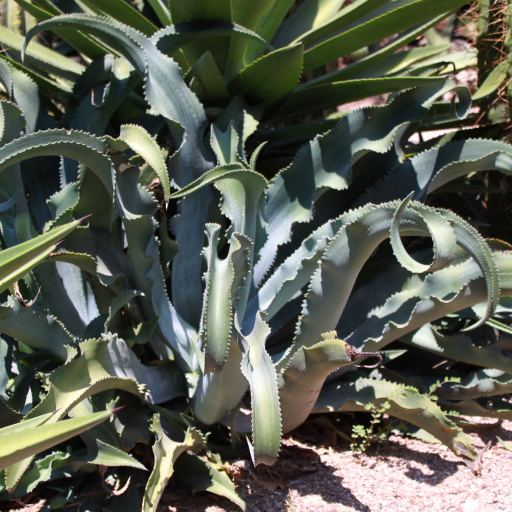
Known as the "Gypsum Century Plant" or the whimsical "Blue Curls," this Mexican native is a true standout in the succulent world. Unlike its rigid, straight-leaved cousins, this Agave looks like it is dancing underwater, with leaves that ripple and wave like frozen blue flames. It is highly prized by collectors for its sculptural elegance and its soft, smoky hue that seems to glow in the twilight.
🔍 How to Identify
- 🌊 Wavy Foliage: The most striking feature is the undulating, deeply curved margins of the leaves, which give the plant a ruffled, "curly" appearance.
- 🌫️ Powdery Color: The leaves are a beautiful powdery blue-gray or silver-green, often coated in a waxy "bloom" (epicuticular wax) that protects the plant from intense sun.
- 🦷 Delicate Teeth: The edges are lined with small, dark, and relatively spaced-out teeth, ending in a sharp terminal spine at the tip of each leaf.
🏡 In Your Garden
- 🧪 Mineral Specialist: As the name Gypsophila suggests, this plant is a "gypsum-lover." In your garden, this means it craves mineral-rich, gritty soil and will struggle in heavy, organic potting mixes that hold too much water.
- 🧊 Fragile Beauty: Unlike many Agaves that are tough and leathery, the Gypsum Century Plant is surprisingly brittle. Its leaves can snap cleanly off if bumped by a garden hose or a passing guest, so place it in a protected "look but don't touch" spot.
- ☀️ Light Balance: It loves bright, filtered light. While it can handle full sun in coastal areas, the intense heat of inland deserts may scorch those beautiful wavy edges, so provide some afternoon shade.
⚠️ Safety & Toxicity
- 🌵 Irritant Sap: The sap contains calcium oxalate crystals which can cause "Agave dermatitis"—a painful, itchy skin rash. Always wear gloves when pruning or moving the plant.
- 🐾 Physical Hazard: While not "deadly," the sharp tips can injure curious pets or children. It is considered toxic if ingested, causing mouth irritation and stomach upset for cats and dogs.
✨ Fun Fact
In its native habitat in Colima and Guerrero, Mexico, this plant is a "calciphile," often found clinging to nearly vertical gypsum cliffs where almost no other green life can take hold!

Detailed Care Instructions
| Humidity | Normal |
| Lighting | Part Sun |
| Difficulty | Medium |
| Temperature | 16°C - 28°C |
| Hardiness Zones | 9B - 11B |
To grow Agave Gypsophila, you can follow these steps:
- Choose a suitable location: Agave Gypsophila prefers a sunny location with well-draining soil. Ensure the area has enough space for the plant to grow, as Agave Gypsophila can reach a height and width of up to 4-6 feet.
- Prepare the soil: Agave Gypsophila thrives in well-draining soil. Amend heavy clay soils by adding compost or sand to improve drainage. Mix it into the soil to a depth of around 12 inches.
- Planting: Dig a hole that is slightly larger than the root ball of the plant. Place the Agave Gypsophila in the hole and backfill with soil, pressing it down gently. Ensure the plant is planted at the same depth it was previously growing.
- Watering: After planting, water the Agave Gypsophila thoroughly. This will help to establish the roots. Afterward, water the plant deeply and less frequently to prevent root rot. Allow the soil to dry out between waterings.
- Mulching: Apply a layer of organic mulch around the base of the plant, such as wood chips or bark. Mulching helps to retain moisture, suppress weeds, and regulate soil temperature.
- Fertilizing: Agave Gypsophila is a low-maintenance plant and generally does not require much fertilization. However, you can apply a slow-release, balanced fertilizer in spring to provide some nutrients.
- Pruning: Agave Gypsophila does not require regular pruning. However, you can remove any dead or damaged leaves as needed. Be cautious when handling the plant as it has spiky leaves.
- Winter care: Agave Gypsophila is cold hardy and can withstand temperatures as low as 20°F (-6°C). However, providing protection during extreme winter conditions, such as covering the plant or moving potted plants indoors, can help prevent any possible damage.
Remember to check for any specific care instructions for your specific region and to monitor the plant regularly for pests or diseases. Agave Gypsophila is generally a low-maintenance plant suitable for xeriscaping and arid garden landscapes.

Place in a bright room that is sun drenched almost all day. Or directly in a south-facing window.

To water this plant, it is important to monitor the soil moisture level. It is recommended to let the soil dry out completely before watering again. When watering, pour water slowly to ensure it reaches the root system. Avoid getting the leaves wet as this can lead to rotting. It is also important to use well-draining soil and a container with drainage holes to prevent waterlogging. During the winter months, the frequency of watering should be reduced as the plant goes into a state of dormancy.
To fertilize this succulent plant, apply a balanced, slow-release fertilizer in the spring or early summer, following the package instructions for dosage and application. Avoid fertilizing during the fall and winter months, as this plant benefits from a period of dormancy. When applying fertilizer, be careful not to get it on the plant's leaves, as this can cause burning. Water the plant thoroughly after fertilizing to ensure the nutrients are absorbed properly.
The ideal soil to use for this plant should be well-draining and have a slightly sandy texture. It should have good aeration and be able to hold moderate moisture levels. The pH level of the soil should be in the neutral range, around 6.5 to 7.5. The soil should also provide adequate nutrient levels to support the growth of the plant. It is recommended to add organic matter, such as compost or peat moss, to the soil to improve its structure and fertility. This plant prefers to grow in soil that is not too rich in nutrients, as an excess of nutrients can result in stunted growth or leaf burn.
Agave Gypsophila can be propagated by removing the offsets that appear around the base of the parent plant. Careful removal of the offsets is important as they have their own roots and can grow into their own separate plant. Gently untangle the roots of the offset from the main plant and gently pull it away. Prepare a potting mix that consists of a well-draining soil and sand, or perlite and vermiculite. Plant the offset in the prepared potting mix, and ensure the soil is well-draining. Water the newly planted offset sparingly, and avoid saturating the soil. It is recommended to place the pot in a warm, bright location but avoid direct sunlight. The new plant will eventually send out its roots and establish itself in its new container.
Common pests of the gypsiferous agave include Scale insect, mealybugs. Make a habit of checking your gypsiferous agave frequently for pests so that any infestations can be caught and managed early.








